French marine textile specialist NVequipment is highlighting its FLEX by NV range for recreational boat owners who need weather protection without commissioning an entirely bespoke canvas project. The company's current product pages describe adaptable covers and accessories for sailing boats, inflatable craft and other leisure boats, with coordinated materials, practical fittings and an emphasis on repairability. FLEX is an established product family in the manufacturer's catalogue, not an item proved to have launched for the first time this November. Its relevance within the 2026 marine-equipment market is the growing importance of convenient protection and serviceable soft goods for boats that spend much of the year exposed to weather.
The problem with one-size-fits-all canvas
Boat covers have to work around winches, rails, wheels, seats, masts, hardware and other fittings that differ between models. An overly loose cover can flap, chafe and collect rainwater, while an excessively tight fit can make it awkward to install and damage delicate edges. A fully tailored canvas solution may perform well but involves measurements, fabrication time and a cost that is difficult to justify for a modest dinghy or weekend boat. NVequipment positions FLEX as a more adaptable family of products for situations where a model-specific custom cover is unavailable or unnecessary. The exact degree of adjustability must be confirmed for each item.
Why protection matters on small leisure craft
Owners often devote attention to propulsion and electronics while overlooking canvas until an exposed seat begins to fade or a cockpit becomes difficult to use. Sunlight, rain, salt, dust and repeated handling affect upholstery and deck equipment over time. A well-fitted cover can slow weathering and reduce cleaning, particularly when the boat sits on a mooring or trailer for weeks between trips. It cannot remove every environmental risk, and poorly ventilated canvas may encourage condensation or mould. The correct goal is protecting a particular surface while maintaining drainage, ventilation and secure fastening according to the local conditions.
FLEX is a family rather than one universal cover
The brand's website describes multiple protection and shade products, including accessories for sailing boats and more general boating applications. That distinction matters when buyers encounter a catalogue photograph of a canvas item and assume it can be fitted to every boat. Wheel covers, winch covers, companionway sprayhoods, sunshades and cockpit protection all serve different purposes. The size, shape and attachment points of each product determine whether it suits the intended vessel. The right purchase begins with identifying exactly what needs protection and where the fixing loads can be safely carried.
Shade is useful beyond full cockpit enclosures
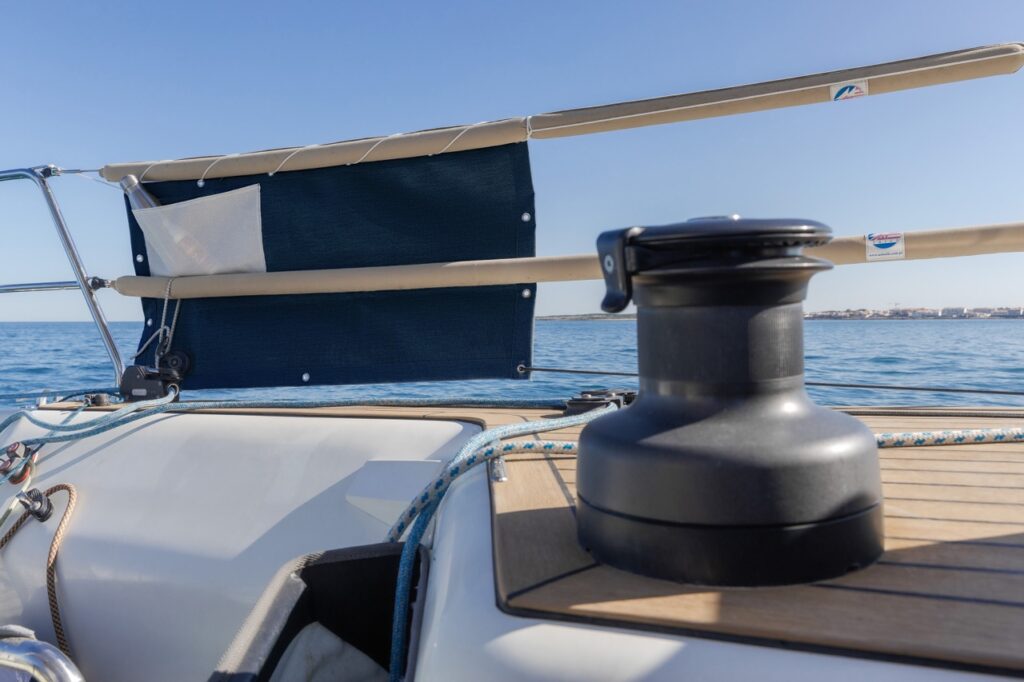
A removable sunshade can make a short leisure-boat trip more comfortable without enclosing the cockpit permanently. A sailboat crew at anchor may want protection across part of the aft deck, while a motorboat crew may need shade around seating. FLEX-related manufacturer photography shows canvas deployed around real deck hardware, demonstrating the sort of adaptable protection at the heart of the range. But a photograph cannot establish the wind-speed limits of a particular canvas product. Owners should seek explicit manufacturer instructions about when to remove or fold the shade, especially before the boat leaves a sheltered anchorage.
Wind loads are easy to underestimate
Canvas presents a substantial surface to moving air, even when the fabric feels light in the hand. A cover left exposed in strong wind can place loads on rails, poles, lashing points and stitching. The appropriate fastening system therefore matters as much as the fabric itself. Deck fittings not designed to restrain a sail-like surface may be damaged by an improvised arrangement. Owners should follow published wind and speed limits, using the product only in the circumstances for which it was designed. It is dangerous to infer from a picture of a sunshade under way that any similar arrangement is suitable while the boat is moving.
Choosing the correct fabric is part of the installation
NVequipment emphasises durable materials and coordinated colours across the FLEX range. Fabric choice affects UV resistance, handling, water behaviour, ease of cleaning and the weight of the assembled product. A cover used on a fixed winter mooring has different demands from one removed several times a day during a summer cruise. Owners should also consider whether seams and straps can be repaired locally when damaged. A material marketed as durable is not necessarily appropriate for a hot exhaust area, a frequently walked-on deck or extended exposure to standing water. Product-specific suitability should be checked rather than assumed.
Repairability can improve long-term value
The company identifies ease of repair and attention to finishing as priorities. That is relevant because canvas fittings often fail at relatively small points: a worn strap, torn loop, broken fastening or abraded edge. If a local specialist can replace a component, the owner may avoid discarding a much larger piece of fabric. But repairability should be confirmed through availability of matching materials and hardware, supported cleaning methods and local service options. A promise of long product life depends on the ability to keep the cover in usable condition through several seasons. Buying the lowest-cost initial solution may not produce the lowest lifetime cost.
Airflow matters underneath a cover
A protective cover that blocks rain but traps moist air can create other maintenance problems. Condensation around lockers, timber, upholstery and electrical compartments can be persistent in temperate climates. Proper ventilation and the avoidance of water pooling are therefore central design considerations. Owners should inspect whether a specific FLEX product leaves the required vents clear and whether it can be used while the vessel is occupied. Some canvas products are suitable only for storage, while others are designed for shade during normal boating. Mixing these purposes can lead to discomfort or damage. Follow the manufacturer's intended-use classification for each model.
Measurement should precede ordering
An adaptable cover still has a defined range of dimensions and mounting assumptions. Measuring the overall length of a boat is rarely enough: the shape of its cockpit, location of rails, height of a console and position of cleats can make a significant difference. Owners should check the manufacturer's size chart and any prescribed allowance for straps or supports. If the cover is intended to fit an accessory, such as a winch or steering wheel, measure the actual installed component rather than selecting by boat model alone. A dealer familiar with the product can help assess whether the required fastening points exist.
Colour coordination is more than decoration
Manufacturers offer coordinated textile ranges partly because owners prefer a consistent appearance across cockpit seating, sail covers and protective accessories. Colour can also influence the visibility of dirt and the amount of solar heat absorbed, although the latter depends on fabric construction as well as appearance. Darker colours may show salt marks differently from lighter ones, and all require suitable maintenance. NVequipment's approach of coordinating textiles can make replacement parts look less obviously mismatched, but exact colour consistency across batches and years should not be taken for granted. Request current samples when matching an existing boat.
Inflatable boats have their own protection needs
A small RIB or inflatable is exposed to different stresses from a fixed-deck cruising yacht. Its tubes may require protection from sunlight and abrasion, while a removable motor or console may need separate covering. An accessory that fits a rigid cockpit opening may not sit correctly over inflatable tubes that change shape slightly with pressure and temperature. Straps and edges must not cut or rub against the fabric. Buyers should consult the relevant FLEX categories and the inflatable boat's manufacturer before installing aftermarket protection. The aim is to preserve the boat's materials, not create new points of wear around valves or glued seams.
Cleaning and drying determine how covers age
Even premium textiles can deteriorate if folded away wet for long periods. Salt deposits, airborne grime and organic growth should be removed according to the maker's instructions, and covers should be dried before storage when practical. Aggressive chemicals or pressure washing may affect coatings, seams or colourfastness. A sensible routine includes inspecting stitching and attachment points before winter and again when the boat is prepared for its next season. Owners who sail frequently should have a defined place aboard for a removed shade so that it does not obstruct safety equipment or circulation. Good protection must also be easy to live with.
Distinguishing the manufacturer photograph from a new launch
The accompanying photograph is NVequipment's own FLEX-related canvas image, credited to photographer Tony Guillou and displayed in the manufacturer's product-range material. It documents an actual sailboat installation of a textile shade around deck hardware. The file belongs to an earlier official media collection and is not represented as a photo taken at METSTRADE 2026. That distinction matters because the present article examines a currently offered product family, not an independently confirmed unveiling of the particular item shown. Its technical or wind-load performance cannot be inferred from the picture alone.
A practical checklist for prospective buyers
The first decision is whether the owner needs storage protection, sailing protection, shade at anchor or a small equipment cover. Next, measure the boat carefully and compare actual attachment arrangements with the manufacturer's drawings. Request information on fabric composition, maintenance, repair materials and the circumstances in which the product must be removed. An installed quotation should include any supports or fixing hardware, not simply the canvas price. If existing custom protection is in good condition, repair may be more sensible than replacement. FLEX offers an interesting middle ground where a fully bespoke cover is unnecessary, provided the selected item fits and performs as intended.
Original industry sources and image credits
Reporting based on NVequipment original FLEX by NV manufacturer range overview, materials, adaptable coverings and repairability; existing range reviewed during current 2026 industry equipment cycle., NVequipment official sailing-boat FLEX protective cover specifications, including winch and wheel protection..
Lead image: NVequipment FLEX Extends Adaptable Boat Covers to More Owners — genuine first-party manufacturer product or boating photograph. © NVequipment / Tony Guillou, official FLEX sailboat shade photograph. Original supplier image.