
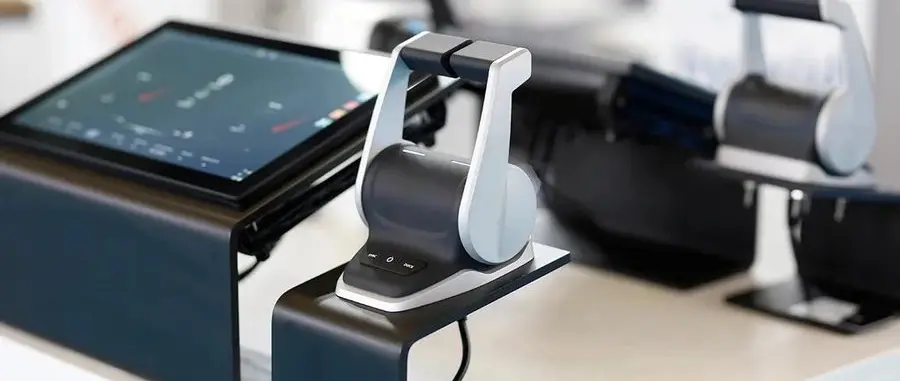
Slovenian marine technology company NT Systems presented an early look at its forthcoming electric outboard design as part of METSTRADE 2026, held at RAI Amsterdam from 17 to 19 November. The company used stand 05.271 in the Slovenian Pavilion to show visual material for a propulsion product still in development, while also explaining its wider approach to integrated electric drives, helm controls and displays. NT Systems says it is targeting a winter 2027 launch for the new outboard. That is a development intention rather than a confirmed delivery date or a completed independent test. For the under-12-metre leisure boat sector, the interesting question is whether the company's emphasis on integration can eventually make electric propulsion easier to specify, install and operate on small recreational craft.
A design preview, not a production launch
The company's 10 November announcement was unusually clear about what visitors would see. NT Systems said the new electric outboard would not be present as a physical product at METSTRADE. Instead, the team intended to display design visuals and discuss its direction with boatbuilders and other industry participants. This distinction matters when readers compare announcements from a busy equipment exhibition. A rendered image cannot establish noise levels, durability, thrust or reliability. The product may develop considerably before it becomes available. The news is the public design preview and planned development path, not the completion of a commercial outboard.
Why the small-boat market pays attention
Smaller recreational boats often have limited capacity for large batteries and elaborate electrical installations. An electric outboard can be attractive for sheltered-water use, short passages and craft where quiet operation is valued. Yet a practical system must fit the hull's weight, transom arrangement, control layout and intended operating conditions. A company developing propulsion as part of a wider system may address some integration difficulties. That possibility is relevant to dinghies, small motorboats and compact sailing boats, but the current preview does not establish which hulls or power classes the NT Systems outboard will serve. Owners should wait for verified specifications before assuming compatibility.
Integration is the company's central argument
NT Systems describes its work as turnkey electric propulsion rather than simply selling a motor in isolation. The company brings together propulsion units, electrical engineering, helm controls, display hardware and system integration. Such coordination can matter when a boatbuilder wants equipment that communicates reliably across the vessel. An owner may otherwise have to combine hardware from several suppliers, each using different interfaces and installation requirements. A complete approach could simplify planning, but it does not automatically guarantee that every installation will be straightforward. Wiring, protection, component access and operating software still require careful engineering.
The helm is part of the propulsion system
A boat's throttle and display are the parts of the propulsion arrangement the operator encounters most often. They need to communicate clearly and remain usable with wet hands, bright reflections and the movement of a small craft. NT Systems has shown visual material for its helm controls and display concepts, emphasising that the user interface is part of the design process. This approach is sensible, although a promotional rendering cannot prove sunlight readability or response under real conditions. A practical evaluation will need to examine how operators select direction, monitor available energy and receive warnings. Simplicity should be measured through actual use rather than appearance alone.
Displays must convey reliable information
Electric propulsion creates new questions at the helm, especially when the battery's state of charge and estimated remaining operating time influence route choices. A display that indicates remaining energy without explaining changing conditions could be misleading. Speed, current, wind and hull load all affect consumption. An integrated interface may allow the user to understand the system more clearly if it is correctly calibrated. NT Systems has not published a full technical description of its new outboard's energy-management display in the preview announcement. The relevance of the concept is clear, but its eventual effectiveness will need demonstration and independent assessment.
Propulsion components must suit real boats
An outboard is exposed to spray, changing temperature, vibration and repeated handling. A new electric unit must be designed with those conditions in mind, including connectors and moving parts. A small-boat owner also needs service access and equipment that can be safely inspected between outings. The official NT Systems release does not give a final enclosure standard, corrosion test or warranty. Those figures should not be invented. Buyers should eventually ask about freshwater and saltwater suitability, approved mounting arrangements and the availability of replacement components. A sophisticated propulsion concept becomes valuable only when it can be supported through ordinary ownership.
Battery questions remain open
The manufacturer has not provided a complete production specification for its new outboard, including an approved battery combination, capacity or independently verified range. Without that information, it would be wrong to promise a particular distance or running time. A boat's energy use varies with displacement, trim, sea conditions and speed. Prospective owners must also consider how and where batteries are charged. An electric system can simplify some maintenance routines, but it introduces the need for appropriately installed charging and electrical protection. NT Systems' broader integration expertise may be relevant here, though details remain to be confirmed for the final outboard product.
The installation may be as important as the motor
Retrofitting a boat with electric propulsion requires an understanding of the hull and its existing systems. Removing a petrol outboard does not mean the replacement electric package will have identical weight distribution. Batteries may need additional space, secure mounting and suitable cable routes. A newbuild offers more freedom to plan those elements from the beginning, but it still requires professional design. NT Systems says it works with both newbuild and retrofit projects. That breadth is relevant to the small-craft market, although the upcoming outboard cannot yet be assumed to be a straightforward drop-in replacement for every current engine.
The METSTRADE setting
METSTRADE is an international business-to-business exhibition for marine equipment, materials and systems, making it a useful place for emerging suppliers to speak with boatbuilders and integration partners. NT Systems exhibited within the Slovenian Pavilion rather than as a standalone exhibitor, according to its invitation. The 2026 show took place from 17 to 19 November and had already concluded by the date of this article. The company described the stand as an opportunity to discuss electric propulsion concepts rather than a retail sales launch. The venue offers useful context, but attendance at a trade show is not evidence that a product has entered production.
A Slovenian company with wider marine applications
NT Systems says it works with leisure and commercial vessels, including projects involving serial-hybrid propulsion. Commercial systems can involve very different power and duty-cycle requirements from a recreational dinghy or dayboat. The skills involved may nevertheless inform work on smaller installations, particularly in power management and controls. The release does not disclose the confidential details of all commercial projects. It would be inappropriate to use those references to assign a proven performance record to the new outboard. The relevant fact is that the company is positioning the forthcoming motor within a broader portfolio of integrated propulsion engineering.
Electric does not mean zero impact
An electric outboard produces no exhaust at its point of operation, but environmental performance must consider battery manufacturing, electricity supply, component life and disposal. A company may design an efficient motor without demonstrating an overall lifecycle advantage in every use case. The new NT Systems product has not yet been accompanied by publicly reported independent lifecycle data. Owners should also recognise that a quiet motor does not make a vessel free from wake, collision risk or disturbance to wildlife. Responsible operation remains essential regardless of propulsion technology.
Owners should seek evidence rather than estimates
Before considering a new motor for purchase, a practical buyer will need rated power and thrust data, system weight, approved transom dimensions, battery compatibility, charging specifications, warranty conditions and service coverage. Sea-trial results under representative loads will be especially important. A supplier's claims about simplicity should also be tested through installation and normal operation. NT Systems has said the motor remains in development, so these details may be unavailable or subject to revision. A credible news article should keep that uncertainty visible. A development preview can be interesting without being treated as a finished consumer product.
What a winter 2027 target means
The manufacturer's release identifies winter 2027 as the intended launch period. The word winter may refer to a period spanning different calendar months, so it would be unwise to invent a precise delivery day. Dates may change as design, testing and manufacturing progress. Interested boatbuilders and owners can monitor official NT Systems updates for the next milestone. The presence of a rendered image in November 2026 does not establish that stock is currently available. This distinction is central to accurate equipment reporting, particularly in a sector where concepts can attract attention long before real-world validation.
A practical role for integrated design
When a boat's electrical systems are planned as one installation, there may be opportunities to reduce duplicated displays or simplify fault diagnosis. However, integration can also create dependency on proprietary components if a supplier does not provide adequate support or interfaces. Owners should eventually ask how the system communicates with other onboard electronics and whether software updates require specialist tools. The concept of a unified propulsion platform is appealing, but the details determine whether it is convenient over many years. For under-12-metre craft, where equipment space and budgets can be tight, these questions deserve as much attention as headline power.
The news from Amsterdam
NT Systems' confirmed November 2026 development is the public display of its upcoming electric-outboard design at METSTRADE, along with information about the company's wider propulsion integration work. The outboard was not physically exhibited, and a winter 2027 launch remains a target. No final speed, battery range or price should be inferred. For Leisure Boat Guide readers, the significance is a supplier exploring how motor, controls and energy management might be presented as a coherent system for future vessels. The final test will be whether the production equipment performs safely and reliably on the kinds of small boats its customers actually use.
Official source: NT Systems, 10 November 2026, *Meet NT Systems at Metstrade 2026*, including its original electric-outboard design-preview media. Editorial interpretation and small-boat integration questions by Leisure Boat Guide.