
New preliminary estimates reach the public
On 5 November 2026, NOAA Fisheries posted preliminary recreational fishing data for the first three two-month sampling periods of the year. The release is notable because the estimates use the revised Fishing Effort Survey introduced in 2026. For owners of small coastal fishing boats, recreational fishing operators and organisations representing anglers, this is an important change to the statistical foundation on which future fisheries discussions may be based.
It is not a new catch limit or an announcement opening a fishing season. The update concerns estimates of recreational fishing activity and harvest, which may inform assessments and decisions through a separate management process. NOAA explicitly identifies these initial wave estimates as preliminary. Anyone comparing the results with older figures must take account of changes in the underlying survey method rather than assume that every apparent difference reflects a change in actual angling activity.
Why fishing effort matters
A fishery cannot be understood solely by counting the fish brought back to the dock. The number of times people go fishing also matters. A change in total catch may reflect changes in fishing success, changes in participation or some combination of influences. Managers need to understand these different factors if they are to interpret patterns and evaluate the effect of recreational activity.
This is particularly relevant to people using private boats, because the activity is dispersed across many launch ramps, marinas and coastal communities. A single operator can keep detailed records of personal trips, but those records are not a census of the rest of the fleet. Statistical surveys are intended to provide a wider picture by drawing information from samples and applying appropriate estimation methods. The credibility of the result rests in part on how effectively the method measures the activity it is designed to represent.
The difference between two survey components
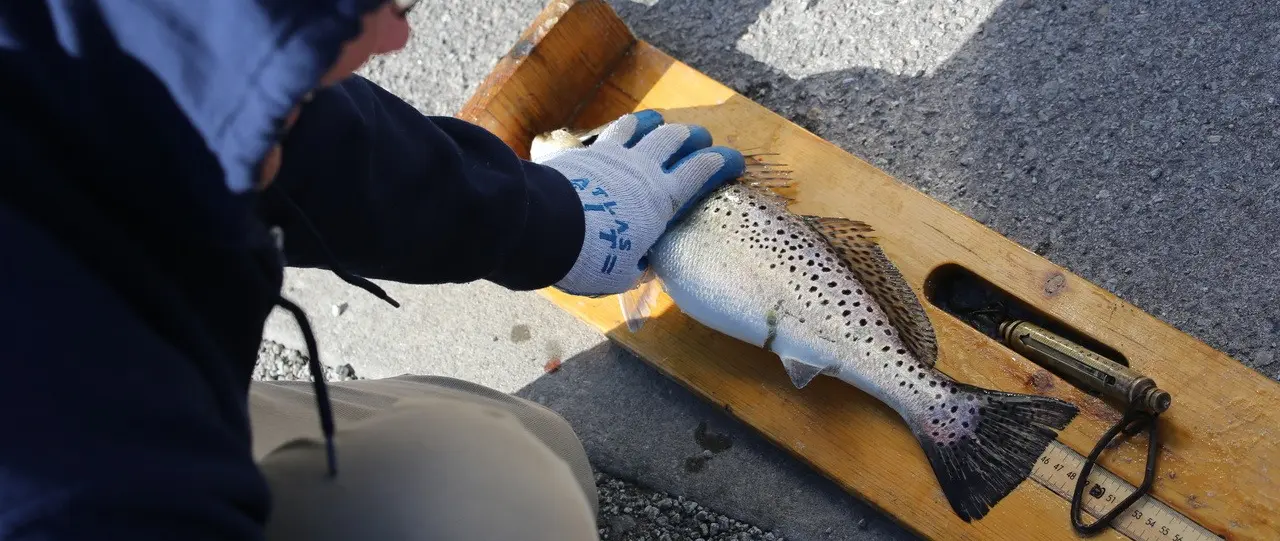
The Fishing Effort Survey is concerned with fishing activity. NOAA's separate Access Point Angler Intercept Survey obtains information about recreational catches through interactions with anglers at fishing access locations. A person encountering a field interviewer at a dock may therefore be contributing information to a different component of the larger estimation programme from the survey measuring trips.
These distinct sources of information are complementary. Catch information can help describe what happened on sampled outings, whereas an effort estimate helps establish the scale of activity to which observations may relate. Neither should be confused with a requirement for every boat owner to file an individual account of every outing. Operators should consult the relevant survey guidance and any applicable local reporting requirements. A survey used for statistical estimates and a legally mandated reporting system may serve different purposes and have different rules.
Understanding the revised historical series
A second important element of the November release follows NOAA's earlier update of 31 August 2026, when historical estimates from 1981 through 2025 were recalibrated to reflect the revised effort survey method. That work provides a basis for comparing the new estimates with earlier activity on a more consistent methodological footing. It is particularly useful for organisations trying to establish whether a long-term change is apparent.
Without that distinction, an observer might compare a figure produced under one method with a figure produced under another and assume that the numerical difference represents a real change at the water's edge. That interpretation could be misleading. Owners' associations, fishing clubs and marine businesses using official statistics in presentations should identify which version of the data they are using. An old spreadsheet downloaded before the recalibration may not be directly comparable to a new download from the improved series.
Why NOAA provides comparison estimates
The November update also identifies a set of estimates calibrated back to the former survey design. NOAA explains that these are intended to facilitate comparison with existing annual catch limits established using data from before the revised calibration. This is an issue of statistical consistency, not an invitation to select whichever set of numbers produces a preferred conclusion.
For the fishing community, the distinction is valuable because management measures and the data used to evaluate them need to be understood together. A catch allowance cannot necessarily be interpreted as if it had been developed using the revised methodology. The availability of comparison estimates can help explain differences during the transition. When discussing an existing limit or an estimated harvest, identify both the period and the calibration basis. Those details are essential to understanding whether the comparison is meaningful.
Preliminary numbers are not permanent
The Marine Recreational Information Program publishes estimates in stages. Its normal schedule allows time after a sampling period for the information to be compiled and reviewed. The agency classifies wave-level estimates as preliminary until the following year's process of finalisation, and it recognises that even final estimates can be revised when new information supports a change.
That qualification does not make the November information useless. It means that the figures should be interpreted as the latest available assessment, subject to the agency's continuing review. A marine business analysing seasonal activity should record the date of its data download. A fishing association preparing a report should avoid presenting a preliminary figure as an unchangeable result. If the work is updated later, the reporting should explain whether any numerical differences reflect revisions, a new period of activity or the adoption of a different calculation basis.
Quality review and local knowledge
NOAA describes a review process that looks for data errors and unusual developments in estimated catches and effort. Regional offices and fisheries science centres contribute knowledge of local conditions during that review. Such checks are important because statistical estimates can appear surprising for many reasons, and an apparent anomaly may deserve investigation before its meaning is assessed.
A small-boat owner may have useful experience of local conditions, launch facilities or the behaviour of fellow fishermen during a season. Such experience is not a substitute for a structured survey, but it helps explain why local knowledge can complement formal statistical work. For example, anglers may be aware of a prolonged interruption to access or an unusual period of weather. Those circumstances need to be examined alongside the data rather than used to dismiss an estimate simply because it differs from an individual's experience.
Implications for recreational boating businesses
Marine suppliers and service providers have reasons to follow participation trends, even when they are not directly involved in setting fishery rules. Changes in the activity of recreational anglers may affect demand for trailer servicing, maintenance, launch facilities, equipment, fuel and other boating services. A consistent historical data series can be useful background when a business considers investment or changes in its customer base.
Nevertheless, recreational fishing estimates should not be treated as a direct sales forecast. A trip recorded by a survey does not necessarily entail a new boat purchase or use of a particular marina. A change in survey design should not be marketed as evidence of a sudden expansion or contraction of the leisure boat market. Business planning requires additional information, including local operating conditions and the characteristics of the customers a business actually serves.
What it means for individual skippers
The practical obligations of the recreational boat owner remain separate from the estimation methodology. Before fishing, verify the current rules for the intended waters and species, including licensing, retention limits and any reporting obligations. A public statistical release does not itself amend a fishing regulation or authorise a boat to retain additional fish.
Where an angler is invited to participate in an official survey, accurate information is the useful contribution. Keep clear records when appropriate and follow the instructions of the survey involved. A skipper need not become a specialist in statistical modelling to understand the importance of describing trips and catches correctly. The collective picture depends on the quality of the information collected and on methods fit for their purpose, so responsible participation can indirectly support the management of future recreational opportunities.
Following the 2026 estimates
The November posting marks another step in the transition to the improved effort survey. It gives readers access to preliminary information based on the revised method and makes provision for comparisons with existing management limits. The historical recalibration and the comparison estimates should be considered alongside the new numbers whenever longer-term patterns are examined.
For the boating community, the appropriate response is to follow the official release schedule, read the explanatory material accompanying each series and distinguish statistical findings from regulatory decisions. The direct experience of a day afloat and the statistical measurement of recreational fishing serve different purposes. Both can contribute to a better understanding of the activity, provided the limits of each are recognised. NOAA's published updates offer a useful place to follow those developments.
Official source: Read the primary announcement. A field interviewer measures a spotted seatrout. NOAA Fisheries; archive illustration of recreational survey sampling. Photograph used with documented public-domain provenance.