
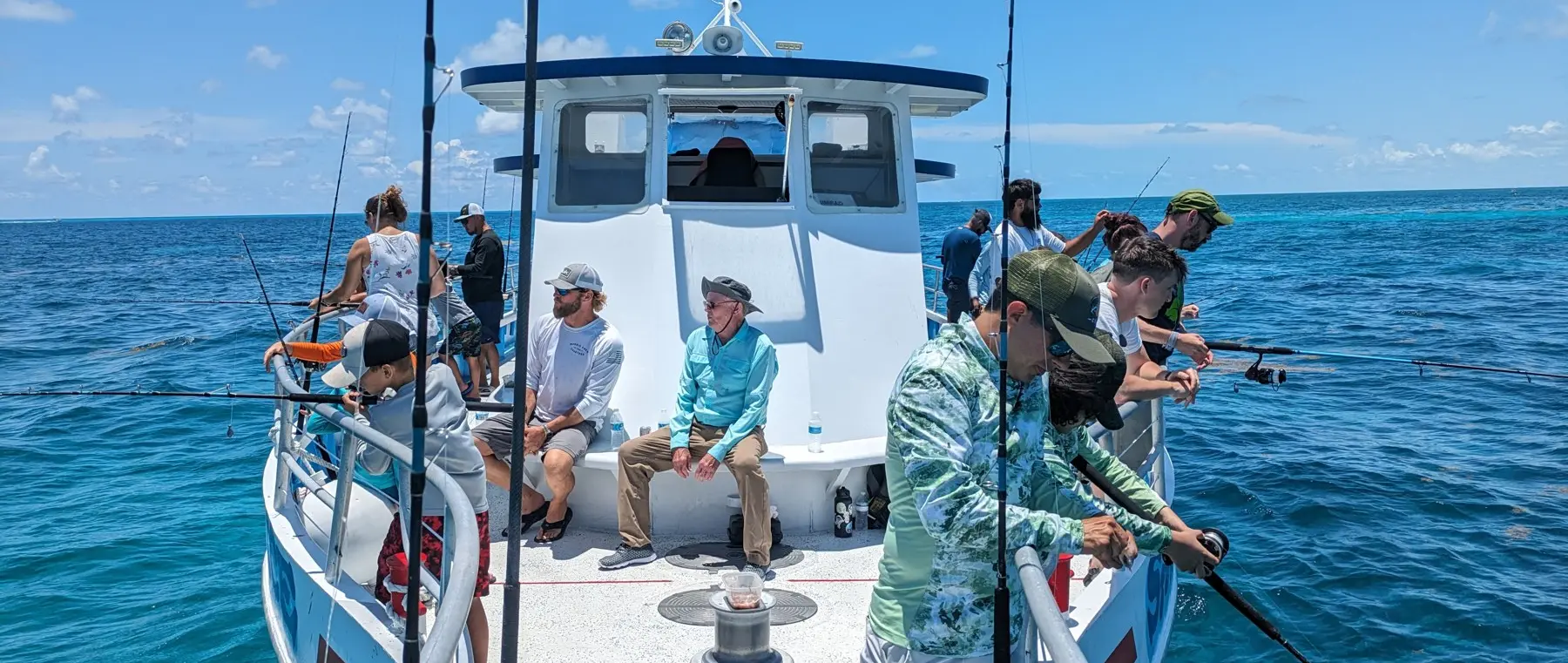
NOAA Fisheries has outlined the next stage of a programme intended to improve how recreational saltwater fishing activity is measured across the United States. In a statement published on 19 November 2026, Laura Grimm, NOAA's Deputy Under Secretary for Oceans and Atmosphere, described work on the Recreational Angler Partnership Improvement Directive, or RAPID, and announced regional workshops and angler listening sessions. The initiative matters to the recreational boating community because estimates of fishing trips and catches inform management decisions that can affect seasons, limits and conservation measures. It is not an announcement of a new bag limit for a particular species, and no one should treat it as a replacement for current federal and state fishing regulations.
Why fishing estimates matter to boat owners
A large part of marine recreational fishing takes place from privately owned boats, charter vessels and small coastal craft. Understanding that activity requires more than counting commercial landings or observing the fishing effort of a few well-known ports. Fisheries managers need estimates that reflect trips made from many different places, seasons and methods. A trailer boat launched at a local ramp may be part of the same broad statistical picture as other recreational activity, even if individual trips are never directly observed. The method used to estimate those journeys therefore matters. Reliable data helps make management decisions more credible, while uncertainty should be explained rather than hidden.
What the RAPID programme is intended to do
NOAA describes RAPID as a partner-driven process for identifying a stronger, more collaborative recreational fisheries data system. It brings together state agencies, regional partners, councils, commissions and NOAA staff to review the strengths and weaknesses of current approaches. The aim is not simply to install one new app or introduce a national requirement for every small-boat owner. The statement refers to workshops and partnership discussions about the appropriate way to gather information. Different regions have different fishing patterns and administrative arrangements, so a successful system must accommodate local conditions while producing statistics that can be interpreted consistently.
The economic case for better understanding fishing
Grimm's official message cites NOAA's 2024 Fisheries Economics of the United States report, which estimates that marine recreational fishing generated $146 billion in sales impacts and supported 685,000 jobs nationally, with $78.9 billion in value-added impacts. These are modelled economic impacts, not a statement that anglers directly spent $146 billion purchasing bait or fuel. The distinction is important. Economic-impact estimates include effects through supply chains and associated activity. They demonstrate why coastal communities pay attention to recreational fishing, but they should not be converted into invented figures for boat ownership or used to predict an individual business's revenue.
Regional spending patterns differ
NOAA identifies the Gulf region as having the highest total recreational fishing trip expenditures, reported at $5.5 billion, followed by the South Atlantic at $3.8 billion and the Mid-Atlantic at $2.2 billion. These regional figures belong to the underlying economic report and should not be confused with the nationwide sales-impact estimate. Different coastal areas support different boat types, species, seasons and travel patterns. An angler planning a short trip from a local harbour faces different costs and conditions from someone travelling a long distance for a specialised fishing holiday. Regional analysis can help authorities recognise those differences rather than adopt a uniform assumption about every trip.
Eight regional planning teams are active
The November announcement says eight regional planning teams have been activated. They include representatives from states, fishery management bodies and NOAA, tasked with preparing workshop agendas relevant to regional fisheries. That approach acknowledges that fishing in New England, the Pacific and the Caribbean is not interchangeable. A practical survey system needs to consider where boats launch, how trips are recorded and whether existing local information can contribute to a wider picture. The precise agenda and outcomes of the meetings had not been established at the time of the announcement. Their significance is the beginning of a structured consultation, rather than a final decision about survey methods.
Workshops start in early January 2027
NOAA has listed a series of meetings for the following year. The Mid-Atlantic workshop is planned in Philadelphia from 5 to 7 January; the South Atlantic meeting in Charleston from 11 to 13 January; and New England in Boston from 20 to 22 January. A West Coast meeting is scheduled for San Diego from 2 to 4 February. These are announced planning dates, which should be checked against current NOAA notices before travelling. A regional meeting may interest fishing associations, public agencies and groups representing small-boat users. It is not a promise that every attendee will be able to change a particular regulation immediately.
Pacific, Caribbean and Gulf meetings follow
The announced sequence continues with a Caribbean workshop in Puerto Rico on 8 and 9 February, a Western Pacific meeting planned for 23 to 25 February with the location still to be confirmed, and a Gulf meeting in New Orleans from 1 to 3 March. A North Pacific workshop is intended for the week beginning 29 March in Anchorage. The spread of locations illustrates the scale of the data question. Fishing opportunities, local institutions and geography vary significantly. Some regions involve islands and remote communities, where survey methods may need particular care. The programme's challenge is to maintain comparability without ignoring those distinctive circumstances.
Anglers are also invited to listening sessions
Grimm's message says anglers can listen in to the regional workshops and that NOAA plans two national listening sessions for comments, questions and feedback. The sessions are scheduled for 3 December 2026 from 5 to 7 p.m. Eastern Time and 9 December from 8 to 10 p.m. Eastern Time. NOAA provides registration links through its original announcement. These sessions could be important to people who feel previous data systems have not adequately reflected their fishing. A useful contribution might describe a specific difficulty in reporting trips, a local launch pattern or the way seasonal activity differs from a standard survey assumption.
Why private boats can be difficult to count
Private recreational fishing does not operate through a single landing system like a large commercial fleet. Boats may launch from marinas, public ramps, private docks and beaches. Some anglers fish frequently while others make only an occasional trip. A survey needs to estimate activity without assuming that every vessel or household behaves in the same way. Methodological decisions can have large consequences when estimates are expanded to a regional population. NOAA's reform effort is therefore relevant to boat owners even when participation in a particular survey is voluntary. The reliability of the wider estimate depends on how well real behaviour is represented.
The relationship with earlier survey improvements
The November statement follows work by NOAA to update parts of its recreational fishing survey methods. Changes to sampling and calibration can affect estimated trip counts and catches, making communication especially important. A new estimate may differ from an older one because the method has changed, not necessarily because the number of fish in the sea has altered abruptly. This distinction can be difficult for the public to interpret. A careful management programme should explain both the estimate and the uncertainty behind it. RAPID is presented as a process to improve collaboration and confidence, not as proof that every historical disagreement has already been resolved.
Fisheries conservation is part of the rationale
The message connects the initiative with sustainable fishing and science-based stock management. Grimm notes NOAA's reported 2025 Status of Stocks result that 96 per cent of assessed US fish stocks were not subject to overfishing, while also mentioning species removed from an overfishing list during the year. Such statements require precise wording: the agency's reported measure concerns stocks assessed under its framework, not a claim that all fish populations worldwide are healthy or that overfishing has disappeared. Good data helps authorities weigh conservation needs alongside access, but management decisions still involve laws, scientific assessments and regional consultation beyond the RAPID workshops.
A distinction between data and fishing rules
An article about data reform must not be mistaken for an announcement that fishing seasons, bag limits or size limits have changed. The regulations governing a particular species may depend on location, jurisdiction and the date of the trip. Anglers should consult current official notices before departing, including any emergency closures or amendments. This is especially important when a journey crosses state and federal boundaries. The statistical programme described in NOAA's release concerns the evidence used in future decisions. It does not authorise fishing in a closed area or create a personal exemption for anyone who participates in a listening session.
Trust is built through clear explanations
Disagreement over fishing estimates can arise when people compare official numbers with their individual experience. A busy weekend at one ramp may feel inconsistent with a regional estimate, while another location can experience much lighter activity. Both observations may be true without representing the entire area. Survey designers need to explain how samples are selected, how they deal with non-response and how uncertainty is calculated. NOAA's plan to involve regional partners and direct angler feedback is an opportunity to improve understanding, but the quality of the results will depend on actual implementation and transparency. Consultation is a process, not an automatic guarantee of agreement.
What participation could mean for clubs
Fishing clubs and local boating organisations may have useful knowledge about launch patterns, seasonal activity and the difficulties faced by volunteers or casual anglers. The announced workshops could provide an opportunity to identify concerns that a purely national system misses. However, clubs should not assume that membership records represent all recreational fishing in a region. Independent boat owners and visitors may use the same waters without belonging to any association. A well-designed system needs to consider those groups as well. Local knowledge can improve questions and assumptions, but statistical representativeness still requires disciplined methods.
Relevance to leisure boats under 12 metres
The Leisure Boat Guide audience includes small fishing motorboats, open skiffs, trailer boats and other craft that are commonly used for recreational angling. Their owners may care about fishing access, conservation and the health of coastal communities. The data programme has direct relevance to those interests even though it does not announce a new engine, hull or piece of equipment. It also illustrates how decisions affecting time on the water can depend on information collected far from an individual boat. Understanding that relationship gives recreational users a better basis for evaluating future management proposals.
Next steps after November's announcement
NOAA's official statement documents eight regional planning teams, workshops scheduled between January and March 2027, and two listening sessions in December 2026. It also sets out the economic context and broad goals of RAPID. The agency has not claimed that all survey questions are settled or that specific regulatory changes will follow automatically. For boating readers, the useful development is that a major part of recreational fisheries governance is undergoing a documented consultation process. Those interested can read the primary announcement, review registration details and consider whether their experience could contribute information that helps managers describe fishing activity more accurately.
Official source: NOAA Fisheries, Laura Grimm, *Charting the Course on Recreational Fishing Data*, 19 November 2026, https://www.fisheries.noaa.gov/leadership-message/charting-course-recreational-fishing-data-message-noaas-laura-grimm. Official image: Families fishing from a boat in the Florida Keys National Marine Sanctuary, credited to NOAA Fisheries on the agency's source page. Independent editorial interpretation by Leisure Boat Guide.