
American-made boats connect recreation and protected landscapes
The National Marine Manufacturers Association has released a new video summary of on-water Great American Expedition activities held during the summer of 2026. The events brought boatbuilders together with the United States Department of the Interior and other public agencies as part of the country’s 250th-anniversary commemorations.
Instead of focusing on a conventional new-model launch, the programme used recreational boats to visit public waters and protected places. The central message is that safe access to lakes, rivers and coastal environments enables people to experience landscapes that would be difficult to reach by other means.
The association’s 14 October report describes several regional outings involving American manufacturers and federal or local representatives. It is an account of events that have already taken place, not the announcement of an additional nationwide boating event with future public ticket sales.
Michigan and the Potomac supplied different examples
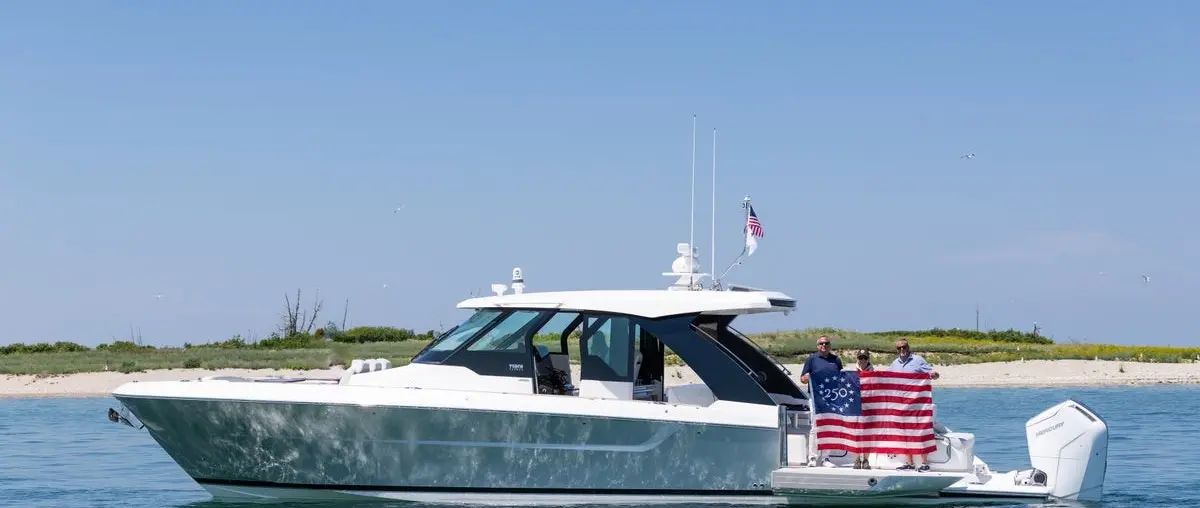
Tiara Yachts hosted a 10 July expedition in northern Michigan, with participants visiting Round Island on Lake Huron and Hat Island on Lake Michigan. The programme included the US Fish and Wildlife Service and local dealer Walstrom Marine among its partners.
Smoker Craft joined a separate 13 July programme on the Potomac River, bringing specially branded boats to visits including Theodore Roosevelt Island and Fort Washington. The trips illustrated how boating can connect visitors with sites of historical and environmental interest near major population centres.
Both settings underline the importance of waterways remaining safe and accessible. Suitable launching facilities, reliable navigation information and clear rules around protected habitats can help visitors enjoy these places without causing unnecessary disturbance.
Sailing and fishing communities also had a role
Smoker Craft returned to Indiana later in July for a Lake Michigan trip associated with Indiana Dunes National Park. The visit also highlighted the regional economic activity generated by long-established boatbuilding firms and the recreational customers they serve.
Viking Yacht Company participated in a New Jersey outing from New Gretna to the Edwin B. Forsythe National Wildlife Refuge. NMMA connected that visit with the part played by boating and fishing users in supporting conservation funding through relevant federal programmes.
Although the vessels and organisations involved differed, the regional events shared a common theme: a recreational boating industry depends on healthy waterways and public access. Conservation and responsible use are therefore linked to the long-term interests of both boat owners and marine businesses.
A report on American marine manufacturing
NMMA describes recreational boating as a largely domestic manufacturing sector, estimating that approximately 95 per cent of boats sold in the United States are built in the country. The association also says small businesses make up the majority of American boatbuilding companies.
The industry body puts annual recreational boating economic impact at around 230 billion dollars and associates the sector with more than 812,000 jobs. Those are industry estimates and should not be interpreted as figures generated by the commemorative expeditions themselves.
For recreational boaters, the direct lesson from the programme is more practical than ceremonial. Preserving usable waterways, maintaining facilities and understanding local environmental responsibilities help ensure that future generations can explore lakes, rivers and coastlines by boat.