
The National Marine Manufacturers Association is encouraging boatbuilders, dealers and exhibitors to revise their approach to consumer marketing ahead of the winter boat-show season. In a November 2026 advisory, its Discover Boating programme outlined five lessons drawn from advertising tests and its Health Score Index. The advice addresses digital visibility, consumer research, platform optimisation, clear product information and the continuing appeal of recreational boating. While the recommendations are aimed at businesses, they have implications for small-boat buyers as well: how easily someone can find accurate information about a model often determines whether they can compare alternatives intelligently before travelling to an exhibition. The advisory also announces a 3 December webinar intended to explore the findings in greater detail.
A different starting point for boat-show promotion
A boat show can introduce a consumer to a new manufacturer or help an existing owner narrow a shortlist, but many visitors have already done substantial research by the time they enter the exhibition hall. They may know which activities they want to try without knowing the technical terms used to describe them. A retailer who provides clear explanations online can make that first contact easier, especially when selling a small fishing boat, runabout, trailerable cruiser or sailing dinghy. Discover Boating argues that marketing should be present while customers are researching as well as during the event itself. That is a strategic recommendation, not proof that a particular advertising budget is appropriate for every business. Manufacturers and dealers must still examine their own customer base and the value of actual enquiries.
Lesson one: keeping the brand visible
The association reports that markets with Discover Boating paid advertising generated at least 22 per cent more website traffic than markets where those advertisements were not present. That comparison suggests that an organised marketing campaign can increase the number of people reaching boating information. It should not be simplified into a promise that every dealer will gain 22 per cent more sales, because website visits are not completed purchases. Differences between markets may also affect measured results, depending on the test design and audience. For smaller businesses, the practical consideration is to make relevant information easy to find before and during a show and then assess the quality of the resulting enquiries. More traffic only creates business value when visitors can identify products and services that suit them.
Lesson two: reach people during active research
Discover Boating also says markets receiving its paid advertising produced more than 80 per cent more digital conversions, described as online actions indicating consumer interest. The distinction between a conversion event and a vessel sale is essential. Someone downloading an information sheet, clicking to a dealer page or requesting an appointment may be a serious prospect, but they may also be at the beginning of a long decision. The programme recommends reaching consumers while they watch reviews, compare brands and explore specifications. Boat dealers could respond by ensuring that key facts are available without an immediate sales call. Correct dimensions, propulsion choices, capacities, warranty terms and likely ownership arrangements are useful information to a potential buyer even if they are not ready to purchase.
Lesson three: make creative materials adaptable
The advisory reports a 28 per cent increase in website visit rates when dynamic creative features were enabled across advertising platforms, naming services such as Meta, TikTok, YouTube and Google. These tools can combine supplied images, video and messages to match different audiences. That can be useful for a brand selling multiple categories, but automated placement should never lead to inaccurate claims about a boat's specifications, image identity or operating limits. A manufacturer's promotional image should correspond to the model being discussed, and a cropped photograph should not imply that a different vessel or equipment arrangement is included in the base price. Supplying verified source material is therefore just as important as choosing a sophisticated distribution platform. Automation cannot make a misleading claim more reliable.
Lesson four: publish information that can be understood
The association highlights changes in online search behaviour, citing an external industry estimate that 68 per cent of Google searches end without a click to another website. That number is attributed in the advisory to Search Engine Land and is not a figure independently produced by the NMMA. The proposed response is to make product specifications, dealer details and frequently asked questions accessible to both consumers and search systems, including AI-powered tools. From the buyer's perspective, this is valuable only when the information is accurate and kept current. A search summary that gives an outdated engine option or wrong beam can be worse than an incomplete answer. Retailers should provide authoritative model pages with clear revision dates and avoid burying essential safety or ownership details in inaccessible promotional brochures.
Lesson five: connect the show to boating itself
Discover Boating says its tracking indicates that participation in boating is holding near pre-pandemic levels while some other leisure activities are still recovering. The release does not provide enough detailed time-series information to translate this statement into a precise forecast for particular models or regions. The practical recommendation is to encourage prospective visitors to imagine realistic days on the water rather than treat a show as a warehouse of products. Hands-on demonstrations, clear explanations and knowledgeable staff can help people understand what ownership involves. A family deciding whether to buy a boat needs more than a maximum-speed figure; storage, launching, learning, maintenance and the type of local water will all influence how much the boat is used.
What the evidence does and does not establish
The figures belong to different measurements: website traffic, online conversion actions and site visit rates under dynamic advertising. They cannot simply be added together or described as one increase in sales. The advisory summarises a Test and Learn programme and its Health Score Index, but the public page does not provide all experimental assumptions, complete market-level results or an independently audited financial return. It is reasonable to report the performance changes exactly as the association states them, while making clear that they reflect its campaigns and methodology. A dealer's own results will depend on advertising cost, message quality, inventory, seasonality and follow-up. Comparing campaign performance requires consistent definitions of visits and conversions before conclusions about effectiveness can be reached.
A challenge for smaller independent dealers
Large manufacturers may be able to supply extensive video libraries and advertising variants, while an independent business can have only a few staff and a small marketing budget. This difference need not prevent useful improvements. Keeping opening details correct, publishing real photographs of stock, stating the features of an advertised model and answering common buyer questions are relatively straightforward tasks that may reduce confusion. A dealer could also invite customers to book a viewing or ask about local instruction, rather than promote an exhibition ticket without any explanation of what visitors will see. Those are editorial examples of good practice; the NMMA announcement does not require dealers to adopt a particular software service or spend a stated amount on digital advertising.
The role of real show experiences
An effective boat-show experience has to bridge the gap between a compelling advertisement and the reality of the craft. Visitors should be able to walk around accessible displays, ask direct questions about hull and propulsion choices and understand what the listed price includes. In the small-boat market, the importance of a trailer, suitable tow vehicle or nearby ramp can change the buying decision entirely. A well-prepared exhibition team should be ready to say when a product is not suitable for a visitor's intended waters or crew. The NMMA's message about practical engagement is best understood through that requirement. Marketing can attract the visitor, but knowledgeable explanations and accurate materials support the quality of the eventual decision.
A December webinar and practical resources
Discover Boating has scheduled a webinar for 3 December, from 11:00 to 11:30 a.m. Eastern Standard Time, to explore the findings and ways businesses might use them. The advisory also directs exhibitors to promotional materials and an experiential tip sheet through the organisation's business-facing website. These resources can provide starting points, but participants should verify registration requirements and the latest schedule directly with the organiser. A webinar about methods is not a certification or guarantee of commercial performance. Businesses should decide which examples translate to their own market and test changes against their actual enquiries and sales process, rather than assuming a national campaign's headline metrics will reproduce themselves at every local boat show.
A more informative marketplace for consumers
The five recommendations collectively reinforce the importance of giving prospective owners useful information before they buy. When good photographs, complete specifications, realistic demonstrations and clear dealer contacts are available, consumers can ask better questions and avoid expensive misunderstandings. When marketing relies on vague promises, even strong advertising numbers may bring visitors who leave uncertain about the product. A small-boat buyer benefits from understanding the full purchase and ownership process, not simply from receiving more advertisements. The best long-term measure for a dealer may therefore be informed customers who return to the water confidently, though the NMMA release does not offer evidence establishing any particular retention effect.
What happens next
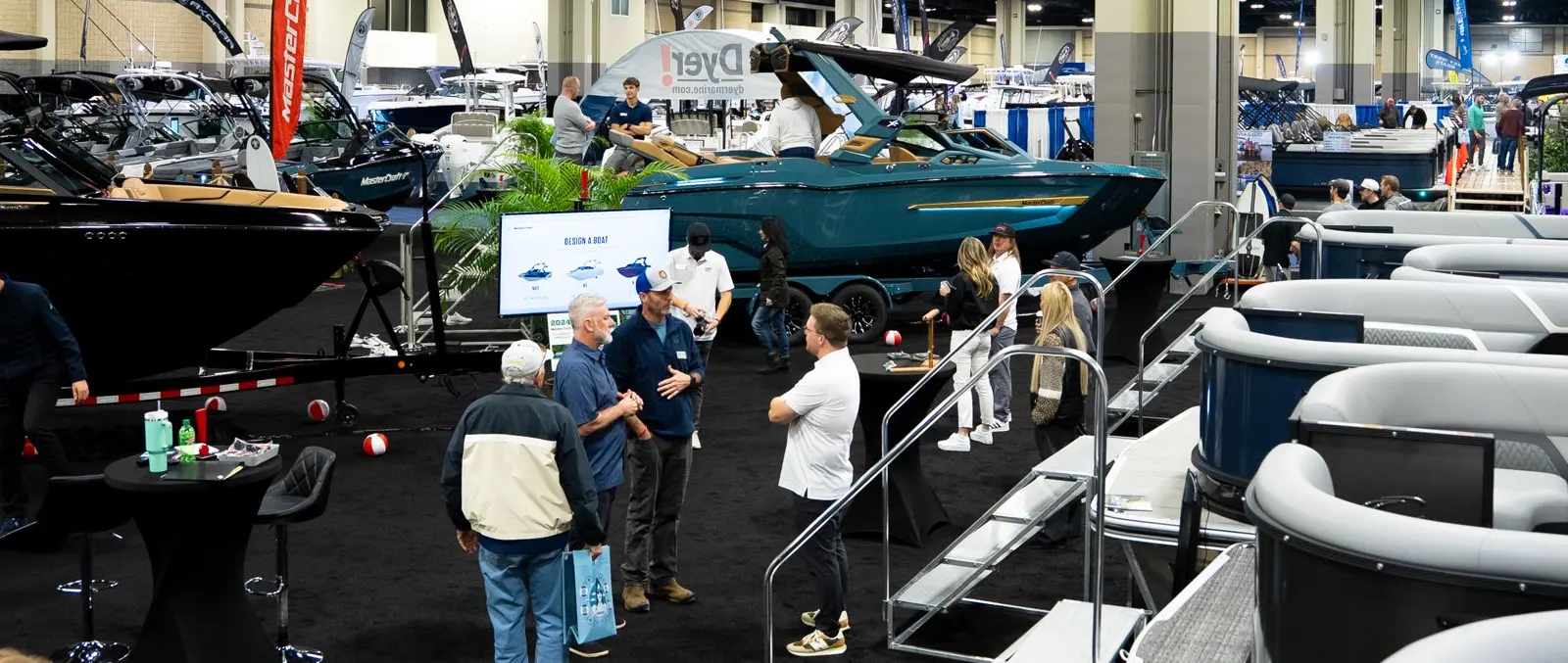
The official November advisory confirms the five themes and the reported performance figures from Discover Boating's marketing work. The next milestone is the 3 December webinar, followed by the approaching winter boat-show season in which exhibitors can apply and evaluate the advice. The accompanying lead photograph is a real boating and show-related image provided with the NMMA's own press release. It is not a chart of the research statistics and does not imply that the pictured business achieved the reported percentages. For Leisure Boat Guide, the news is chiefly about how the small-boat industry is trying to reach informed buyers: better visibility matters, but clear, verifiable product information and the quality of the in-person experience are equally important.
Sources and image attribution
Primary reported announcement: https://www.nmma.org/press/article/25708.
Official photographic provenance: https://www.nmma.org/press/article/25708. Image supplied by the originating organisation, credited in the photograph title; original copyright remains with the rights holder. Official image file. The photographs are documentary or clearly labelled archival illustrations, not evidence of events that have yet to happen.
