
What is happening in Knoxville
The National Marine Manufacturers Association has announced an Engineering Compliance Seminar in Knoxville, Tennessee, for 8–10 December 2026. The association's published programme positions the training around standards, regulatory interpretation and practical manufacturing compliance, with an emphasis on preparations for the 2028 model year. That long lead time can surprise people who see a boat only after it arrives in a showroom. In reality, a new runabout or fishing boat may be engineered, tested, documented and ordered well before its model-year badge appears. For builders, the seminar is a chance to check assumptions early. For buyers, the story explains why changes in certification and construction practice can be underway long before a press launch. The NMMA announcement was issued in late October, so this is a November look ahead to a December event, not a claim that the seminar has already taken place.
Why compliance is not a narrow factory concern
A leisure-boat builder makes decisions about hull form, flotation, engine power, electrical installations, fuel systems, steering and labels long before a craft meets its first owner. Different requirements may apply according to type, size, propulsion and intended market. Engineering teams must decide how to demonstrate that the finished product meets those requirements, while production teams must reproduce the approved design consistently. A small change in an assembly line can have wide consequences: a substitute component might require fresh checks, and a heavier power unit could affect the assumptions used in a capacity assessment. Training is therefore a way to reduce uncertainty, not merely to collect a certificate for a wall. The trade-off is real, too: time spent on documentation, inspection and testing costs money, but failures discovered late can be much more disruptive.
The standards and agencies on the agenda
NMMA's description identifies the United States Coast Guard, American Boat and Yacht Council standards, European CE-related requirements and Transport Canada among the compliance frameworks being addressed. These are not identical or interchangeable systems. Coast Guard recreational-boat rules have a particular US legal basis. ABYC produces industry standards with important commercial and technical influence, while conformity requirements for sales into European markets follow their own structure and obligations. Canadian requirements also need separate consideration. An engineer cannot simply attach four badges to a design and assume the paperwork is complete. A responsible business identifies the product and target destination, works through the applicable requirements and preserves the supporting technical evidence. The seminar's international scope is consequently relevant to smaller manufacturers that export boats as well as larger companies with dedicated compliance departments.
Why model-year planning starts so early
The reference to the 2028 model year is a reminder that a boat's release schedule is driven by far more than marketing. Tooling, purchasing, supplier qualification, prototype testing, dealer orders and training all need coordination. If a standard changes, or an interpretation becomes clearer, a builder may need to revisit a drawing before starting production. That is easier and cheaper than discovering a problem after finished hulls have been shipped. It also helps explain why the specification of a boat at a show may differ from the first illustrated concept. Buyers should ask for the confirmed production specification, not rely on renderings or a prototype label. Dealers in turn need updated information so that what they explain at handover matches the craft actually delivered. A calendar for engineering training can thus influence a future showroom experience in subtle but practical ways.
Inspection findings as a learning resource
One element highlighted in the association's announcement is the discussion of inspection findings. Reviewing common errors allows several manufacturers to learn from problems encountered in particular production settings, without suggesting that every boat on the market has those defects. Inspections can examine whether work on the factory floor reflects an approved design and whether documents and markings stay aligned with the actual product. Good practice is to turn such findings into specific checks: identify the relevant stage of assembly, assign responsibility, record corrective action and confirm that the change persists. Dealers and owners do not generally see those procedures, but they depend on their results. A compliant boat is the outcome of repeated decisions across design, supply and production, rather than a last-minute visual inspection before delivery.
What consumers should ask about certification
Certification is often presented as a simple logo or a sales phrase, even though it has a precise scope. Buyers of smaller powerboats can ask what standards the particular model was built to, which market it was intended for, and whether the fitted engine and equipment are within the manufacturer's approved specifications. A seller should be able to supply the relevant owner's documents and explain any manufacturer warnings. This is particularly important when buying a boat imported from another country or modified with alternative propulsion. A statement that a vessel was suitable for one market when new does not automatically settle its current status in another. Owners should avoid doing their own interpretation of complex legislation based on promotional claims. Where conformity or registration is in doubt, seek advice from the relevant authority or competent marine professional.
The cost and value of specialist training
According to the NMMA event information, participation is priced at $1,000 for members and $1,250 for non-members, before allowing for travel and accommodation. For a small builder, that is a substantial but measurable investment. The decision should be assessed against the business's product range and export plans rather than treated as an automatic purchase. A company producing a handful of craft may benefit from having one engineer bring back structured notes and a list of areas to audit. A higher-volume builder may need to spread the learning across several departments. The important outcome is what changes after attendees return: revised checklists, clearer responsibilities, controlled engineering updates and documented advice to dealers. A training fee does not confer approval on a boat, and attending the seminar is not a substitute for whatever formal compliance process applies.
Why the under-12-metre sector has its own pressures
Smaller recreational boats are often sold in numerous configurations. The same base model might be offered with different outboards, electronics, batteries, seating arrangements and fishing accessories. That flexibility appeals to customers, yet it also increases the number of combinations that have to be assessed. Fast-moving accessory markets can create pressure to adopt equipment before all its installation implications have been considered. Many small-boat builders work with less staff and fewer specialist departments than the manufacturers of larger yachts, making clear processes especially important. A practical engineering culture records which combinations have been reviewed, how changes are approved and what information goes to the owner. The objective is to preserve reliability and safety while still allowing product development and competitive pricing.
The dealer's role between standards and owners
Dealers translate engineering decisions into customer choices. When a purchaser wants a larger engine, an additional livewell or a more elaborate electrical installation, the sales conversation should include any relevant limitations. Fitting equipment after manufacture can be perfectly legitimate, but it should be assessed against structural, electrical, stability and capacity considerations rather than treated as unrestricted personalisation. Clear handover documents protect both customer and seller by identifying the specification supplied and the maintenance guidance that follows it. A dealer who understands the purpose of certification can also explain why a particular upgrade has been declined. That is better than promising every combination to secure an order and expecting the workshop to resolve the details. Industry training ultimately pays off only when accurate knowledge reaches the point of sale.
How to follow the December event responsibly
Interested industry professionals can consult NMMA's official seminar page for the current registration arrangements, eligibility details, programme and contact information. Event dates, fees and travel arrangements should always be confirmed directly before booking. Readers should not interpret an advance seminar announcement as evidence that a new law has already come into effect or that the 2028 model-year requirements have been fully settled. The published agenda provides a framework for education, while individual manufacturers still have to determine the obligations relevant to their products. Leisure Boat Guide will distinguish any subsequent technical announcements from this preview. For now, the news is that an industry organisation is bringing several important compliance subjects together at a defined December training event, with implications extending to the next generation of small recreational boats.
The wider message for boaters
Owners seldom ask which meeting or engineering seminar contributed to a boat's design, and they should not need to. Their reasonable expectation is a well-built craft with consistent instructions, suitable equipment and traceable support. Compliance is one of the systems that makes that possible. For an under-12-metre boat, safe loading, appropriate engine selection, dependable electrical installation and reliable control systems are experienced directly every weekend. When manufacturers understand requirements early and apply them throughout production, the eventual owner benefits without seeing the paperwork behind it. That is why an engineering event has legitimate consumer relevance, provided it is reported accurately as an upcoming industry training seminar rather than dressed up as a product launch or a sweeping regulatory change.
Sources and image credit
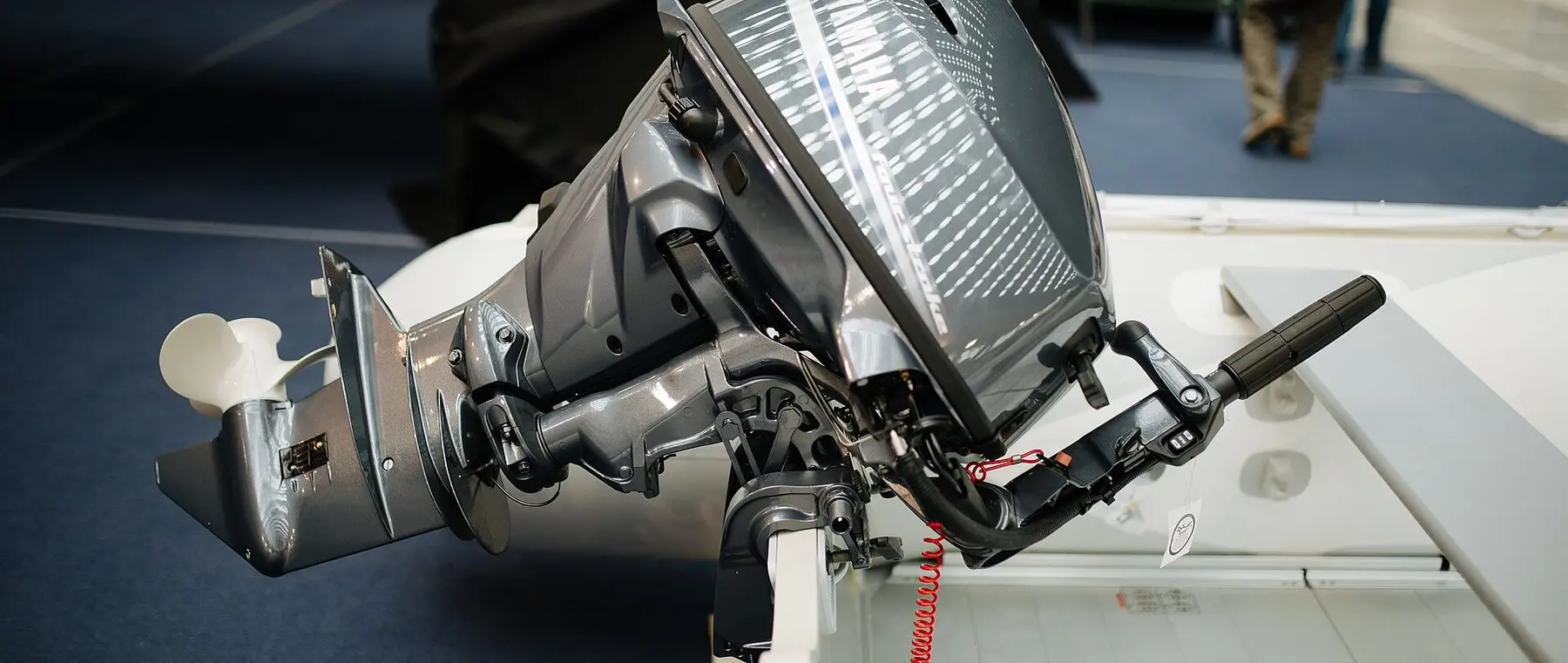
Official reporting: NMMA seminar announcement and event details. Image: Outboard motor at a marine exhibition by Shixart1985, CC BY 2.0; resized without cropping, illustrative only and not taken at the December seminar.
