
The N'Fun 29 moves towards production
Polish boatbuilder N'Fun Yachting has detailed its new N'Fun 29, a narrow-beam performance-oriented sailing boat measuring 9.62 metres overall. Updated information circulated in early November 2026 describes a compact cruiser and day-sailer developed from the manufacturer's earlier N'Fun 30. The builder's published plan is for a first demonstration boat in spring 2027, while construction of initial examples is being prepared. This is a development-stage model, not a vessel that Leisure Boat Guide has sea-tested or confirmed in commercial delivery.
The design falls directly inside the under-twelve-metre recreational sailing market. Its most distinctive features are a maximum beam of just 2.54 metres and a lifting keel intended to make transport and shallow-water access more practical. A compact sailing yacht can provide appealing performance and weekend accommodation without the size of a conventional family cruiser. The trade-off involves limited interior volume, the need to manage stability and load carefully, and dependence on the final build specifications.
A narrow 2.54-metre beam shapes the concept
At 9.62 metres overall length, the N'Fun 29 is long enough for a conventional small-cruiser layout while remaining unusually slender for its length. The manufacturer quotes a 2.54-metre beam, intended to make it easier to transport by road and to fit narrow marina spaces. Whether a vessel is legally trailerable without special permits depends on the rules of the country and the complete transported dimensions, including its trailer and any fittings. The builder's claims must be checked against those local requirements.
The boat's length on deck is listed at 8.77 metres. Its narrow proportions affect the amount of seating and stowage available aboard, even if they may also appeal to sailors seeking a responsive design. Owners who regularly use restricted inland waterways or crowded marinas may value a slender hull. Those planning long periods aboard with several passengers may prefer the additional living space of a wider cruiser. A beam figure describes geometry; it does not automatically establish superior sailing performance.
The lifting keel expands the operating area
The N'Fun 29 is offered with a lifting keel. Published specifications list a short-keel option drawing approximately 0.55 metres with the keel raised and 1.65 metres when lowered. An alternative long-keel arrangement is listed at roughly 0.70 to 1.80 metres. The ability to reduce draught can be useful in shallow harbours and when preparing a boat for transport or storage. A sailor still needs to understand the permitted operating positions and the manufacturer's guidance for safe handling.
A lifting keel is a sophisticated mechanical and structural system rather than a simple convenience. It needs inspection, suitable maintenance and attention to the condition of its lifting mechanism. The extra range of possible anchorages can be attractive, but a skipper must still consider local charted depths, tidal changes and bottom conditions. Raising a keel is not a substitute for navigation. Final suitability will depend on the engineering and instructions supplied with the completed boat.
The sail plan is intended to be lively
The manufacturer's preliminary data give the mainsail an area of approximately 24.9 square metres and the jib 17.8 square metres. Larger off-wind options include an asymmetric spinnaker of about 82 square metres and a zero-type headsail in the published equipment list. These figures point towards a boat intended to offer active sailing rather than purely low-effort motor-assisted cruising. Actual sail choice depends on weather, crew experience and the completed rig specification.
An option sheet cannot tell a sailor how a boat behaves in a gust or in steep water. A powerful sail combination requires a reliable system for reefing, controlling sheets and managing the vessel's balance. Less experienced sailors should assess whether the cockpit and equipment make these tasks accessible, particularly when sailing with a small crew. The design is promising on paper, but its handling should be judged after the first production boat is available for meaningful sea trials.
Displacement is quoted before equipment
Published dry-weight figures range between about 2,200 and 2,500 kilograms. That is a relatively modest displacement for a boat of this overall length, but the final operating weight will depend on the keel and equipment choices, provisions, water, fuel and crew. Dry weight is not the same as loaded displacement. A trailer and tow vehicle must be assessed against the actual transported mass, rather than the most optimistic headline number in a brochure.
Changes in equipment can affect both the total load and the boat's trim. Extra batteries, sails, heavy anchors and comfort installations are not weightless. A designer seeking quick responses and trailerability has to balance optional equipment against those ambitions. Anyone considering long-distance road transport should request the full loaded towing weight and dimensions of the hull, mast and trailer. The manufacturer's intention to make travel easier does not eliminate the owner's obligation to comply with transport regulations.
The new model follows the N'Fun 30
The builder describes the N'Fun 29 as a smaller and more practical development of its earlier N'Fun 30 sailing yacht. The preceding design established a focus on performance, accessible handling and flexible sailing. The new model is intended to bring those qualities into a somewhat narrower platform, with changes that suit constrained berths or regular transport. The manufacturer presents it as a purpose-built new boat rather than a cosmetic relabelling of a previous hull.
Owners evaluating a model before its first public sea trials should ask what has been retained from the older design and which systems are new. A proven component in one boat can still behave differently when the hull, rig or weight distribution changes. Independent reviews of the N'Fun 30 may explain the manufacturer's philosophy, but they cannot substitute for direct testing of the 29. The final specifications could also evolve as construction moves from the design stage into production.
The interior favours straightforward use
The N'Fun 29 is presented with a functional rather than elaborate cruising interior, reflecting its performance-led concept. The boat is intended to support occasional overnight stays and short breaks while preserving room for sailing equipment. Optional facilities can include modest cooking and toilet arrangements, according to early reports. Such flexibility may be attractive to sailors who use the boat mostly for day trips but want the possibility of a weekend aboard.
A compact interior should be viewed in person before ordering. Headroom, berth length, ventilation, secure movement underway and access to lockers can be more important than a floor plan appears to show. Buyers must also understand which equipment is standard and which requires an additional charge. A rendering can illustrate the intended arrangement but cannot establish the feel of a completed space. Comfort is individual, especially when several people are expected to share the boat.
The first sail tests are scheduled for 2027
The developer says preparation of moulds and construction of the initial boats is proceeding, with the first demonstration and test sailing planned for spring 2027. Early prospective customers can discuss configurations, but the advertised launch date remains a plan rather than proof of a delivered yacht. The builder's sales partner gives an indicative starting price of about €111,000 before tax for a ready-to-sail configuration including a diesel engine, and indicates a build period dependent on the order book.
Any quoted price should be checked against the actual specification, taxes, delivery location and currency. Early-bird discounts and other offers may be subject to conditions and change before delivery. The price and schedule do not include a guarantee that a demonstration boat will be available on any particular date. Buyers should obtain written terms identifying when equipment choices are fixed, what changes are possible and how delays are handled.
Transportability needs an engineering check
The builder says the N'Fun 29's dimensions allow it to fit into a standard shipping container, opening possibilities for international transport. That is a noteworthy design ambition for a 9.62-metre yacht, but container transport involves more than comparing the outside beam with an opening. The mast, keel, rudder, hull support and securing arrangements all need suitable planning. Professional lifting and transport providers should assess the entire package before anyone relies on a shipment price.
Road transport raises similar issues. The permit rules, allowable width and weight vary between countries, and a keelboat's height on its trailer can be critical. A design described as easy to transport is not proof that any ordinary passenger car can tow it. Practical owners should seek the final technical drawings and a complete transport plan. The potential benefit of a narrow keelboat is real only when it can be moved safely and legally.
What the new model means for small-boat sailors
The verified announcement is a 9.62-metre performance-oriented sailboat with a 2.54-metre beam, lifting-keel choices and a relatively lightweight concept, with first sailing demonstrations scheduled for 2027. The official builder and dealer materials support these specifications, while several aspects remain provisional until construction and testing are complete. The design is relevant to sailors balancing performance, weekend cruising and manageable marina or transport requirements.
Leisure Boat Guide will describe the N'Fun 29 as an announced model rather than an independently tested production boat. Its practical appeal will become clearer when completed examples are sailing and owners can assess handling, accommodation and maintenance. Anyone interested now should compare the published figures with their usual sailing waters and request confirmed prices and equipment lists from the manufacturer or appointed dealer. The model offers an interesting direction for compact cruising without removing the need for careful buyer evaluation.
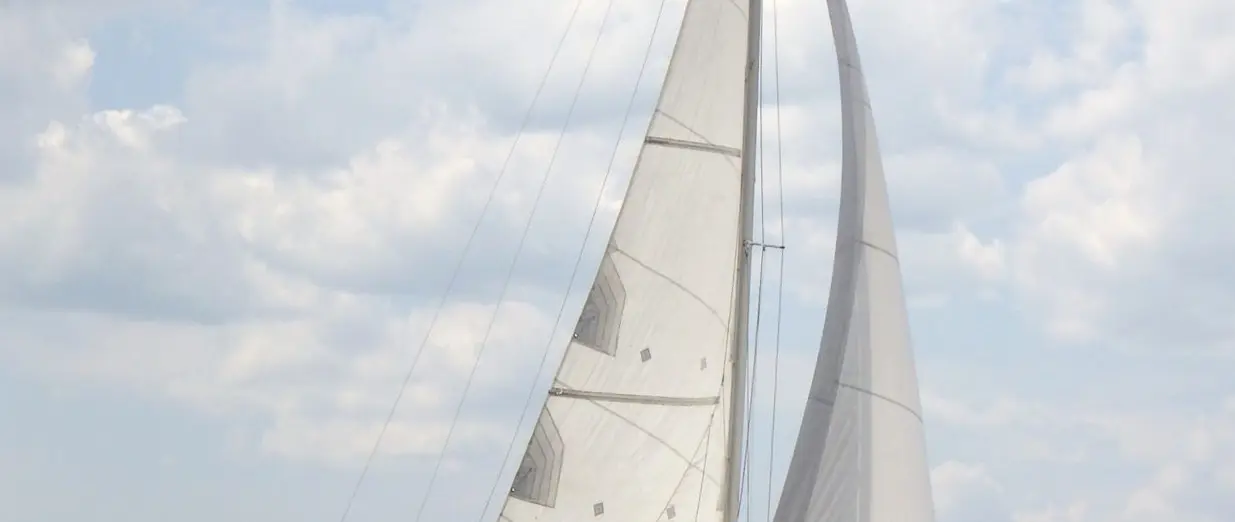
Sources: N'Fun Yachting official 29 model and provisional specifications, Swiss Nautik's dealer update on test sailing and prices and Dutch sailing press November 2026 coverage. Photograph: an earlier Beneteau Oceanis 281 cruiser, by Ahunt, Wikimedia Commons, CC0. This is a contextual small-cruiser photograph, not an image of the N'Fun 29.
