
A new way to document a recreational boat
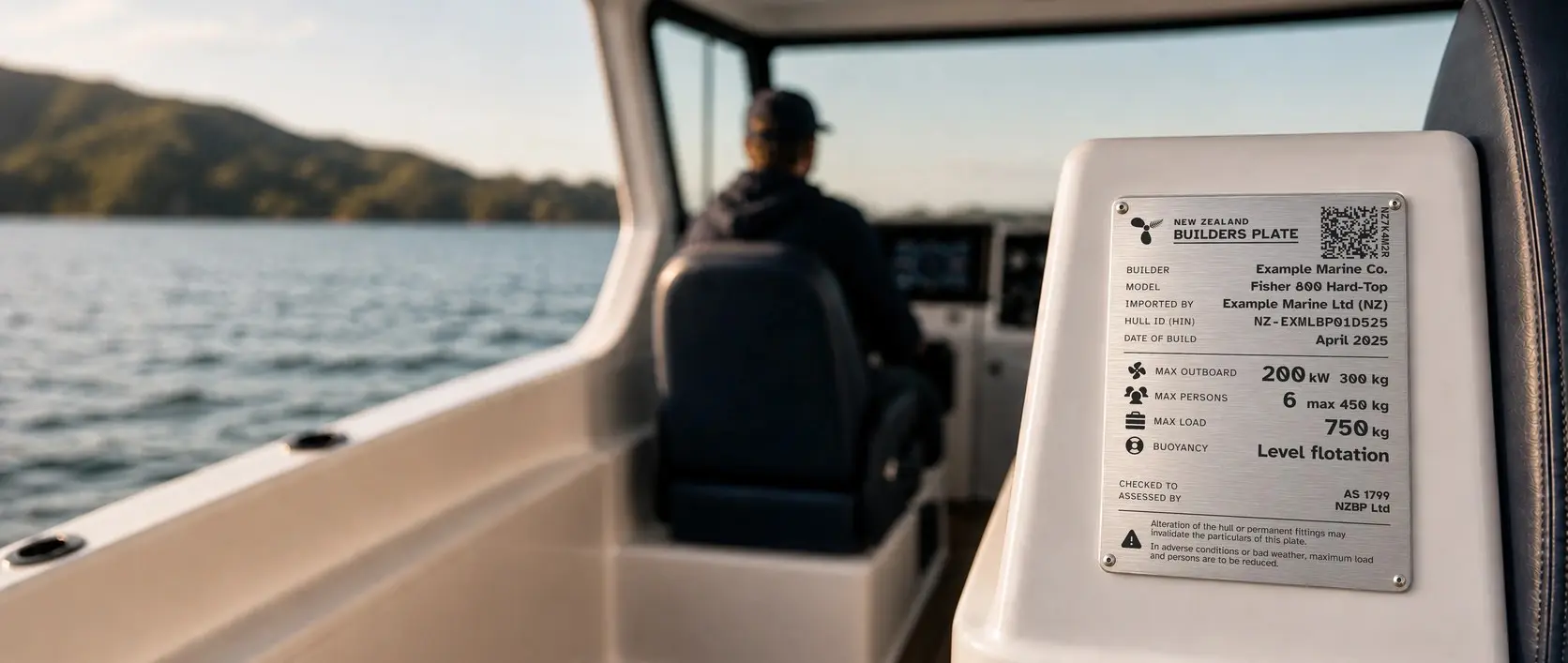
New Zealand boat owners have a new route to documenting the construction standards and carrying limits of their vessels. The New Zealand Builders Plate, or NZBP, has been introduced alongside a linked New Zealand Vessel Register, with the two services publicised for November 2026. The plate is intended to make a boat's identity, assessed standards and declared operating limits visible on board, while a QR code connects those details to a digital record. It applies to participating vessels rather than automatically certifying every boat in the country.
There is an important distinction at the outset: NZBP Limited describes itself as an independent assessing organisation, not a maritime regulator. The scheme is a voluntary conformance pathway, not a newly imposed government licence or an all-boat requirement. Its significance lies in the information it can assemble for buyers, owners, importers and insurers who otherwise may struggle to establish how a boat was built or changed. An assessment record may help a transaction, but it never removes the need to inspect the particular vessel.
What the plate tells a skipper
A builders plate is more than a maker's badge. The NZBP example identifies the builder and importer, a hull identification number, the standard used for assessment and the assessor. It also displays limits for engine power and weight, permitted persons, maximum loading and the type of buoyancy or flotation provided. Where an ISO design category applies, the example also shows it. These details are practical checks before passengers, provisions, fishing gear and fuel are loaded for a passage.
The operator's published sample illustrates a boat checked to AS 1799, but that is an example, not a universal requirement for every participating craft. Assessors can consider standards appropriate to the individual design, including ISO small-craft and relevant other recognised frameworks. A plate is also not a declaration that a boat is safe in any conditions. Operating limits, weather, sea state, maintenance and the competence of the crew remain separate considerations, and an owner should read the vessel's actual record rather than rely on a photograph of a sample plate.
Independent assessment instead of a simple sticker
The scheme describes an evidence-led examination of the vessel's design, construction and equipment by recognised surveyors and naval architects. Checks can address structural strength, stability, buoyancy, operating information and relevant fuel or electrical installations. A plated boat has its key particulars linked to a more detailed record, helping a later buyer see what standard the assessor applied. The precise scope will vary by hull, age, documentation and equipment; one universal inspection checklist cannot substitute for an assessment matched to the craft.
That distinction may be especially useful for imported or older boats. A vessel already carrying a European CE mark, Australian Builders Plate, US NMMA certification or New Zealand's existing CPC plate may have supporting evidence that can be reviewed. According to NZBP, valid prior certificates can provide a shorter assessment route, with extra checks where information is missing or a substantial change has been made. A repower, major modification or unclear build history is therefore a reason to ask for the current evidence, not to assume an original plate still describes the boat accurately.
How the digital vessel record fits in
The connected New Zealand Vessel Register is intended to give each participating boat a searchable digital identity. The NZBP site's sample record can be opened through the QR code on its plate, allowing an owner, prospective purchaser or insurer to compare physical information with a record held online. As service and repair documents are added, the record can become a more useful account of the boat's life. Its value will depend on the quality, completeness and currency of the information supplied.
Owners interested in the digital record do not necessarily have to commission a builders-plate assessment first. The November launch information says boats, engines and trailers can be registered through the related service independently of the NZBP conformance process. That separation matters because listing a boat and independently assessing its construction are different actions. A database entry is not, by itself, evidence that an engine installation, flotation arrangement or maximum-persons limit has been inspected and approved. Buyers should confirm which documents were actually verified and when.
How to apply, and what it does not replace
NZBP currently directs applicants to email the scheme while its online application portal is being developed. Builders, importers and private owners are asked for the boat's type, make, model, year, location and available build documents, drawings, manuals or survey records. The operator then explains the applicable assessment and inspection requirements. Its site says an etched plate and public record follow completion of the review. Costs, timelines and the scope of work for a particular vessel should be confirmed with the operator before an owner commissions the process.
The voluntary service should not be confused with the separate statutory New Zealand Register of Ships administered by Maritime New Zealand under ship-registration legislation. Nor should a builder's plate be treated as a substitute for a marine survey, current insurance evidence or a properly documented transfer of ownership. People purchasing an imported boat should check the hull identity, original compliance documents, modifications and any applicable national legal obligations. The new plate is a source of structured evidence, not a guarantee against defects or an automatic transfer of legal title.
What buyers and owners should check next
For a buyer viewing a used trailerboat, a useful first step is to record the hull identification number and compare it with the plate, seller's paperwork and any accessible NZVR entry. Check whether the listed maximum load and engine arrangement match the boat as it sits today, and whether significant repairs or a repower are documented. If the vessel claims an overseas standard or CPC certification, ask for the certificate and its scope. On a craft without a plate, the absence should not be mistaken for proof that the boat is unlawful.
NZBP's arrival addresses a familiar problem in leisure boating: a clean-looking hull may offer little immediate evidence of how it was engineered, inspected or subsequently modified. The scheme could make those conversations more specific by giving a named assessor, recognised standard and digital history a place alongside the boat. Its real usefulness will emerge as records accumulate and remain accurate. Until then, responsible ownership still starts with a qualified survey when warranted, an honest account of alterations and a skipper who understands the limits of the vessel in hand.