
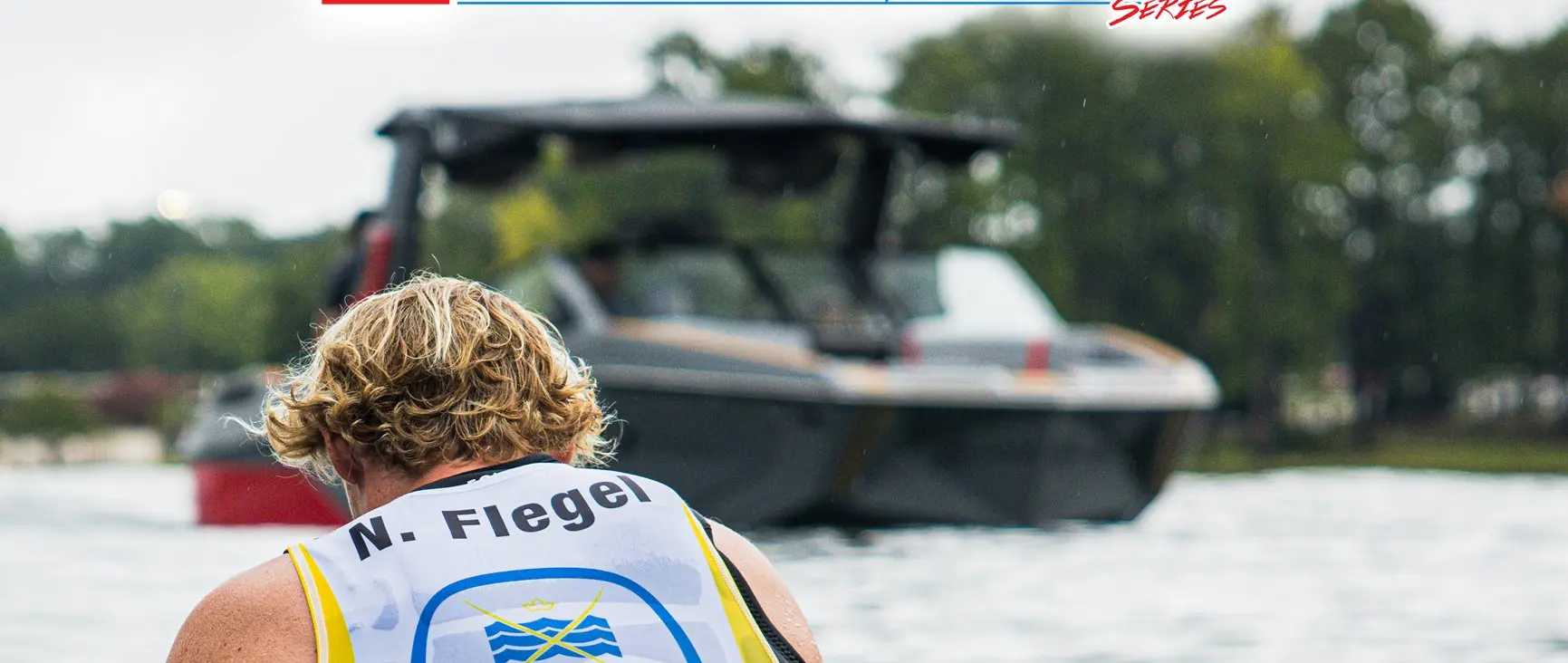
Nautique has announced the 2027 Nautique Wakesurf Series, scheduling four major competitive gatherings from May through August in Japan, Spain and the United States. The calendar opens at Lake Biwa in Japan, continues at Botaski near Madrid, and concludes with events in Boca Raton and Georgia. The manufacturer identifies the Super Air Nautique G23 Paragon as the official towboat and says the series will feature surf, skim and foil disciplines. For Leisure Boat Guide readers, the announcement highlights the international development of a sport built around small powerboats capable of creating a controlled surfable wave. The dates are prospective, and the release does not establish registration, travel arrangements or local conditions for every participant. It is also distinct from Nautique's separate 2027 wakeboarding calendar.
A different discipline from wakeboarding
Wakesurfing generally involves riding the wave produced by a boat, with the rider positioned closer to the vessel than in conventional wakeboarding. A rider may use a short rope to begin a run and then surf without holding it, depending on the conditions and skill level. The sport requires its own equipment, towboat operating practices and waterway consideration. The 2027 programme is not merely a different name for Nautique's Wake Series. Competition formats and judging criteria may differ considerably. Clear distinction helps owners and spectators understand what they are watching and what safety measures apply to each activity.
Lake Biwa opens the international season
The first announced stop is at YANMAR Marina on Lake Biwa in Japan from 14 to 16 May 2027. Lake Biwa is a major inland waterbody with a long relationship to communities and recreation. Hosting a wakesurf competition there places the sport in a different setting from a US coastal boating area. The official announcement does not give a complete local event map or provide public mooring rights for visiting boats. Travellers should obtain that information from the organisers and relevant authorities. The important development is the series opening in Asia, reflecting participation beyond the markets where dedicated wakesurf boats are most commonly promoted.
Spain follows in July
The second event is scheduled at Botaski in Spain on 3–4 July 2027. A European stop extends the season's geographical reach and offers an opportunity for competitors from a different region to participate or watch. Wakesurfing can appeal to existing waterski and wakeboarding communities, although the skills and equipment are not identical. The event announcement is not proof that every local boating centre will offer public lessons during the championship. People interested in trying the sport should locate a provider that uses an appropriate towboat and follows local safety requirements. The competition itself should be treated as a controlled sporting event.
Florida hosts a summer competition
The series then moves to Sunset Cove Amphitheater in Boca Raton, Florida, with dates from 28 to 31 July 2027. The location also appears in Nautique's wider watersports announcements, so fans should check which discipline is taking place on a particular day. An event can host several related activities without making their schedules interchangeable. Florida's summer weather may affect operations, and the release does not guarantee uninterrupted competition or public access under all conditions. Spectators planning a visit should check final timings and admission details, rather than relying on an early calendar alone.
Georgia provides the championship setting
Robin Lake at Callaway Gardens in Pine Mountain, Georgia, is scheduled to host the culminating wakesurf event from 25 to 29 August 2027. An established competition setting can help organisers create consistent conditions, but water and weather remain variable. The purpose of the final gathering is sporting competition, with participation governed by relevant qualification and registration processes. The manufacturer release does not disclose every rider's future place or the precise sequence of runs. Its role is to communicate a framework for the season. The details that determine the spectator experience will come from the event organisers closer to August.
Surf, skim and foil offer different challenges
Nautique describes surf, skim and foil disciplines within the series. Surf-style boards and skim-style boards can encourage different approaches to turns and tricks, while a foil board involves a hydrofoil lifting the rider above the surface at appropriate speed. The equipment demands vary, and a beginner should not assume experience in one category translates directly to another. Foiling in particular can involve a sharp or rigid foil assembly that requires careful handling. Training, suitable supervision and gradual progression are essential. The availability of several divisions makes the championship interesting but also calls for accurate communication of the rules.
The G23 Paragon is the official towboat
The 2027 Wakesurf Series identifies the Super Air Nautique G23 Paragon as its official towboat. Wake-surfing boats are engineered to produce a suitable wave while operating at comparatively low speeds, but their equipment and loading have to be managed carefully. A well-shaped wave is not a guarantee of safe operation or an invitation to exceed certified capacities. The competition's towboat is part of a controlled programme with trained crews. Private owners must follow their own boat's manual and the rules that apply on their waterway. The source does not establish that every production configuration will be identical to the event vessels.
Boat design affects the resulting wave
Hull form, displacement and water movement affect the size and character of a wake. Purpose-built wakesurf boats use systems intended to help control the wave's shape. Such features are valuable when operated correctly, but owners should understand how they influence handling, visibility and loading. The manufacturer release promotes a particular model for competition without supplying a test comparison between all available boats. A prospective buyer should assess a boat's overall suitability, not simply its ability to generate a large wave in promotional footage. Passenger safety, storage and routine operation remain part of ownership.
Not every powerboat is suitable for wakesurfing
Wakesurfing should only be undertaken behind boats specifically suitable for the sport and within the manufacturer’s guidance. Boats with exposed stern propellers or unsuitable propulsion arrangements present serious risks to riders operating close to the hull. A recreational boat capable of towing a wakeboarder is not automatically appropriate for wakesurfing. The safest approach is to use a purpose-designed craft with qualified supervision and follow local regulations. The presence of a dedicated competition towboat in the release underlines that equipment choice matters. Trying to reproduce the sport behind an inappropriate vessel can be dangerous.
Riders and drivers share responsibility
A wakesurf session requires coordination among the helm, rider and any observer required by local law. The operator must maintain awareness of other traffic and be prepared to respond immediately when the rider falls. The rider should understand signals and remain within an area suitable for the activity. Other passengers need to stay in safe positions and avoid distracting the driver. A competition may make the process appear seamless, but that reflects practice and coordination. Recreational owners should establish clear procedures before entering the water, rather than improvising them once a tow has begun.
Ballast and capacity have to be managed
Dedicated surf boats may use ballast to alter displacement and improve wave quality. Ballast adds weight and can change how the vessel accelerates, handles and responds to rough water. It also affects the remaining capacity for passengers and equipment. Owners should follow approved operating limits and should never assume that a competition configuration can be copied safely in ordinary recreational circumstances. Local rules may restrict wake enhancement in shallow, narrow or sensitive waters. A large wave is not a measure of good seamanship when it creates hazards for others.
Shorelines and other boaters matter
Wakes from any powerboat can affect docks, swimmers, kayaks, small sailing boats and vulnerable shorelines. Surfing often requires repeated passes along a chosen stretch of water, increasing the importance of selecting a suitable area. Operators should observe minimum distances, no-wake zones and local environmental restrictions. Some lakes or rivers may prohibit wakesurfing or specify particular operating corridors. The presence of an international competition does not override those rules for private boaters. Responsible recreation means recognising that an enjoyable activity for one group can create problems for people elsewhere on the water.
The series encourages international exchange
Events in Japan, Spain and the United States can bring riders and organisers from different backgrounds together. A competition may support professional development and visibility for the sport, although the announcement does not quantify expected economic benefits or confirm attendance. Travelling riders must organise equipment, accommodation and eligibility according to the event rules. The international schedule may also prompt local clubs to take an interest in the sport, but those programmes would need separate verification. The significance of the calendar is its geographical range and the continuity of a structured competition series.
How series standings may work
The manufacturer describes a points-based series with the lowest result excluded when calculating overall standings. That approach can affect how riders plan travel and manage performance across the season. However, the complete competition rulebook, categories and eligibility details should be consulted before relying on a simplified explanation. Different divisions may have their own scoring requirements. A news article can explain the broad concept without pretending to adjudicate future results. Prospective competitors should use the organiser's current published rules for registration and qualification decisions.
Competitive equipment is not necessary for beginners
The G23 Paragon may be the official towboat, but a person beginning the sport should focus first on safe instruction and appropriate equipment. Learning balance, positioning and signals is more important than purchasing a high-end model immediately. Recognised coaches can help riders understand the distinction between surf and skim approaches and whether foil training is suitable. A beginner should also learn how to enter the water, handle the board and return safely after a run. Competition publicity can inspire participation, but it cannot replace basic skills or knowledge of local conditions.
What the schedule means for boat owners
Owners who enjoy wakesurfing may follow the championship to observe equipment development and riding techniques, while other leisure boaters may be interested in how events manage waterway use. This is directly relevant to under-twelve-metre craft because purpose-built wakesurf boats fall within that general size range. Yet the sport's operational demands are specialised. A boat selected for family fishing or coastal transport will not necessarily be suitable. Owners should assess intended activities before choosing a model and remain realistic about how often they will use dedicated wake-forming features.
Keep the two Nautique calendars separate
The 2027 Wakesurf Series has its own announced opening in Japan and a July stop in Spain. Nautique's Wake Series, which concerns wakeboarding, begins earlier in Melbourne and has a different May competition. Some American venues and late-season dates overlap, but that does not make the events identical. Readers should refer to the correct discipline when arranging tickets or following results. A clear report can acknowledge the relationship between the sports without blending their timelines. That accuracy is particularly useful for families whose members may participate in different categories.
The 2027 dates are a starting point
As of 22 November 2026, the races remain months away. Organisers may refine schedules, registration procedures and spectator access. Weather or operational circumstances can also influence individual events. The official press announcement provides venues and dates, not a guarantee that every activity will proceed unchanged. Travellers should verify the latest details before booking transport or accommodation. Owners planning to arrive by boat must separately investigate marina access and local regulations. A competition venue is not automatically a public launch or berthing facility.
What Nautique announced
Nautique's November 2026 release outlines a four-stop Wakesurf Series: Lake Biwa in Japan, Botaski in Spain, Sunset Cove in Florida and Robin Lake in Georgia, running from May to August 2027. The G23 Paragon will serve as the official towboat, with surf, skim and foil divisions. For Leisure Boat Guide readers, the series illustrates the growth of a specialised small-powerboat activity and the importance of correct equipment, qualified crews and responsible waterway use. The forthcoming calendar is useful news for enthusiasts, but safe recreational wakesurfing remains a matter of suitable boats and local conditions, not simply following competition trends.
Official source: Nautique, first-party press release, November 2026, *Schedule Announced for the 2027 Nautique Wakesurf Series*. Photograph: original Nautique official press media image. Additional boating safety and small-craft analysis by Leisure Boat Guide.