
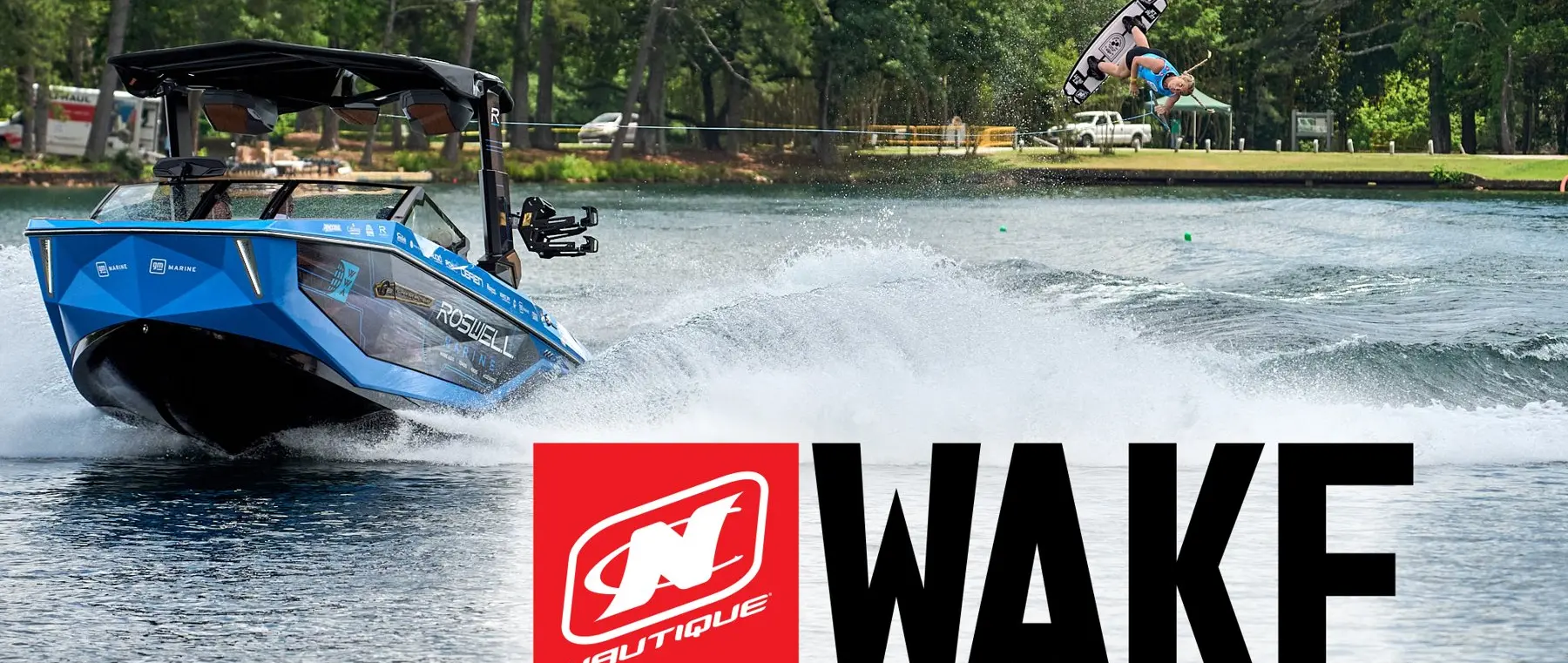
Nautique has set out the 2027 Nautique Wake Series calendar, placing competitive wakeboarding in Australia and the United States across four events between March and August. The manufacturer's announcement identifies Melbourne's Moomba Masters as the opening stop, followed by the Nautique Masters at Callaway Gardens, a national championship in Florida and the Wakeboard World Championships back at Robin Lake in Georgia. The series will again feature a Nautique G23 as the official towboat, continuing a long-running partnership between the manufacturer and the sport. For Leisure Boat Guide readers, the calendar is relevant not just as a competition schedule but as a reminder of the skills, equipment and rules involved in safe recreational wakeboarding behind small powerboats. This is a programme for 2027, with individual event arrangements still subject to organisers' updates.
Four locations create the season
The proposed sequence moves from an early-March event in Australia to a late-May gathering in Georgia, a July competition in South Florida and a late-August world championship. That spread allows competitors and fans to follow an international story through several different waters. It also creates travel and logistical demands for participants, organisers and crews. Dates announced months in advance can change for operational reasons, so a published calendar should not be treated as a guarantee of weather or access at each venue. The official source gives useful planning information, while final registration rules, tickets and local arrangements should be confirmed with the event organisers.
Moomba Masters opens the series in Melbourne
The 2027 Moomba Masters are scheduled for 5–8 March on the Yarra River in Melbourne. A river-based event brings wakeboarding into a setting different from a lake, potentially allowing a wider urban audience to encounter the sport. The venue also presents challenges of coordinating navigation, safety zones and spectators. The announcement does not provide a complete event management plan, so it would be wrong to describe the exact course or public access arrangements without confirmation. Its significance is the start of the competitive year in Australia, demonstrating that wakeboarding is an international discipline rather than an activity confined to North America.
The Nautique Masters returns to Robin Lake
Callaway Gardens' Robin Lake in Pine Mountain, Georgia, is scheduled to host the Nautique Masters from 28 to 30 May 2027. This competition provides another established occasion for high-level watersports. A dedicated lake setting offers a different environment from a public river, with the potential for more controlled competition zones. However, a venue's reputation should not be confused with a guarantee of identical conditions for every rider. Wind, water movement and scheduling can still affect an event. Prospective spectators should check current admission arrangements and competition times before making travel plans.
Boca Raton hosts the July stop
The next announced event is the national championship at Sunset Cove in Boca Raton, Florida, scheduled for 28–31 July 2027. A South Florida setting is likely to attract attention from local powerboat and watersports communities, although eligibility and event access will depend on the organisers. It is important to distinguish a championship event from ordinary recreational towing on nearby waterways. Competition requires controlled procedures and specialist crews, and it does not imply that members of the public can replicate the same riding conditions without appropriate arrangements. The announcement provides the date and venue but not a full operational handbook.
The world championship concludes in Georgia
The 2027 Wakeboard World Championships are scheduled for 25–29 August at Robin Lake, returning the series to Callaway Gardens. A world championship can provide an opportunity for spectators to observe high-level technique, but watching elite athletes should not encourage untrained boaters to attempt demanding manoeuvres. Professional riders work within controlled environments and with experienced towboat operators. The end of the calendar offers a clear progression from an international opening stop to a major concluding event. Final qualification and scheduling details should be obtained from the competition organisers when they are released.
Nautique's G23 remains the towboat reference
Nautique identifies its G23 as the official towboat for the series and describes a partnership extending over fourteen consecutive years. Consistency in towboat equipment can be important for competition fairness because riders experience a predictable wake and operating environment. That does not mean every G23 model or configuration produces identical results in every condition. Ballast, speed, load and water characteristics affect performance. Recreational boaters should not assume that the competition's tow settings are appropriate for ordinary family outings. The relevance of the announcement is the continuing relationship between a manufacturer and an organised sport.
The wake is an intentionally designed element
A wakeboarding boat creates a wake behind the hull that riders use for jumps and other movements. Purpose-built towboats may use ballast and hull features to shape that wake. Such systems demand careful operation because more ballast affects displacement, handling and load. Manufacturer specifications and certified capacities should govern every recreational setup. The sport's equipment has developed to make certain manoeuvres possible, but the presence of sophisticated features does not remove the risk of injury. An operator needs to understand the vessel as a boat first, rather than treat it solely as machinery for creating a large wave.
A skilled driver is part of every performance
The rider may attract most of the attention, but an experienced towboat driver contributes to a safe and consistent session. Maintaining an appropriate speed, turning carefully and responding to a fall require concentration and knowledge of the area. A driver must also account for other boats, swimmers and obstacles. Competition crews follow their event's procedures, while recreational boaters must apply the rules and good practice relevant to their own waters. The official Wake Series announcement is not a driving manual and should not be used as one. Training and experience remain essential at every level.
Observers and communication improve safety
Safe towing depends on clear communication between the driver, rider and any observer required by local regulations. Hand signals or agreed procedures help everyone understand whether to stop, slow down or return to a fallen rider. The operator also needs to maintain a proper lookout and avoid causing dangerous situations for other water users. Local laws determine the precise requirements for observers, mirrors, towing times and safety equipment. A competitive series may make towing look seamless, but much of that success depends on coordination. Recreational groups should practise basic procedures before attempting more demanding sessions.
Wearing suitable equipment is fundamental
Wakeboarders need personal flotation equipment appropriate to their sport and the relevant rules. Helmets and other protective items may be required or advisable depending on the discipline and conditions. Equipment should fit correctly and be inspected for wear. A board that is unsuitable for a rider's weight or ability can make learning harder, while poor bindings may create additional risks. The 2027 announcement does not prescribe a consumer equipment list, so it should not be interpreted as endorsing every product used in publicity photographs. Beginners should seek instruction from recognised providers and start with manageable conditions.
Waterway rules still apply to towboats
Wakeboats share rivers and lakes with anglers, paddlers, small sailing boats and other motorcraft. Their wakes can disturb shorelines, affect smaller vessels and create hazards in confined areas. Operators should respect no-wake zones, minimum distances and local restrictions on towing or ballast use. The fact that a manufacturer sponsors high-level wakeboarding does not imply that generating competition-sized waves is appropriate in every public waterway. A responsible recreational session begins with choosing a location that permits the activity. Good seamanship includes consideration for people who are not taking part.
Competition and recreation have different objectives
Elite wakeboarding rewards athletic performance within a formal judging structure. Family wakeboarding is generally about enjoyment, skill development and shared time on the water. The same boat may be marketed to both audiences, but the operating approach need not be identical. Beginners may learn to rise onto the board and maintain balance before attempting turns, let alone airborne tricks. Progress should be gradual and guided by ability. A competitive calendar can inspire participation without becoming a model for pushing inexperienced riders into manoeuvres beyond their level. The safest session is the one matched to the people aboard.
Organised events can support community learning
Competitions bring together riders, technicians, organisers and fans with knowledge of equipment and the sport's development. Spectators may become interested in local clubs or suitable instruction after seeing the event. However, an international series does not automatically create new beginner programmes in every host city. Anyone inspired to participate should look for recognised coaches and appropriate locations. The calendar offers four opportunities to follow the sport, while the wider recreational community develops through regular teaching and local support. Those activities are related but should not be confused.
Travel and event access need verification
International competitors and spectators face transport, accommodation and equipment arrangements that differ between Australia and the United States. A public announcement of event dates does not include an assured place in the competition, a spectator ticket or insurance coverage. Riders must follow eligibility and qualification rules issued by the organisers. Travellers should verify travel requirements, venue entry and weather contingencies as the events approach. The 2027 schedule is useful for advance planning but not a substitute for official event-specific instructions. Boat owners intending to visit by water also need to establish local access rules rather than assume visitor moorings will be available.
The under-twelve-metre connection
Most recreational wakeboarding takes place behind powerboats that fall within Leisure Boat Guide's under-twelve-metre editorial audience. The 2027 series therefore has direct relevance to both sport participants and owners choosing tow-capable boats. Yet a wakeboat's suitability depends on much more than its length. Capacity, towing arrangements, visibility and power all need consideration. Buying a competition-linked model will not in itself make an owner an expert driver or a novice a skilled rider. The calendar offers a sporting reference point, while everyday safety remains the responsibility of the operator and participants.
A separate calendar from wakesurfing
Nautique also publishes a different 2027 calendar for wakesurfing, a sport with distinct riding techniques and competition formats. It is important not to combine those announcements into one event list. Some dates and locations may overlap, especially where major watersports gatherings share facilities, but this article concerns the Wake Series and wakeboarding programme identified in the manufacturer release. Keeping the disciplines separate avoids confusing riders and spectators about what each event actually offers. A family interested in both sports should consult the appropriate organisers for event-specific details.
What is confirmed for 2027
The official Nautique announcement sets out Moomba Masters in Melbourne on 5–8 March, Nautique Masters in Georgia on 28–30 May, the Florida championship on 28–31 July and the world championship at Robin Lake on 25–29 August 2027. The G23 is identified as the official towboat. Those facts establish the forthcoming calendar, not final tickets, start lists or conditions. For Leisure Boat Guide readers, the news illustrates continued investment in an organised watersport that relies on small powerboats and skilled crews. The series may inspire owners to learn more, but safe recreational towing remains grounded in training, local rules and respect for others on the water.
Official source: Nautique, original manufacturer press announcement, November 2026, *Dates Announced for the 2027 Nautique Wake Series*. Image: original Nautique press photo hosted in the company's official press media system. Safety and small-boat operational analysis by Leisure Boat Guide.