
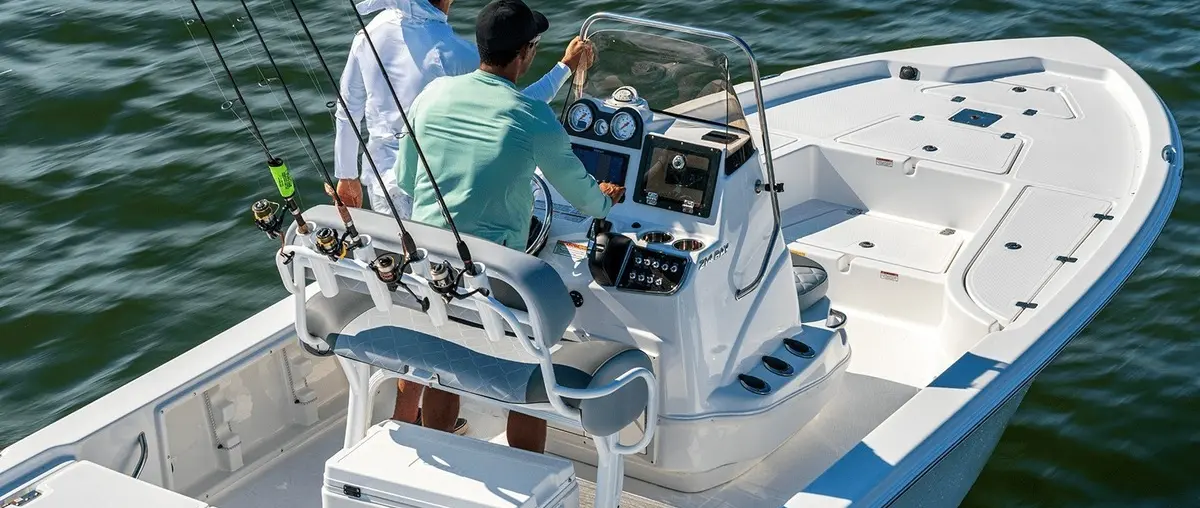
NauticStar's return to boatbuilding in North Carolina has reached a tangible milestone: a 214 Bay centre-console fishing boat has emerged from the restarted operation in Chocowinity. Marine Industry News reported on 20 November that the boat was unveiled and christened at Boater's World Manufacturing Group's facility on 18 November, following the brand's acquisition by Outdoor Network and work to prepare the plant. This is a manufacturing restart story, not the debut of an entirely new hull design. The 214 Bay is a compact 6.45-metre fishing and family boat whose existing manufacturer specifications help explain why it was selected as an emblem of the revived operation.
One completed boat is an important first checkpoint
Restarting a production line involves more than opening a factory gate. A boat passes through material procurement, mould preparation, lamination, assembly, rigging, quality checks and delivery preparation, with many people and suppliers contributing to each stage. Completion of the first unit demonstrates that a working sequence has been established, though it does not establish sustained production volumes, future delivery rates or the long-term economics of the business. The November christening was therefore a milestone to report accurately rather than an occasion to assume a complete recovery. Dealers and prospective owners should look for continued production, service support and clear model availability in the months ahead.
The reported event took place in Chocowinity
The 18 November unveiling was reported at the Boater's World Manufacturing Group facility in Chocowinity, North Carolina. The reported event recognised the team involved in preparing the operation and bringing a boat through the line. Outdoor Network had earlier outlined plans to expand its marine manufacturing activity in North Carolina. Factory location is relevant to owners because regional supply chains and workforce skills influence production continuity, but it does not prove that every component is sourced locally or that the boat's specification differs from earlier NauticStar examples. Manufacturing announcements should distinguish what has physically been completed from investment plans and capacity aspirations.
Why the 214 Bay suits an accessible leisure-boat audience
The 214 Bay is a 21-foot-2-inch, or approximately 6.45-metre, centre-console vessel in NauticStar's Bay Series. This brings the product into a manageable size range for anglers who also want recreational family use. A centre console allows movement around the deck rather than allocating the whole beam to an enclosed cabin, and the type of boat is commonly assessed for shallow-water access, casting space and ease of trailering where local regulations permit. Buyers should not infer trailer weight from dry hull weight alone; a road-ready combination includes engine, fuel, gear, trailer and other loads. The model illustrates how a production restart can address ordinary leisure buyers, not only specialist offshore markets.
Beam is central to the layout proposition
NauticStar specifies a 98-inch beam, equivalent to approximately 2.49 metres, for the 214 Bay. A broad beam relative to overall length provides room for casting platforms, centre-console movement and seating without requiring a longer hull. The builder describes the model as crossing between serious fishing and family outings, with three-across aft jump seats that can fold down when the cockpit is being used differently. Every such layout involves trade-offs. Passengers need secure handholds and useful seating, while anglers need uninterrupted access to tackle and the gunwale. A showroom demonstration should include moving from the bow to the stern with seats deployed and stowed.
A shallow reported draft needs context
The product specification lists approximately 12 inches, or 0.30 metres, of draft, although operating draft varies with weight, engine position and conditions. That figure helps explain the appeal of a bay boat to anglers exploring inshore waters, but it is not permission to proceed through water of the same depth. Under-keel clearance is affected by tide, wave movement, bottom conditions and the submerged propeller or lower unit. A responsible skipper leaves margin and observes local navigation guidance. Prospective owners should also ask how the hull behaves at rest, at slow speed and in the chop typical of their intended waters instead of treating the lowest draft figure as the defining measure of seaworthiness.
The fishing equipment is more than cosmetic
The builder lists two aerated livewells, rod storage at the console and gunwales, built-in tackle storage and insulated fish boxes. The listed forward fish-box volume is 30 US gallons, while the manufacturer's current technical table identifies 13-gallon in-console and 27-gallon aft livewell capacities. These details matter because bait and catch handling can dictate the flow of a fishing day. The position of lids, access to drains and whether the crew can operate every compartment while a passenger is seated are practical considerations. Before ordering, check whether a photographed feature is standard, optional or package dependent and verify the arrangement on the exact model year.
Helm equipment should be inspected on the actual boat
The current manufacturer's specification lists a Simrad NSX9 among highlighted features and describes electrical provisions including dual USB connections. Those details should be checked against the order sheet for the specific boat because equipment packages may change. A chartplotter is useful only when it has the correct charts, the transducers and sensors are installed appropriately, and the driver can read it in direct sunlight. Switch placement, sightlines over the bow, the reach to throttle and wheel, and space for an additional VHF set can matter more during ordinary cruising than the headline screen size. The first completed factory hull does not guarantee that every retail build has identical electronics.
Power and capacity are model limits, not performance promises
NauticStar's 214 Bay specification gives a maximum engine rating of 200 horsepower and fuel capacity of 63 US gallons, or about 238 litres. It lists six persons, with a combined persons-and-weight figure that should be read according to the builder's exact label. An engine's maximum permitted output is not the same as the engine supplied in a base package, and fuel capacity does not establish range. Actual consumption depends on chosen power, speed, trim, loading and conditions. Owners should request performance figures for their intended propulsion package and calculate a realistic reserve. A short loaded sea trial can expose issues that a catalogue speed claim would not.
Construction claims warrant their own questions
The manufacturer's published features describe wood-free composite construction, a vinyl-ester barrier coat and a one-piece moulded fibreglass stringer system, with a limited lifetime hull warranty. Such descriptions explain the intended structural approach but cannot replace a detailed warranty document, maintenance instructions or independent inspection. Buyers should ask how the warranty applies to different owners, what exclusions affect routine wear or accidental damage, and how service claims are handled across regions. A production restart is a particularly sensible time to confirm parts, documentation and dealer channels. No hull-building technique, however well established, eliminates the need to inspect hardware, fittings and accessible bilges.
The restart is about workforce and process
Reporting on the November milestone, Marine Industry News quoted Outdoor Network chairman Tom D'Azevedo explaining that the project required rebuilding and improving the facility, assembling the right team and establishing processes for future manufacturing. Those statements describe the company's ambitions rather than independently measured quality outcomes. In a production environment, quality is demonstrated through repeatability: correct fit, traceable components, documented inspections and consistent final checks from one hull to the next. One finished boat makes those systems visible for the first time, but confidence must be built across successive deliveries. Watch how the builder communicates revisions, availability and owner feedback rather than treating the ceremony as the whole story.
Why a compact bay boat can serve family cruising
A 214 Bay may appeal to buyers who fish early in the morning and bring family aboard later in the day. The builder's three-across aft seating, forward console seat and swim platform with ladder are relevant to that mix. An owner should examine the actual comfort of those positions under way, protection from spray, stowage for personal flotation devices and the ease of recovering a swimmer. The hull's fishing credentials do not remove the obligations of ordinary recreational use. Families should plan shade, drinking water, emergency communications and safe movement for children before deciding that an open fishing cockpit provides all the conveniences they need.
Ownership costs begin before the first trip
A buyer comparing a 214 Bay with another centre-console boat should account for the delivered package rather than a headline hull price. Engine choice, trailer, electronics, batteries, trolling motor preparation, insurance, registration, storage and commissioning can change the total. NauticStar displays pricing and financing examples on its website, but online offers are jurisdiction-specific, time-sensitive and subject to their stated terms. They should not be reported as a universal transaction price. Inshore operating costs also include fuel, filters, anodes, cleaning, maintenance and the occasional replacement of fishing equipment. A realistic annual budget reflects the owner's local water access and the number of days actually spent afloat.
A photograph of the model is not the christened hull
For this report, the accompanying manufacturer photograph depicts an existing NauticStar 214 Bay in the builder's published model gallery. It is an earlier model image and is not presented as documentary photography of the boat completed on 18 November. That distinction avoids giving a misleading impression of firsthand access to the factory event. The manufacturer supplies current technical descriptions of the 214 Bay, while the November production milestone is separately attributed to contemporary reporting. Readers should be able to tell which details are official product specifications, which describe the reported manufacturing event and which are editorial analysis of their practical implications.
What the next milestones will establish
The newly christened 214 Bay brings a familiar recreational model back into the story of a changing American boatbuilding business. The next useful evidence will be continued deliveries, an identifiable dealer and service network, confirmation of model-year equipment, and owner experience with the restarted operation. A prospective buyer can already scrutinise the 214 Bay's 6.45-metre footprint, 2.49-metre beam, shallow-draft design and fishing-focused storage. Those are concrete qualities that can be inspected. Whether the manufacturing restart becomes a durable success depends on repeatable production and customer support over time, not just a single boat's completion.
Original industry sources and image credits
Reporting based on NauticStar official 2027 214 Bay technical product page and older manufacturer model-gallery photographs, Marine Industry News independent 20 November 2026 reporting on 18 November christening at Boater's World Manufacturing Group Chocowinity plant (event not confirmed as a new release on NauticStar official site).
Lead image: NauticStar 214 Bay Marks a Restart at North Carolina Boat Plant — genuine manufacturer press or product photograph. © NauticStar Boats (model photograph, archive 2023). Original supplier image.
