
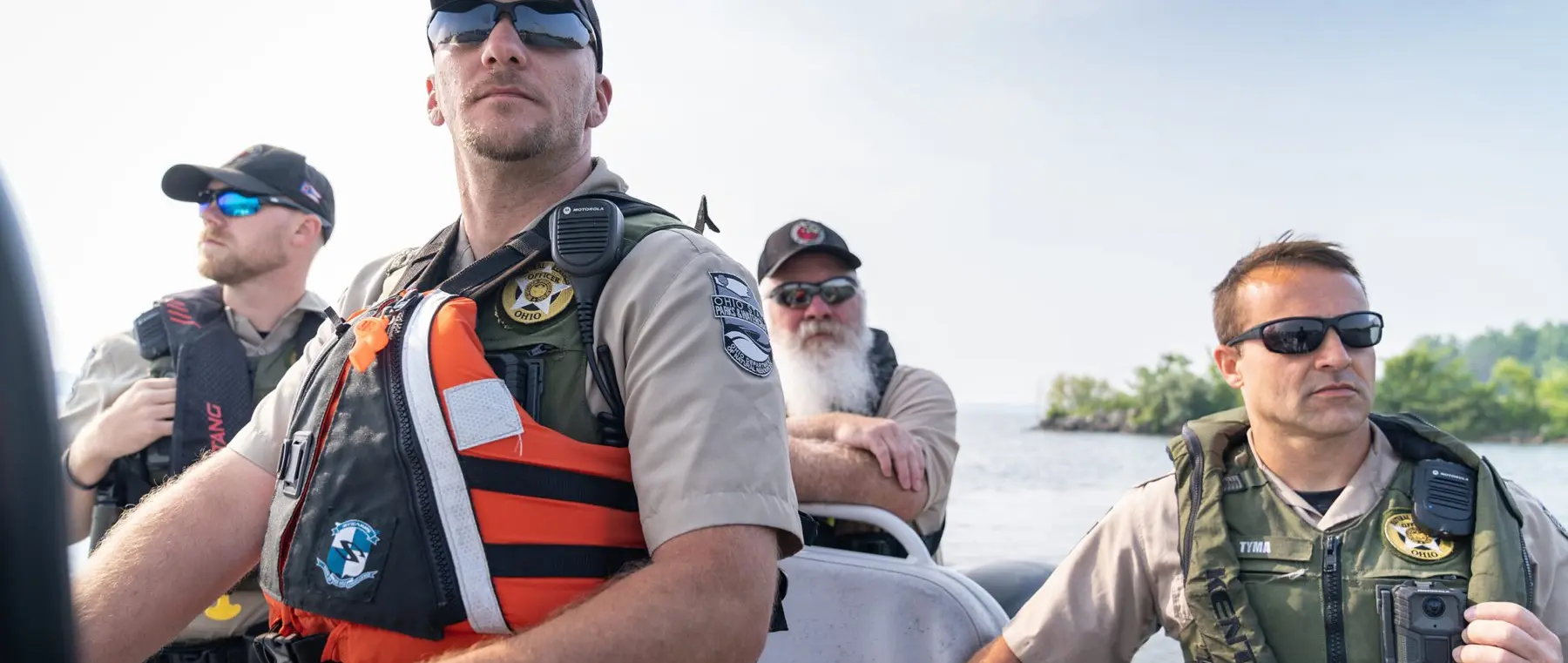
The National Safe Boating Council has announced a new collaboration with The Qualified Captain and At The Helm Training intended to make practical, on-water boating education more accessible across the United States. Announced on 12 November 2026, the initiative brings together organisations involved in recreational boating safety, captain education and hands-on instruction. Its emphasis is not merely on passing an online quiz but on helping boaters develop confidence and judgement while operating a real vessel. For Leisure Boat Guide's under-12-metre audience, the idea addresses a common gap between understanding rules in a classroom and manoeuvring a small powerboat in traffic, wind or unfamiliar marina surroundings. The programme is at a launch stage, so the announcement should not be interpreted as proof that a training place is immediately available in every state.
Why practical experience matters
A recreational boater may learn navigation rules, safety equipment and the principles of weather planning without having handled a boat in confined conditions. Practical training offers an opportunity to connect those concepts with decisions that have to be made at the helm. Approaching a dock, keeping a lookout, controlling speed and communicating with passengers all involve timing and judgement. The new collaboration emphasises the value of experiencing those tasks under instruction. It does not claim that one lesson can eliminate the risks of boating. Competence develops through repeated, thoughtful practice and a realistic understanding of limitations.
Three organisations contribute different roles
The National Safe Boating Council is an established US boating-safety organisation with education and awareness activities. The Qualified Captain is associated with boating education and a community of recreational captains, while At The Helm Training specialises in practical instruction. The collaboration brings these functions together, according to the original announcement. Their involvement does not mean that all existing courses have been replaced or that qualifications issued by different bodies are interchangeable. Prospective students should ask which organisation provides the specific course, who is responsible for instruction and what the resulting completion record actually certifies.
A national network is an ambition and a structure
The release describes a national on-water training network, a term that suggests coordinated access beyond one region or individual instructor. The scope of that access will be shaped by participating instructors, available boats, scheduling and local conditions. It would be misleading to state that the initiative already guarantees identical courses in every coastal county or inland boating area. The useful development is a plan to connect resources and improve the way boaters locate practical training. Interested owners should check the current provider directory and confirm the nearest operating location rather than rely only on the headline.
Classroom and online learning still have a place
Hands-on instruction is most effective when students have a foundation in rules and safety principles. Reading navigation markers, understanding right-of-way situations and recognising risks can make practical sessions more productive. Online material can introduce those subjects, but it does not allow an instructor to observe how a person handles a throttle or responds to a changing situation. The new network should be understood as a complement to appropriate theoretical education, not necessarily a substitute for it. Requirements for boater education cards and licences vary by jurisdiction, and the collaboration announcement does not override state laws.
Docking is a frequent source of anxiety
A boat moving slowly near a berth can still create difficulties if wind, current or nearby traffic are not considered. Many new owners discover that steering response changes with speed and that a vessel cannot always be stopped immediately. A practical course can introduce controlled approaches, safe aborts and communication between the helm and crew. The precise techniques depend on hull, propulsion and conditions, so students should not expect one manoeuvre to work identically on every boat. A competent instructor explains why an action is appropriate as well as demonstrating how to carry it out.
Small boats are sensitive to conditions
A compact powerboat may appear straightforward to operate, yet it can respond noticeably to gusts, passenger movement, propeller effects and waves. Training in a calm environment is valuable, but it should also help students recognise when conditions are beyond their abilities. An instructor can discuss how the boat behaves during turns, low-speed movement and transitions between displacement and planing speeds. These observations require an actual suitable vessel and supervision. The network's announcement does not provide a standard boat model for every class, so owners should ask what training craft will be used and whether instruction on their own boat is available.
Navigation decisions need context
Rules of the road are vital, but safe navigation also requires understanding surroundings. A driver may encounter traffic around a launch ramp, paddlers close to shore, fishing vessels working slowly or larger craft with restricted manoeuvrability. A lesson can show how to maintain lookout and select an appropriate speed while keeping clear of hazards. The objective is not to memorise one hypothetical route; it is to develop habits that can be applied to different areas. Instructors should be willing to discuss the limitations of the lesson and encourage further practice when students move to unfamiliar waters.
Passenger communication is part of handling
An owner is responsible for more than steering. Guests need to know where to sit, how to board, how to wear life jackets and what to do when the vessel is approaching a dock. Passengers may become distracted at moments when a clear deck and predictable movement are most important. Practical instruction can introduce briefings and simple communication routines. Those skills may sound basic, but they contribute to a calmer experience when conditions change. The training-network announcement supports a broad emphasis on safety, though the exact content of every participating course must be confirmed separately.
Emergencies should be discussed before they occur
Boaters need to understand how to react to an engine failure, unexpected weather, a person entering the water or a collision risk. Some scenarios can be rehearsed under controlled conditions, while others require explanation rather than dangerous simulation. A responsible instructor should distinguish safe training exercises from emergency procedures that cannot be replicated realistically in an ordinary lesson. The new collaboration should not be described as guaranteeing complete emergency competence after one session. Students should also know how to maintain equipment, make distress calls and identify the specific hazards of their usual boating area.
Life jackets remain essential
Practical training should reinforce the importance of suitable personal flotation devices and their correct use. Laws differ by jurisdiction and the type or age of the wearer, but owners should not treat minimum legal requirements as the only consideration. Fit, condition and accessibility matter, particularly for children and inexperienced swimmers. An instructor can demonstrate checks and discuss when wearing a jacket is prudent even when it is not legally mandatory. The National Safe Boating Council's wider work includes life-jacket awareness, which provides useful context for the training initiative. A course cannot replace the owner's responsibility to carry and use appropriate safety equipment.
Launch ramps are a learning environment
A busy public ramp can combine pedestrians, tow vehicles, trailers and boats in a confined space. New operators may feel pressure when other users are waiting. Practical instruction can help students prepare before reaching the water, understand the launch sequence and clear the ramp safely. Trailering itself introduces legal and technical responsibilities that may be outside the scope of a basic boat-handling session. Students should confirm whether a course covers trailer operations or only the vessel once afloat. Clear boundaries are important because a person can be comfortable steering yet still need help with safe launching and recovery.
Owners may benefit from training on their own vessel
A course boat may have different controls, visibility, propeller response and handling from the craft a student eventually operates. Instruction on the owner's boat, where offered and insured appropriately, can address those differences. However, the announcement does not guarantee that every instructor will accept every privately owned craft. Boat condition, location, safety equipment and insurance may affect eligibility. Students should ask about these requirements before booking. A manufacturer demonstration is not equivalent to a professional training session, and instruction should be organised around learning rather than merely showing how quickly a boat accelerates.
New owners are not the only potential students
Experienced boaters may also benefit from instruction when changing vessel type, moving to a different waterway or returning after a long period without regular use. A driver accustomed to a small tiller-steered boat may need time to understand a larger outboard craft with unfamiliar controls. Similarly, moving from a quiet lake to a tidal harbour changes the operating environment. The network's value could extend beyond complete beginners if courses are structured for different needs. The release does not publish a complete nationwide syllabus for all skill levels, so travellers should discuss their experience with the provider.
Instructor quality is central
A coordinated directory is useful only if students can understand who is qualified to teach. Training requires technical knowledge, communication skills and sound judgement about conditions. The organisations involved have experience in boating education, but each course should still identify its instructor, intended outcomes and requirements. Students should ask whether teaching is individual or group-based and whether there is an assessment. A certificate of attendance may differ from a qualification recognised for a legal or insurance purpose. Clear information prevents the word certified from creating expectations that a particular course cannot fulfil.
A network may help families learn together
Households often share boating duties, and it is helpful when more than one adult understands the controls and basic procedures. A parent or partner may need to take the helm if the usual driver becomes unwell or distracted. Training can support a more confident distribution of responsibilities, though each person's competency should be evaluated individually. The announcement does not specify a standard family package or minimum age for every course. Families interested in joint learning should ask about age requirements, instructional capacity and whether children can participate in observation or practical exercises.
Insurance and legal recognition require separate checks
Some insurers may ask about experience or qualifications, while states and local authorities may require particular education credentials. It is important not to assume that a newly announced training network automatically satisfies every such requirement. Buyers should consult the relevant authority and insurer before relying on a course for compliance or discounts. A practical lesson can be valuable even if it does not lead to a formally recognised licence. Conversely, holding a legal boating card does not necessarily demonstrate the skill required to handle a particular boat in difficult conditions. The two aspects of competence should be considered together.
Weather and judgement are part of confidence
Confidence at the helm is useful only when grounded in understanding. An overconfident operator may depart in unsafe weather or continue a trip despite deteriorating conditions. Good instruction should encourage conservative decision-making and the willingness to turn back. That can be more important than performing an impressive manoeuvre in ideal circumstances. Learning to read a forecast, identify sheltered alternatives and understand a boat's limits are valuable habits for owners of smaller craft. No training network can guarantee safe weather, so responsibility remains with the person in command.
Availability should be verified locally
The collaboration was announced in November 2026 as a national initiative, but the release alone does not establish a complete live timetable, course prices or immediate capacity in every state. Interested students should contact the partners through their official channels and establish the provider, location, boat type, duration and cost. They should also ask what equipment to bring and how sessions are rescheduled if conditions are unsuitable. A well-designed programme will communicate those practical details clearly. News of a network launch is a starting point for finding training, not a booking confirmation.
What the initiative means for under-12-metre boating
The largest potential benefit may be to people operating everyday recreational motorboats, centre consoles and other craft where owner experience varies widely. Small boats can be approachable without being risk-free, and practical teaching can help new users move beyond assumptions formed through watching videos or riding as passengers. A successful network would make high-quality instruction easier to locate while complementing theory and ongoing experience. Its reach and results remain to be demonstrated as more providers participate. The initiative deserves coverage because practical competence can influence safety for everyone sharing a waterway.
A November step towards more practical education
The National Safe Boating Council, The Qualified Captain and At The Helm Training announced their on-water network on 12 November 2026. The central idea is to connect recreational boaters with practical instruction, building a bridge between knowledge and actual boat handling. The release does not establish universal availability, consistent prices or legal recognition across all jurisdictions. For Leisure Boat Guide readers, the actionable message is to seek qualified instruction that fits the boat and local conditions, and to view ongoing practice as part of safe ownership. A new network can support that process, but cannot replace personal judgement on the water.
Official source: National Safe Boating Council, The Qualified Captain and At The Helm Training, issuer-distributed news release, 12 November 2026, *National On-Water Training Network*. Photo: National Safe Boating Council official training photo library, expressly free for boating and water-safety promotion with NSBC credit. Independent training context by Leisure Boat Guide.