
A marine-data integration focus in Amsterdam
MRS Marine is taking configurable control electronics to METSTRADE in Amsterdam from 17 to 19 November 2026, with a particular emphasis on bringing CAN-based equipment into NMEA 2000 networks. The company is promoting a programmable gateway approach for boatbuilders, original equipment manufacturers and systems integrators who need engines, controllers or sensors to share selected information with compatible marine displays. Rather than assuming every onboard device already uses the same language, the solution is aimed at bridging different data systems through project-specific configuration.
The forthcoming exhibition presentation is relevant to builders because small vessels can carry a surprisingly varied set of electronic systems. An engine may communicate in J1939, a pump or hydraulic controller may use an application-specific CAN message, while the multifunction display expects information framed for NMEA 2000. A suitable gateway can make those systems exchange data without replacing all the underlying hardware. MRS says its new programmable offering will be shown in the Croatian Pavilion, Hall 10, stand 10.209, where visitors can discuss particular architectures with the team.
Why translation between networks matters
CAN is a common underlying communications technology, but devices that use it do not automatically understand one another. Message identifiers, data definitions and application protocols can differ between an engine controller and a navigation display. NMEA 2000 provides a standardised marine network for compatible instruments, yet a proprietary controller may still need its data translated and mapped. MRS positions its gateway as the configurable middle layer that selects the relevant messages and presents them to the onboard system in the format that receiving equipment can use.
The manufacturer says its NMEA 2000 gateway products support communication in both directions between CAN or J1939 equipment and the marine network. That is a more capable proposition than simply repeating a sensor reading on a screen, but it also makes correct configuration important. A builder must identify which data points should be shared, which devices should be allowed to act on them and how errors or missing messages will be handled. MRS explicitly describes the mapping as application-specific, so the product should not be presented as a universal plug-and-play fix for every legacy installation.
Hardware choices for different projects
MRS describes two compact hardware platforms within the gateway offering. The Micro Gateway 32-bit is listed with a 9-to-32-volt operating range, two CAN FD interfaces, two LIN interfaces and two inputs or outputs, with protection options up to IP6K8. The MicroPlex Gateway 3CAN LIN is described with an 8-to-32-volt supply range, three CAN FD interfaces, one LIN interface and protection up to IP68. These are manufacturer-supplied specifications, and a particular installation should be checked against the exact product version and datasheet.
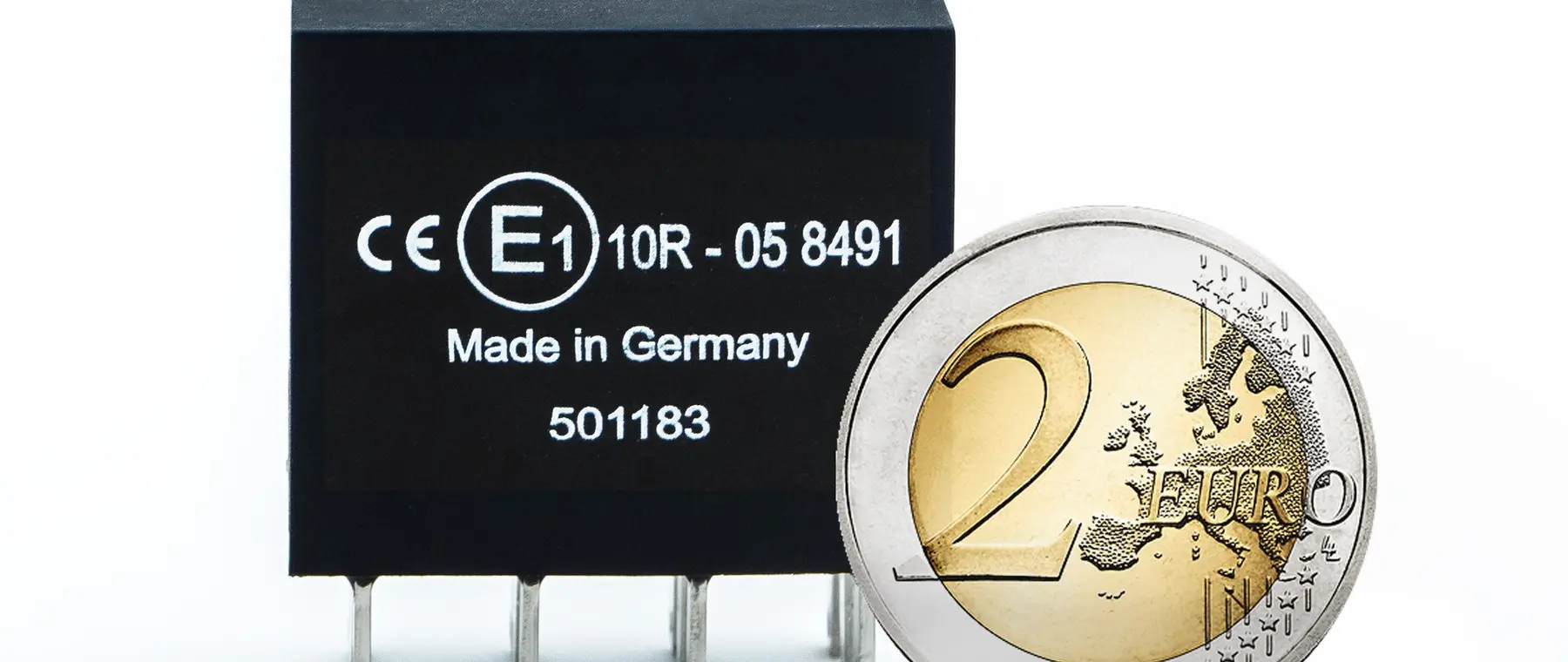
The METSTRADE preview also highlights a compact programmable gateway solution with dimensions of 30 by 30 by 40 millimetres and protection up to IP6K8. The company has not supplied a single statement proving that every hardware variant has those dimensions, so buyers should avoid applying them indiscriminately across the range. Small electronics can be easier to position behind a helm or near machinery, but physical size alone does not settle installation suitability. Cable routing, heat, connectors, supply-voltage tolerance, ingress protection and access for testing will shape the final choice.
Mapping is the essential engineering task
MRS says configuration can be carried out using Applics Studio, with graphical programming or C code depending on the project. The supplier can undertake the work, or an original equipment manufacturer can manage its own configuration. That flexibility is attractive where a builder has an existing set of controllers and wants to retain consistent display behaviour across a production series. It is also useful for a customised boat where a non-standard system needs to communicate a limited number of status or monitoring values to the helm.
Potential application areas include batteries, lighting, hydraulic equipment, DC motor controllers, engines, pumps, tank monitoring and custom sensors. These examples illustrate the breadth of the integration task rather than a promise that every system can be linked without testing. A sensible commissioning plan would identify the desired signals, confirm the network load and check how each display behaves when a controller is disconnected or reports an unexpected value. The gateway is part of an engineered installation, and a critical control function still needs the safeguards required by its application.
What the owner actually gains
For an owner, the visible benefit may be a clearer view of equipment status from familiar multifunction displays rather than a collection of separate panels. A properly configured system can reduce the need to consult multiple proprietary interfaces for routine information. For a builder, common data mapping could simplify a series of boats that use similar engines, pumps or electronic subsystems. None of this means that a gateway improves the underlying mechanical reliability of equipment, and accurate data will still depend on the health of the original sensors and controllers.
Retrofit projects bring an additional layer of judgement because existing networks may have incomplete documentation or devices with limited protocol support. Installers should verify the message definitions, the permitted connection points and the compatibility of current electronics before promising a unified display. The official MRS product page provides hardware information and invites direct discussion about pricing and integration. That is a reminder that each application needs a technical specification, not merely a decision to order a compact box with the right connector.
What to ask at METSTRADE
MRS will be in Hall 10 of RAI Amsterdam during the 17–19 November show, alongside its modular controllers for lighting, pumps, hydraulics, motor drives and digital switching. Visitors evaluating the NMEA 2000 gateway should bring a clear list of the source equipment, expected messages, receiving displays and supply-voltage requirements. It is worth asking which platform fits the application, what configuration work is required and how future software or hardware changes would be supported. For a production yard, documentation and repeatable commissioning can be as important as a compact physical package.
The company's proposition is practical rather than theatrical: translate the relevant data between systems so a boatbuilder can retain specialised controllers and present useful information on a modern marine network. The forthcoming exhibition will let integrators examine hardware variants and the configuration process in person. It remains essential to distinguish the advertised capabilities from a completed, tested installation on a particular boat. With careful mapping and verification, a configurable gateway can be a valuable building block in a more coherent helm and onboard monitoring system.