A small electrical unit with an important job
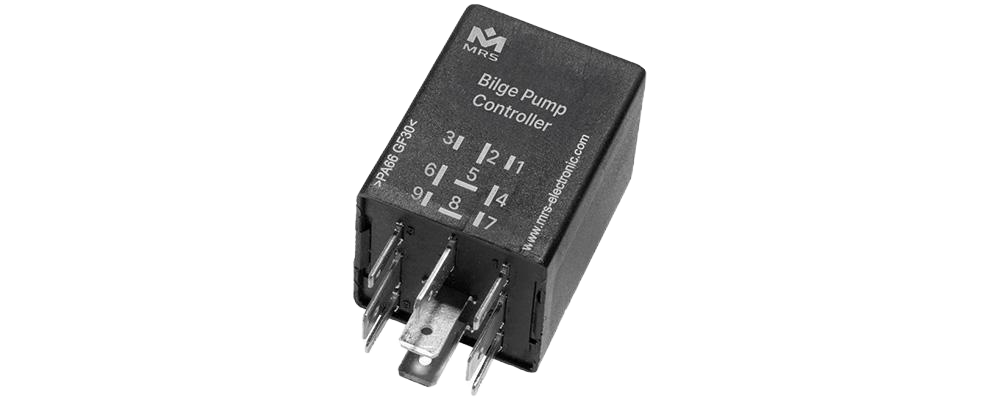
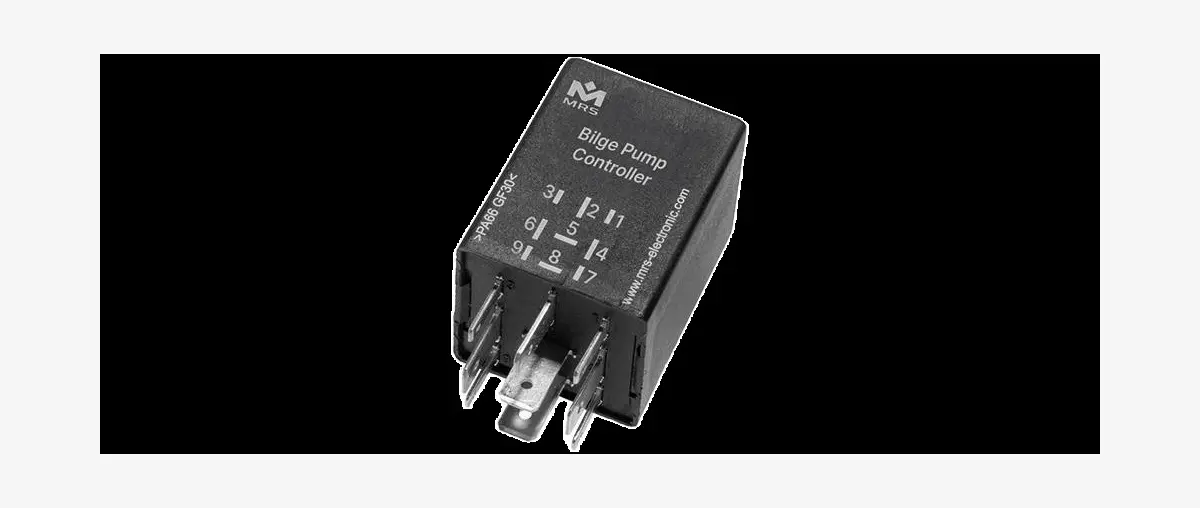
MRS Electronic d.o.o. is listing its Bilge Pump Controller in the current METSTRADE marine equipment directory, describing a low-power control device that operates a bilge pump using signals from the main and alarm float switches. The manufacturer's entry was released on 30 April 2025 and remains part of the catalogue used by the 2026 marine industry, so it should be described as a current equipment option rather than a new November 2026 launch. For owners of recreational boats below 12 metres, dependable bilge pumping is a fundamental maintenance and safety concern. A small leak or a build-up of rainwater can create a problem when a boat is unattended, especially if the pump runs too frequently, a float becomes stuck or the battery supply is depleted. The product promises more structured control through an activation delay, parameter monitoring and intelligent operating modes. These are supplier claims that need to be examined alongside the pump, wiring and actual installation.
What the original product page confirms
The official METSTRADE listing describes a controller that responds to main and alarm float inputs and to a manual/automatic control button. It says the unit remains in a low-power sleep state until activated by a float signal or manual input, and identifies activation delay, parameter monitoring and control modes as features. The supplier links these characteristics to reliable operation and reduced stress on components. The short public entry does not provide the exact current limit, supported pump voltage, waterproofing level or complete wiring diagram. These details are essential for selecting the controller and should be obtained from the maker before any installation. A boat owner should also distinguish between the controller and the actual bilge pump. The device does not remove water by itself and cannot compensate for an undersized, blocked or failed pump.
Why the bilge system deserves attention
Small boats can accumulate water through spray, rain, washdown, condensation or faults in through-hull and plumbing systems. A boat with a self-draining cockpit may still have compartments where water collects below the deck. An automatic bilge pump can help manage some of that water, but it is not a guarantee against sinking. The amount entering the vessel may exceed the pump's capacity, or electrical power may be interrupted. Owners should inspect the entire system, including hoses, non-return arrangements where approved, discharge points and the physical placement of the pump. A controller can provide useful operating logic, but it works only as part of a complete installation whose capacity and reliability suit the vessel. The skipper remains responsible for checking the hull, keeping drains clear and investigating unexplained water accumulation.
The main float and the alarm float
The manufacturer's reference to both main and alarm float inputs suggests a design that distinguishes ordinary pumping demand from a potentially more serious condition. In a typical arrangement, one float may activate the pump at an expected water level while a second provides an alert when water rises further. The exact wiring and response of the MRS controller must follow the approved manual, rather than a generic assumption about the switches. The alarm should be placed where it can warn the operator of rising water and should remain understandable during routine use. A second float may provide an additional indication, but it does not automatically create full redundancy if both switches share wiring or power. Owners should know which faults the system can detect and which problems would remain unnoticed. A good bilge design considers component failure as well as normal operation.
Why an activation delay may be useful
A small boat moves, pitches and rolls, causing water in the bilge to shift around. A float switch can momentarily rise or fall as the water sloshes, potentially causing repeated short starts if the control arrangement responds instantly to every movement. The MRS catalogue identifies an activation delay, which may help manage unnecessary switching under appropriate conditions. The usefulness of this feature depends on how it is configured. A delay should not prevent a pump from responding when water genuinely needs to be removed, particularly if a rapid leak develops. The manufacturer should provide clear limits and explain what happens when the alarm float is activated. A boat owner should not arbitrarily extend a delay in an attempt to reduce noise or battery use. The control must balance normal sloshing behaviour against the need for timely pumping.
Sleep mode and energy demand
A controller that consumes little power while idle may be attractive on a small boat with a modest battery bank. The supplier states that its device stays in sleep mode until a float signal or manual/automatic control input wakes it. This could reduce the controller's own background electrical consumption, but the exact current draw is not given in the short listing. Owners should request measurements and distinguish that consumption from the much larger current typically drawn by a running bilge pump. An automatic system may remain enabled while the boat is unattended, so battery capacity and charging arrangements matter. A low-power controller cannot keep a pump running after the battery becomes depleted. A boat stored on a mooring may need a different energy strategy from one connected to shore power. Reliable pumping begins with an accurate electrical budget.
Parameter monitoring can make faults more visible
The listing mentions parameter monitoring as part of the controller's function. That raises useful questions: does the device track pump current, switch status, operating time or other conditions? The public product summary does not establish every measured parameter, so these features should not be described in more detail without the manufacturer's documentation. If operating information is available, it may help owners notice abnormal patterns, such as a pump cycling more often than expected or running unusually long. Yet monitoring creates value only when alarms and readings can be understood and acted upon. A boat owner should ask which indicators appear locally, whether remote notifications are supported and what happens when a sensor fails. A practical controller should be straightforward enough to assess without specialist software during an urgent situation.
Manual control must be available and clear
Automatic bilge control is convenient, but a skipper may need to operate a pump deliberately during inspections or after finding unusual water. The MRS listing includes a manual/automatic control button, suggesting an operator can interact with the controller directly. The exact function, priority and response of that control should be verified. A manual command may be useful for testing, but it should not encourage running a pump dry beyond its permitted operating limits. Owners should understand whether manual operation bypasses any protective function and how to return the system to automatic mode afterward. A clear labelled switch and visible status indication can reduce the risk of leaving a boat without its intended automatic protection. Good documentation and a routine test procedure are essential to making the controller a dependable part of the vessel.
Choosing a suitable pump and electrical circuit
The controller must be compatible with the chosen bilge pump's voltage and current, as well as its startup characteristics. A pump can draw a higher current during starting or when obstructed, so selecting a controller solely by the nominal running value may be inappropriate. The manufacturer's ratings and wiring instructions should determine the circuit protection. Fuse selection, conductor size and cable routing are particularly important in a wet environment. An owner should not bypass existing protection or connect several pumps to one controller unless that use is approved. If the boat has a separate high-capacity emergency pump, its arrangement may need to remain independent of the primary controller. The system should be designed by someone familiar with marine electrics and the boat's actual bilge layout.
Float-switch placement matters
A float switch is only useful if it can move freely and respond to the intended water level. In a cramped bilge, loose cables, debris or adjacent equipment can prevent movement. A switch mounted at the wrong height may activate too often or allow excessive accumulation before responding. The MRS controller cannot correct a poorly installed float. Owners should inspect the location of both main and alarm inputs and consider how the vessel's trim changes with people, fuel and equipment aboard. Water may collect in several compartments that are not hydraulically connected, requiring a more complex arrangement than one pump and one controller. The boat's builder or a qualified marine technician can help determine the proper layout. The critical lesson is that electrical logic and physical installation need to be designed together.
Hoses, discharge and unwanted backflow
A working pump still needs an unobstructed route to discharge water safely. A hose may kink, a strainer may become clogged or a discharge fitting may be positioned incorrectly. Water that flows back into the bilge after pumping can cause repeated activation and unnecessary energy use. A controller with more sophisticated logic may make cycling easier to manage, but it cannot repair these mechanical problems. The installation should follow the pump maker's guidance on hose diameter, permitted lift and any appropriate check valves. Owners should avoid assuming that adding a non-return valve is always the right solution because some pumps and configurations have restrictions. Routine testing should verify that water actually leaves the boat rather than merely showing that the motor can be heard running.
Alarm behaviour while the boat is unattended
Some small boats are left on a marina berth or mooring for days between visits. An alarm triggered in an empty boat has limited value if nobody nearby can hear or respond to it. The MRS product listing does not establish an integrated cellular alert service, so remote notifications should not be assumed. If the owner wants off-boat monitoring, the complete arrangement must include approved communication hardware and a practical response plan. A phone message does not stop a leak on its own, and network coverage can be unreliable. Neighbours or marina staff should not be assumed to provide continuous emergency supervision. Owners need to know what the controller can do locally, which problems require human intervention and how the boat will be checked during long absences. Electronic monitoring is a supplement to a sound maintenance programme.
Testing a controller in realistic conditions
A commissioning test should establish that the pump starts and stops as intended, that the manual mode operates correctly and that the alarm float triggers the expected warning. The crew should also confirm that the system returns to automatic operation and that wiring remains secure after the test. Using fresh water in a controlled way may be appropriate where the manufacturer permits it; deliberate flooding of the boat is not. The installer should check for unexpected cycling, overheating and errors under normal battery conditions. A written record of the configuration can help future technicians if a fault develops. Owners should repeat simple checks at suitable intervals, particularly after maintenance or replacement of a float switch. Equipment may work correctly on installation day and fail later due to corrosion or debris, making inspection a continuing responsibility.
Maintenance in the presence of salt and grime
Bilge spaces often contain moisture, dust, oil residues or fragments of debris that can affect electrical components. The controller itself should be mounted according to its environmental rating and protected from inappropriate contact with water. The public catalogue does not specify an IP classification, so the owner should request it rather than assume the unit can be submerged. Connectors and terminals should be inspected for corrosion, with repairs carried out using suitable marine methods. The pump inlet and float switches need cleaning according to their respective manufacturers' instructions. A low-energy design may reduce unnecessary electrical consumption, but it does not make the system maintenance-free. A tidy, accessible installation is easier to inspect and less likely to be forgotten until an alarm sounds.
A current catalogue product with an earlier release date
MRS Electronic originally listed its Bilge Pump Controller in April 2025, and the product remains visible in the METSTRADE 2026 catalogue. The factual basis of the report is its documented float-switch inputs, sleep behaviour, activation delay and monitoring concept. Those features can be relevant to under-12-metre boats without being described as an entirely new November invention. Owners should obtain the latest manual before purchasing, since detailed electrical specifications are not included in the short public product entry. A proper comparison with a basic automatic float circuit would consider reliability, available alarms, energy use and the ease of servicing. More features are worthwhile only when they support the owner's actual needs and do not create avoidable complexity in the bilge.
The value of better pump control
The MRS Bilge Pump Controller illustrates how a relatively small electronic unit can influence an important safety-support system aboard a recreational boat. It may help manage float-switch inputs and reduce unnecessary operation, but it cannot overcome poor installation, inadequate pump capacity or a neglected hull. For boats below 12 metres, the strongest reason to consider the device is the possibility of clearer, more deliberate bilge-system behaviour while preserving straightforward manual control. Buyers should focus on verified ratings, independent alarm arrangements where needed and a reliable power supply. A bilge pump may be silent for most of a cruising season, yet it must work when called upon. The best control system is one that makes that essential task predictable, inspectable and easy for the skipper to understand.
Original industry sources and image credits
Reporting based on MRS Electronic d.o.o. first-party Bilge Pump Controller product entry, first released 30 April 2025, current METSTRADE 2026 catalogue.
Lead image: MRS Bilge Pump Controller Adds Float-Switch Logic to Small Boats — manufacturer original product photograph. © MRS Electronic d.o.o.. Original supplier image.