
What the 2026 specification says
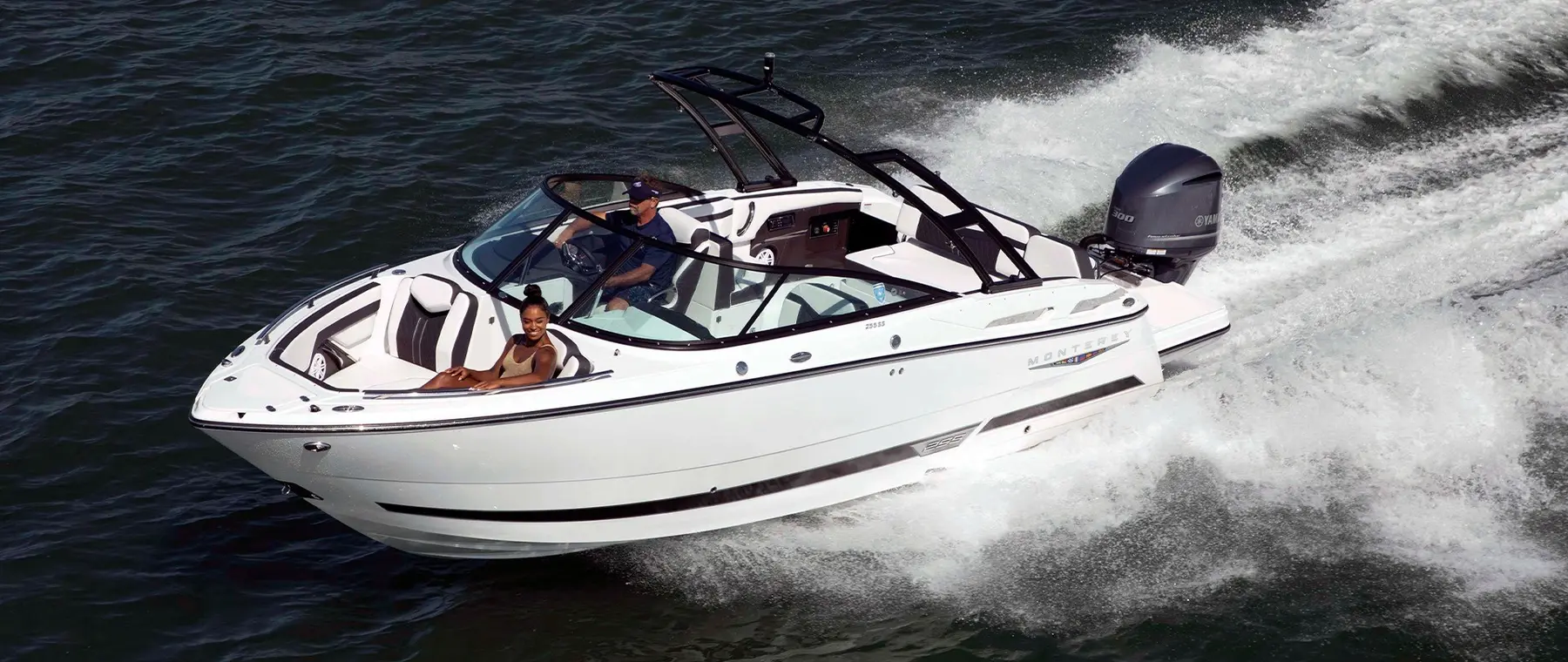
The 2026 Monterey 255SS occupies a familiar but competitive part of the leisure-boat market: the powerful open bowrider that has to please both enthusiastic helmsmen and passengers who simply want a comfortable day on the water. Monterey positions the model within its Super Sports range, putting generous cockpit seating and easy access to the swim platform alongside a sport-oriented hull. Its appeal is built around varied daytime activities rather than overnight accommodation.
The builder lists a length of 7.82 metres when measured with the swim platform and 8.74 metres when the outboard installation is included. That distinction matters when comparing specifications or planning a berth, because quoted lengths can vary according to what is counted. The beam is 2.59 metres, a dimension that gives the seating plan room without making it resemble the deck of a much larger cruiser.
The transom deadrise is 20 degrees and the maximum rated power is 350 horsepower. Those numbers suggest a boat intended for lively day boating, but neither by itself predicts its ride in a particular sea state or the speed of an individual engine package. Practical buyers should assess the boat with the people and equipment they usually carry, not rely on a light-load demonstration or an isolated performance claim.
The social layout from bow to stern
The 255SS's open bow provides forward-facing leisure space for passengers who want a close connection with the water. Deep seating, bolsters and storage keep that area useful for harbour cruising and time at anchor. A walkthrough windscreen also allows people to move between the bow and cockpit without clambering around a console, although the safest seating positions will depend on speed, wave action and conditions.
The aft cockpit's L-shaped lounge can serve different groups over a long day. An aft-facing seat and a removable cooler contribute to the practical leisure setup, while the optional table turns the area into a casual waterside dining space. This is a thoughtful detail: a boat used for family lunches, swimming and sunset rides benefits from a flexible social area more often than from any single technical feature.
Monterey lists a carry-on 48-quart cooler, cockpit drainage, courtesy lights and standard stainless-steel cupholders among its everyday equipment. Such items may sound minor next to engine output, yet they have a large influence on whether owners actually enjoy spontaneous outings. A seating scheme is most successful when people can store personal belongings securely, reach refreshments and move around without trip hazards.
Watersports choices and onboard systems
The model includes an integral swim-platform arrangement and lists a removable ski tow pylon among the available options. Buyers wanting wakeboarding equipment can explore a fold-down tower, while some configurations offer a powered alternative. Those choices should be assessed together with storage height, tow-point geometry and passenger circulation, because an accessory that looks appealing in a showroom still needs to suit an owner's launch ramp, driveway or marina.
The standard bimini provides shade, while optional lighting and upgraded audio systems offer ways to personalise the atmosphere on board. Monterey also lists a cockpit table, anchoring upgrades and a transom shower among its optional items. These should not be mistaken for universal inclusions; the equipment on a stock boat may vary meaningfully from a fully configured display model, and an itemised quotation remains essential.
A 65-US-gallon fuel capacity translates to approximately 246 litres, with fresh and waste tanks listed at around 38 and 42 litres respectively. The builder gives an engine-up draft of approximately 0.41 metres and an engine-down draft near 0.89 metres. For owners visiting shallow coves, the distinction is useful, but charted depths and safe manoeuvring allowances must still be respected rather than treating the minimum draft as an operating target.
Who should look closely at the 255SS
The manufacturer's dry-weight figure is about 2,495 kilograms including engines and batteries but excluding consumables and loose equipment. That weight can increase markedly by the time a family has loaded fuel, water, coolers and watersports gear. If towing is part of the ownership plan, capacity calculations must include the trailer and real travel load, together with local restrictions on width and licensing.
Passenger capacity illustrates the importance of identifying which standard applies. Monterey's published table lists 15 people for the US rating but 13 for the CE rating, figures that should not be interchanged when operating in another market. Comfort is also different from certification: a crowded legal load may be neither relaxing nor appropriate for choppy weather or towing a skier.
The 255SS is most persuasive when judged as a capable social platform with sporting potential. Its generous aft seating, open bow, substantial power allowance and practical swimming access answer the needs of owners who want variety without maintaining a cabin cruiser. The right decision depends on local waterways, storage arrangements and the activities a family enjoys most, not merely on choosing the highest horsepower offered.