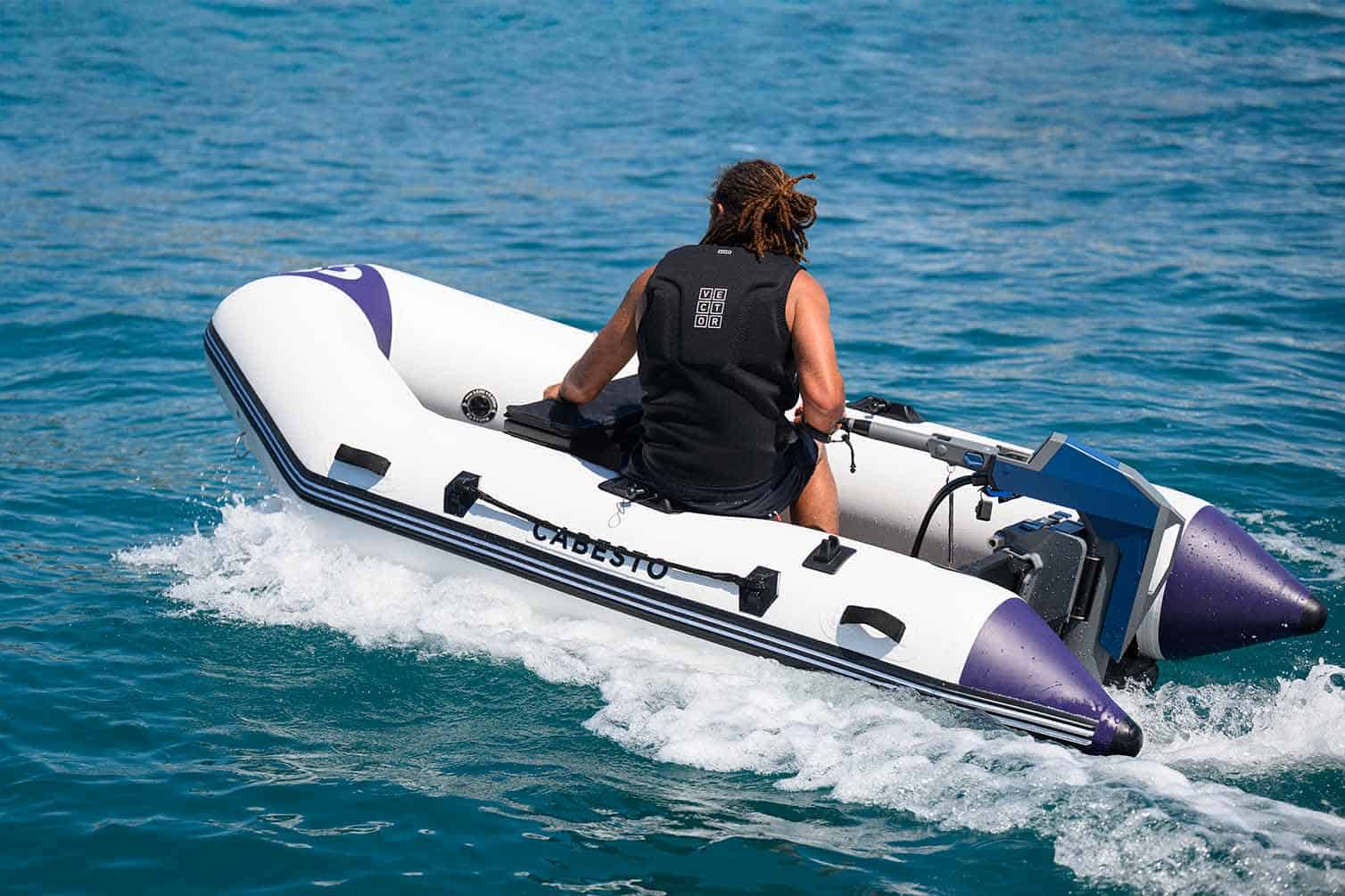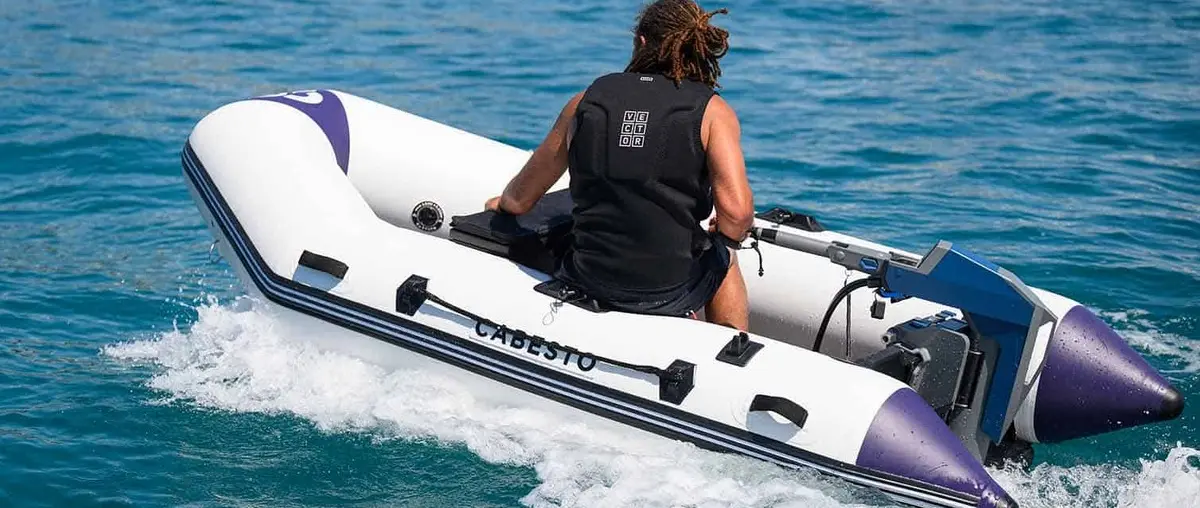
Momentum Electric Marine's M10 is among the electric propulsion systems being promoted in the METSTRADE 2026 equipment marketplace, bringing a nominal ten-kilowatt maximum input-power class to owners of small motorboats, inflatable tenders and compatible sailing cruisers. The manufacturer highlights a folding tiller, integrated colour trip display, single power-and-data connection, quick-release mount and passively cooled motor and controller. This is a current industry product showcase rather than a claim that the M10 made its first-ever commercial debut this November. For leisure-boat owners, the meaningful question is how a compact high-output electric installation compares with conventional outboards over their real routes, loads and charging conditions.
A ten-kilowatt label needs careful interpretation
The company's technical material identifies 10kW as maximum input power. That should not be converted casually into a guaranteed shaft output, a precise petrol-horsepower equivalent or a predictable boat speed. Propeller selection, battery state, controller limits, hull resistance and vessel loading all affect performance on the water. A heavier boat pushing into waves will behave differently from a light inflatable carrying two people on a calm morning. Buyers should ask for test data on a hull and loading arrangement close to their own. Power is only one part of propulsion; usable thrust, energy consumption, practical range and handling matter just as much.
METSTRADE exposes electric propulsion to trade scrutiny
The Amsterdam marine-equipment show, held from 17 to 19 November 2026, is a place where boatbuilders, dealers and system integrators can examine hardware rather than relying entirely on catalogues. Momentum's M10 listing puts its design choices in front of that audience. The presence of an established model at a current exhibition is newsworthy as a sign of ongoing competition and technical development, but it is not proof of a newly announced launch or new independent certification. Visitors should distinguish manufacturer performance claims from observed demonstration results, and they should request the exact data sheet and battery documentation relevant to the current production version.
Portability is more than whether an engine has a handle
Momentum promotes the M10 as a portable alternative in its power category. The European manufacturer's technical figures list approximately 22 kilograms for the outboard and propeller assembly and another six kilograms for the mounting hardware. Those figures are useful only if read with their stated scope; a separate battery, cable and other installation components add to total carried weight. For a tender operator, removing an outboard can improve security and simplify storage, but handling a substantial motor from a rolling dinghy remains physically demanding. The quick-release arrangement therefore merits a practical demonstration that includes lifting, reconnecting and securing the unit with realistic crew numbers.
The folding tiller addresses cramped spaces
The M10's integrated fold-back tiller is designed to make storage and handling less cumbersome. On small RIBs and open boats, the distance between the helm position and passengers is limited, so an extended tiller can obstruct boarding or access to a storage locker. Folding it away may create a clearer route when the engine is not being operated. The owner must still confirm that the tiller locks and operates according to the installation instructions, and that it cannot interfere with steering, engine tilt or neighbouring equipment. A successful design is one that is convenient during preparation as well as responsive while under power.
Adjustable throttle feel is an unusual detail
The exhibitor listing describes a throttle with adjustable resistance and a high-power unlock button. Those features suggest attention to the operator's control experience rather than raw motor output alone. An abrupt throttle movement can be awkward during close-quarters manoeuvres, particularly when an electric motor delivers immediate torque. A deliberately controlled interface may help, but it should not be described as automatically preventing an accident. Skippers still need to learn the behaviour of the specific installation and check the distinction between forward, neutral and reverse controls. Before handing a boat to an unfamiliar operator, give a practical briefing on the throttle's positions and any interlocks.
A visible trip computer can improve decisions
Momentum lists an integrated high-contrast colour display that presents trip and energy information. On an electric outboard, an understandable display is particularly valuable because the operator needs to relate remaining battery energy to distance, wind and operating speed. A displayed range estimate is inherently conditional, not a promise that the boat can travel the number shown regardless of changing load or sea state. A prudent skipper plans with reserve and monitors consumption during the passage. The screen should be readable from the normal steering position and remain legible in bright daylight. Equally important is whether its menu system can be understood without looking away from the water for long.
Battery selection is a system-level purchase
An outboard motor does not define a complete electric propulsion package on its own. The energy store, battery-management system, cabling, isolation devices and charging arrangements determine what owners can actually do between ports. The M10 is part of a broader manufacturer ecosystem, and compatible equipment needs to be identified using up-to-date electrical documentation rather than assumptions about connector appearance. Battery voltage, chemistry, capacity and protective arrangements have to suit the intended installation and applicable standards. A buyer should ask whether an advertised price includes energy storage and mounting hardware. Comparing only the motor unit with a petrol outboard understates the cost and complexity of moving to electric propulsion.
A single combined cable simplifies one part of rigging
Momentum says the M10 uses one combined connection for power and data. A streamlined connector can reduce the clutter around a small transom and may make regular removal easier. However, fewer visible cables do not eliminate the need for proper strain relief, protected terminals and routing clear of moving steering and tilt components. Saltwater exposure and repeated connection cycles make connector condition an important maintenance item. Owners who frequently remove an engine should inspect seals and contact surfaces according to the manual. Good installation practice matters because a convenient connector loses its advantage if a cable can be trapped during a turn or damaged by luggage.
Passive cooling changes the maintenance conversation
The manufacturer describes a fully sealed electronic speed controller and motor with passive seawater cooling rather than a conventional pumped coolant circuit. That design could reduce certain service tasks and components, but the exact heat-transfer arrangement and permitted operating conditions should be verified in the official manual. Passive cooling does not mean that marine growth, dirt or corrosion can be ignored. Operators should understand the manufacturer's advice for shallow water, out-of-water running and storage. A light, quiet outboard still needs mechanical inspection, propeller checks, corrosion prevention and correct electrical maintenance. The absence of petrol servicing is an advantage in some respects, not freedom from all upkeep.
Shaft length and mounting geometry must suit the hull
Momentum's European technical information identifies short, long and extra-long shaft options of about 39, 52 and 64 centimetres respectively. These are installation choices, not interchangeable labels that a purchaser can ignore. A shaft that positions the propeller incorrectly may produce ventilation, drag or handling problems. Transom height, hull form, propeller immersion and the permitted adjustment range all matter. Before purchase, obtain the exact model and shaft specification recommended for the boat rather than ordering according to the nominal size of its old petrol engine. The mount should also be assessed for access, steering clearance and secure restraint when operating in chop.
Real range should be measured at real cruising speeds
Electric boating conversations often revolve around a single headline range, yet energy use varies considerably with speed. A displacement sailboat travelling slowly under auxiliary power may cover useful distances on a given battery, while a heavier tender driven at high output may exhaust the same energy much sooner. The manufacturer's published examples provide a starting point, but owner decisions need loading, sea state and charging assumptions that match the actual route. A useful trial records battery consumption over a representative leg and then repeats at several speeds. Planning should include a margin for headwinds, detours, colder conditions and the possibility that the intended charging point is unavailable.
Installation deserves professional attention
An electric outboard may appear mechanically simpler than a fuelled engine, but a ten-kilowatt system can involve substantial electrical energy. Correct fusing, isolation, cable specification, battery protection and waterproofing are safety-critical. Owners should use competent installers and manufacturer-approved components, especially where a system is fitted to an existing boat with a mixed electrical installation. Details of emergency stop functions, propeller access and protection against unintended engagement need to be demonstrated. The engine's operating instructions also determine whether it should be left fitted during transport or long-term storage. A successful conversion is a coordinated boat-and-propulsion project, not simply an engine swap.
What owners should compare before changing engines
A realistic comparison includes the installed price, battery capacity, charging access, expected seasonal mileage, acoustic comfort, ease of handling, replacement parts and the availability of local technical support. For a boat that runs short predictable journeys with regular charging, electric propulsion may fit the programme well. For extended or unpredictable passages, charging logistics and reserve capacity may dominate the calculation. Neither use case can be judged from the rated power alone. A trial of the M10 should encompass quiet harbour operation, working speed, reverse response, emergency stop behaviour and the full practical process of securing and charging the boat afterward.
Where the M10 fits in the market
The current METSTRADE appearance provides a useful point to review Momentum's portable electric outboard offering in an increasingly crowded propulsion field. The M10 combines ten-kilowatt maximum input power with a deliberately integrated helm interface and removable mounting concept. The maker's feature list is specific, but independent tests and installation advice remain essential before a purchase. For a small boat, a well-matched propulsion package can change noise levels, daily preparation and the cost of using the vessel. The right conclusion is not that every petrol outboard should be replaced, but that buyers now have another detailed specification to evaluate against their own operating realities.
Original industry sources and image credits
Reporting based on Momentum's exhibitor-authored M10 listing in the official METSTRADE 2026 equipment directory; show appearance does not imply a new model launch, Momentum Electric Marine Europe official M10 technical specification and authentic on-water product photograph by Franck Cluzel.
Lead image: Momentum M10 Brings 10kW Electric Outboard Choices to Small Boats — genuine manufacturer press or product photograph. © Momentum Electric Marine / Franck Cluzel. Original supplier image.