
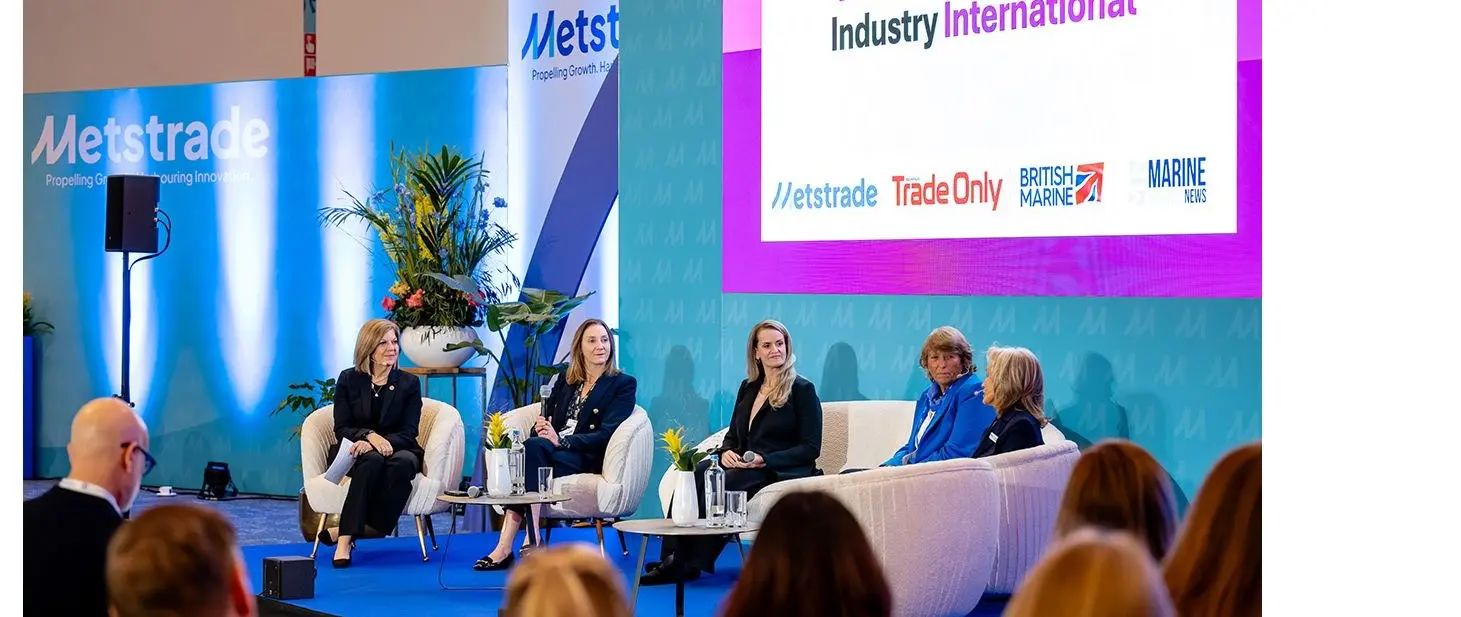
A marine career can take someone from the yard floor to product development, retail or the boardroom, yet people do not always see a clear route between those jobs. A forthcoming Metstrade panel will ask how businesses can make the workplace more welcoming and develop talent across different roles.
Women in the Marine Industry International has announced its annual panel and networking breakfast for 18 November 2026. It will bring together leaders from several parts of the marine sector rather than focusing on a single boatbuilding discipline.
Senior voices from different businesses
The announced speakers include Fiona Richardson of Brunswick’s Navico Group, West Marine chief executive Paulee Day, Victoria Low of the Magenta Project and Saxdor chief executive Erna Rusi. Their respective organisations span electronics, retail, professional development and boat production.
The discussion is billed around the future of the marine workplace, with an opportunity for industry participants to meet afterwards. Attendees will hear perspectives from companies whose hiring and training needs differ in scale and specialism.
The supply chain is part of the conversation
A small-boat business depends on designers, technicians, sales people, trainers and service staff, not solely on boatbuilders. Conversations about career progression therefore affect the network that keeps an under-12m boat operating after delivery.
The Magenta Project works on opportunities for women in sailing, while the commercial panel members bring other professional experiences. Their participation offers examples to discuss, but the outcomes of the November event remain to be seen.
Attendance requires advance registration
The breakfast is advertised as a free in-person event, with registration required by the organiser. Those planning to attend should confirm venue access and the final programme directly rather than rely on an early announcement.
For LBG readers in the industry, the relevance extends from recruitment into mentoring and staff retention. A marine workforce with visible career pathways can support the skills on which ordinary boat owners depend.