
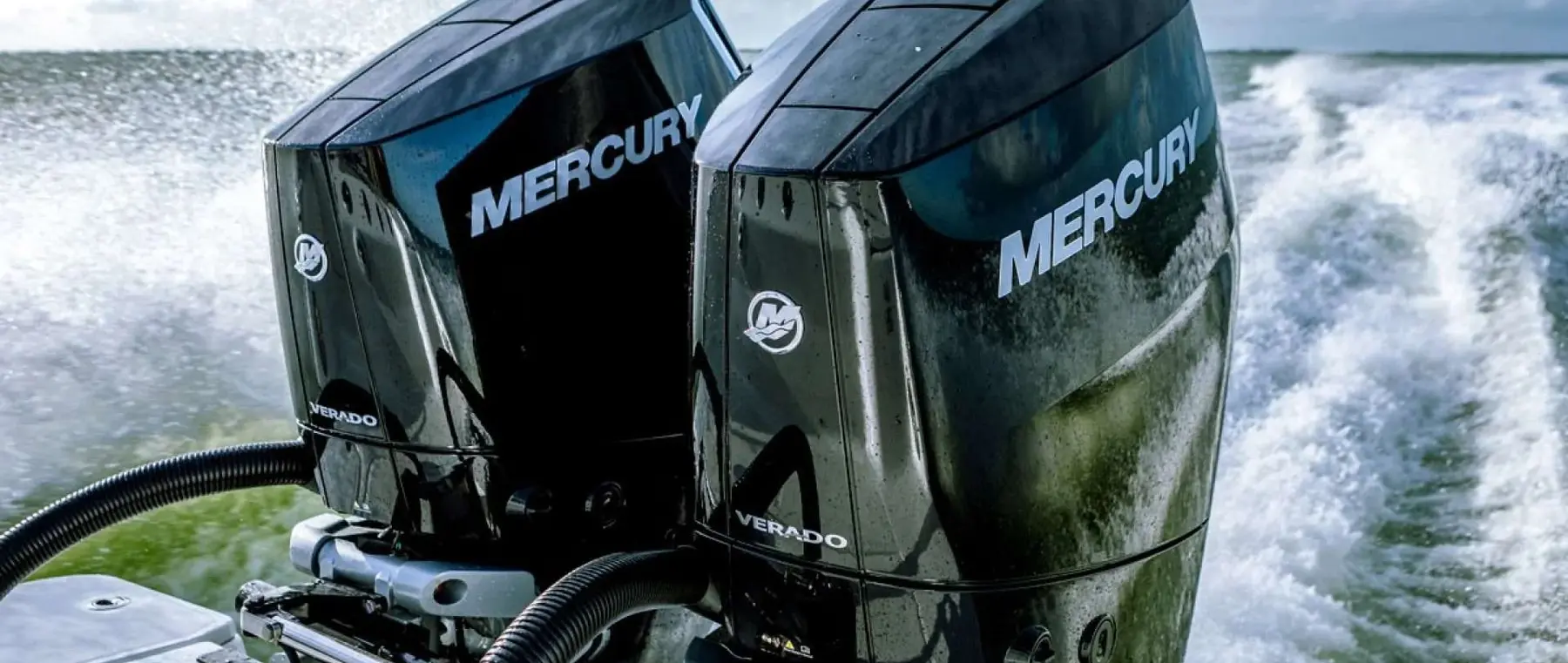
Mercury links propulsion controls with movable onboard equipment
Mercury Marine has introduced the Vessel Interface Module, or VIM, to let an outboard propulsion system receive status information from other equipment aboard the boat. The system was presented at IBEX 2026 and is intended to prevent specific propulsion functions from operating when another component is in an unsafe position.
A swim platform provides a simple example of the logic. If a sensor reports that the platform is deployed and could interfere with engine movement, VIM can temporarily block trim until the platform is returned to a safe position.
Builders can define interlocks around each boat design
The same concept can be applied to ladders, fold-down terraces, trolling motors, anchor windlasses and ski poles. During design and installation, the boatbuilder decides which conditions must be satisfied before functions such as engine starting, gear engagement, steering or trim are enabled.
VIM supports different sensor types and can integrate with major digital-switching platforms. When the system blocks an action, it can provide an audible warning and display the reason through Mercury SmartCraft Connect rather than leaving the operator to diagnose the problem manually.
More integrated boats require systems to communicate
Modern yachts and tenders contain an increasing number of movable platforms, powered accessories and automated equipment whose operating envelopes can overlap. Treating propulsion as an isolated system creates more opportunities for accidental contact or damage when one component is left in the wrong position.
Mercury says deliveries of the Vessel Interface Module are expected to begin before the end of 2026. For builders, the technology provides another tool for designing safety logic into the boat itself instead of depending entirely on operating checklists and driver memory.