
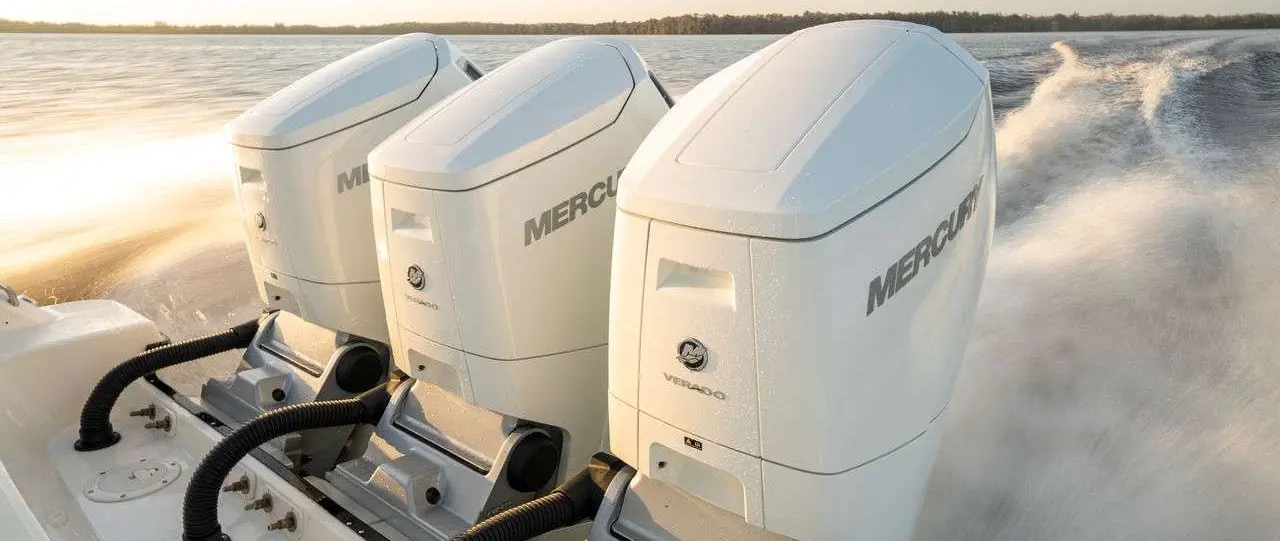
Same horsepower does not mean same engine package
Mercury Marine produces five variants of its 300-horsepower V8 outboard, each intended for a different role. A technical interview released through PressMare on 16 October explains the distinctions between FourStroke, Verado, Pro XS, Racing 300R and SeaPro.
The powerhead is based on a naturally aspirated 4.6-litre V8, but the complete product includes much more than an engine block. Changes to steering, gearcases and calibration can alter how a boat handles and feels.
FourStroke offers familiar installation choices
The FourStroke is a comparatively conventional option, which may make it attractive to owners replacing an older engine. Mercury's technical representative describes it as suitable for a wide range of recreational hulls.
A repower still requires checks of transom weight, shaft length and controls. Fitting a 300hp engine is not appropriate merely because an earlier engine had a similar horsepower rating.
Verado emphasises comfort and handling
The Verado has integrated electric steering and mounting arrangements intended to reduce vibration. These differences can matter on a family cruiser used for frequent manoeuvring and longer passages.
Mercury says correctly matched FourStroke and Verado engines can produce comparable top-end performance. Owners comparing them should therefore evaluate refinement, control integration and costs rather than assume the Verado is automatically faster.
Performance and commercial duty are separate priorities
The Pro XS uses a specialised TorqueMaster gearcase and components intended for lightweight performance installations. The Racing 300R is aimed at sportier use, while SeaPro is positioned for commercial and demanding service.
These categories have different requirements, even though all the engines carry a 300hp designation. A fishing boat, sport RIB and workboat may require very different lower-unit specifications.
Choose the package to suit the hull
Some Mercury electronic systems support complex multi-outboard installations, but individual controls and joystick options vary by variant. Owners should consult an authorised installer about compatibility with the boat and its existing equipment.
The main lesson is that quoted horsepower is only the beginning of a propulsion decision. Tests on an appropriately configured hull and clear support arrangements are more valuable than choosing by the badge alone.
Horsepower is only one part of propulsion
A motorboat's behaviour depends on its hull shape, weight, load and how power is delivered through the propeller. Two outboards with identical rated horsepower can feel different if their gearcases, steering systems and calibrations are designed for different uses. Choosing a motor by a headline figure alone can therefore disappoint an owner once the boat is carrying passengers and equipment.
The appropriate comparison begins with the boatbuilder's approved engine range and installation information. Transom strength, recommended shaft length and total engine weight should be checked before considering performance. An authorised dealer can advise whether a particular Mercury variant is suitable for the exact hull rather than relying on an apparently similar boat.
Comfort can matter more than a top-speed gain
Family boaters often notice vibration, steering effort and low-speed control more frequently than maximum speed. A refined installation can make harbour manoeuvres easier and reduce fatigue on longer coastal passages. This is one reason why a package designed around smooth operation may appeal to different owners than a motor intended primarily for high-performance sportboats.
Verado's integrated steering and mounting arrangement are part of that broader comfort proposition. A buyer should test how the complete boat handles with the chosen motor, including turns and docking. Comfort depends on hull characteristics and load as well as engine design, so the same outboard can produce different experiences on different craft.
Gearcase selection affects practical performance
The lower unit transfers power from the engine to the propeller and operates continuously in water that may contain debris or suspended particles. Its size, gearing and shape influence how the boat accelerates and performs at speed. Performance-oriented gearcases may have advantages in particular installations while being less appropriate for other hulls.
Owners should avoid treating a racing-derived component as an automatic upgrade. The engine manufacturer's installation guidance and the boatbuilder's design limits provide a better starting point. Propeller selection also matters because an unsuitable propeller can reduce acceleration, increase fuel use or prevent the engine from operating in its intended speed range.
Repowering an older motorboat
Replacing an old outboard can make a familiar boat easier to maintain and potentially more efficient, but it can also change the vessel's balance. Modern motors may differ in weight and control requirements, while existing instruments or fuel systems may need updating. The owner should request a written installation plan before ordering an expensive engine.
A proper repower quotation should account for labour, controls, rigging, testing and disposal of the existing motor. Different packages may require steering upgrades or changes to battery arrangements. The real cost is the completed, supported installation rather than simply the price of the engine displayed in a catalogue.
Commercial and recreational duty are different
A commercial workboat may spend many more hours operating at modest speed and frequent load than a privately owned dayboat. SeaPro's positioning reflects those demands, while recreational engines may place greater emphasis on refinement, appearance or the range of control features. The distinction is about operating profile, not merely whether somebody is paid to drive the boat.
Maintenance intervals and warranty terms should be checked for the intended duty. A propulsion package used for chartering or regular commercial work may be subject to different conditions from one used for private weekend cruising. Buyers should describe honestly how the vessel will operate rather than assume that a higher nominal rating makes every model equally durable.
Testing the final package before acceptance
A useful demonstration includes starting, steering, reversing, acceleration and normal cruising with a realistic load. The installer should confirm that engine speed and other readings fall within manufacturer guidance and that warning systems operate correctly. It is also wise to review access for routine servicing and the availability of authorised support near the vessel's home berth.
The Mercury interview explains the purpose of its different V8 variants, but selecting one remains a boat-specific decision. Written technical compatibility, a carefully chosen propeller and a proper handover provide more reassurance than a brief high-speed test. The best package is the one that serves the owner's real boating habits reliably.