
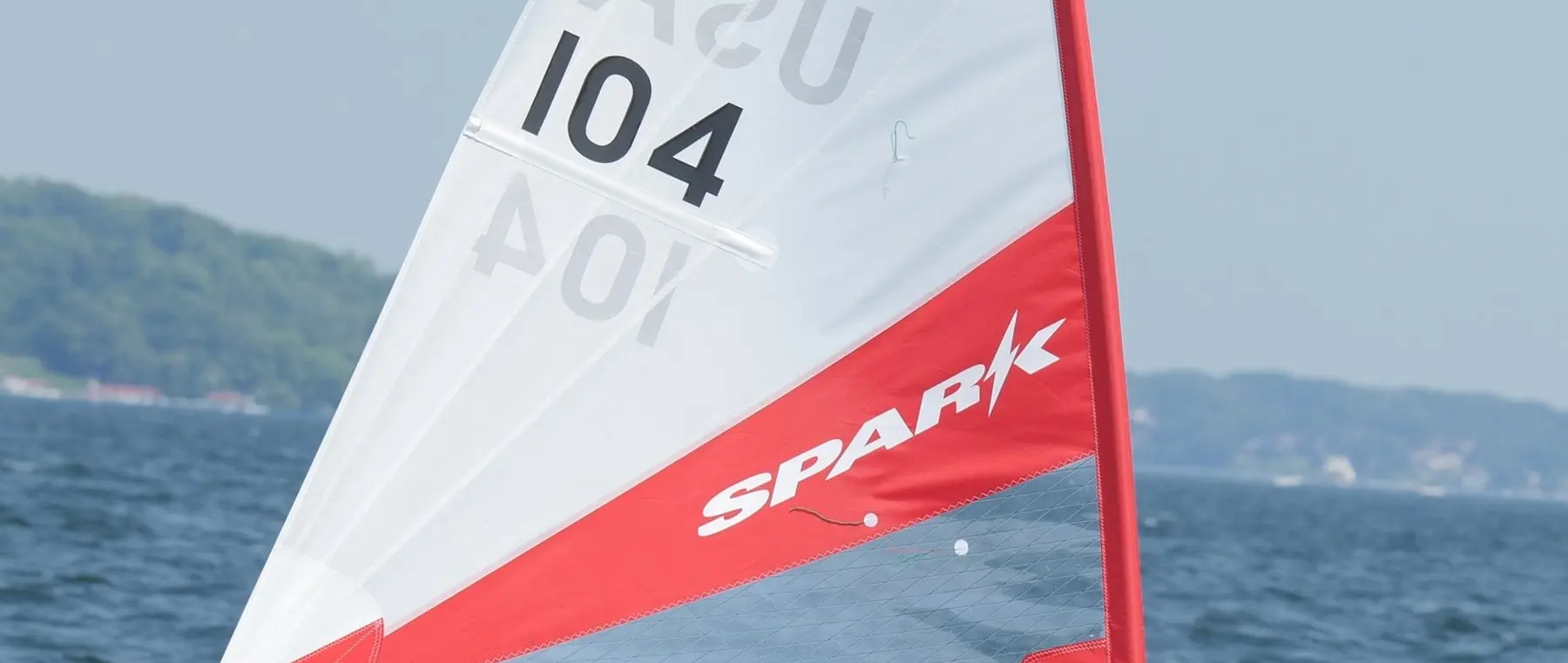
A New Entry Point to Singlehanded Sailing
Melges Performance Sailboats has introduced the Spark, a singlehanded dinghy intended to make the first stages of sailing approachable without treating learning as a temporary exercise. The design is aimed at young sailors, clubs and training programmes that need a boat capable of supporting developing skills. The company presents the Spark as a platform for enjoyable time afloat as well as structured progression, a distinction that matters when new participants are deciding whether to remain in the sport.
The announcement adds another option to a youth-training market where equipment choices affect much more than race results. A successful introductory dinghy has to make preparation understandable, give instructors a manageable teaching platform and allow the sailor to feel a clear connection between each action and the boat's response. Melges says ease of use and fast rigging are central to the Spark's design, while the hull is intended to provide a balance of stability and performance.
Two Sail Choices Instead of an Immediate Boat Change
One of the Spark's defining ideas is a choice between Red and Blue sail configurations. Melges identifies the Red as the more manageable option for lighter sailors, while Blue provides extra sail area as a sailor grows and becomes comfortable handling more power. The same basic boat concept can therefore serve different stages of development, although the correct choice remains dependent on the individual rather than simply their age or the calendar.
According to the manufacturer's published specifications, the Red sail measures 40 square feet, approximately 3.7 square metres, and is recommended for sailors weighing 40 to 90 pounds. The Blue carries 49 square feet, approximately 4.52 square metres, with a recommended sailor-weight range of 90 to 140 pounds. These are manufacturer recommendations rather than guarantees of suitability in all wind strengths, so training organisations should still match sail, sailor and conditions on the day.
What the Rigging Approach Means
Melges specifies a carbon mast and boom, using relatively modern spar materials in a craft whose principal job is teaching fundamentals. The company also highlights a simple rigging sequence and quick launching, both important practical matters at a sailing centre where several boats may need to be prepared by a small team. A lighter, more manageable rig can make the connection between rig setup, sail shape and boat handling easier to explain.
The ability to change sail size also has a practical implication for fleet management. Rather than automatically replacing an entire hull as a participant advances, a club may be able to evaluate a different sail and matching mast top within the Spark family. That is a potential operational benefit, not a claim that every combination will suit every programme. Instructors will still need to maintain consistent checks of fittings, rig condition, flotation equipment and weather limits.
The Hull and the Learning Experience
The builder describes the Spark's hull as a contemporary shape designed to balance steadiness with responsive sailing. For a beginner, the most useful characteristic is often a predictable response to steering, sail trim and body movement. Too much initial complexity can turn a training session into an exercise in avoiding mistakes, whereas a boat that rewards correct technique provides the feedback needed for skill development. Melges is positioning the Spark in that latter role.
That positioning does not mean the boat can remove the normal challenges of dinghy sailing. Students must still learn how wind shifts change pressure on the sail, why a boat heels, how to control speed and when to ease the sheet. The Spark's appeal will depend on whether the package allows those lessons to take place progressively. Real-world assessments from instructors and clubs will be more revealing than any single set of specifications.
Different Needs at Clubs and Beaches
Melges says the Spark is intended to work both at sailing clubs and from beaches, broadening the settings in which an introductory fleet could be deployed. Those two operating environments place different demands on equipment. A club with launching trolleys, storage racks and instructors on shore may prioritise fleet consistency. A beach programme may place more emphasis on simple carrying, prompt launching and components that are straightforward to rinse and inspect after exposure to sand and salt.
The manufacturer has not presented the Spark as a solution to every local operating requirement, and programme managers should check how the craft fits their launching arrangements and supervision ratios. They should also consider storage space for masts and sails, the availability of replacement components and how young sailors will recover from capsizes. The advantage of a well-defined teaching platform is that such procedures can be standardised across a fleet.
Pricing and the Initial Package
The Melges website lists a new-boat price of about 4,350 US dollars for Spark Red and 4,500 dollars for Spark Blue, although one specification panel gives the Red price as 4,352 dollars. Those figures are manufacturer-listed prices in the market shown on the official page, not converted European quotations, and may change with tax, shipping or local supply arrangements. The page also presents a 500-dollar preorder deposit to reserve a boat.
Melges describes the new-boat package as fully rigged, including a choice of sail size and a matching mast top. That description should be read carefully by prospective buyers checking what is included in a final dealer quotation. Trailers, launching trolleys, covers, freight and training equipment can materially affect a club's complete acquisition cost, depending on what is supplied. A transparent comparison should therefore distinguish the advertised boat package from the full expense of putting a usable fleet on the water.
Deliveries and Programme Planning
The official product page indicates that deliveries are expected to begin in autumn 2026. That timing is relevant for clubs building winter training plans or preparing for next-season beginner recruitment, but an expected delivery window should not be confused with a guaranteed delivery date. Anyone ordering several boats will want confirmation from the supplier on the production slot, shipment schedule and availability of the selected rig combination before committing to a launch programme.
Training centres also need time after delivery to assemble boats, familiarise instructors with rigging procedures and develop appropriate safety briefings. A new class can work well in a fleet setting when staff agree how equipment is checked and how beginners move from shore-based practice to supervised sailing. That preparation is especially important when sailors may change from the Red to the larger Blue sail as their weight and ability develop.
Why Sail Area Matters for Progression
The difference between 40 and 49 square feet may look modest as a printed number, yet sail area alters how a small dinghy responds to the same breeze. More area can create greater driving force, but it may also demand quicker trim adjustments and more confident balance from the helmsman. Melges links its two versions to different sailor-weight bands, allowing the craft to be matched more closely to the person at the helm.
In practice, this is a reason for instructors to assess sailors rather than moving them through fixed equipment stages without observation. Comfort in light conditions is not the same as confidence in gusts, and a growing child may benefit from familiar technique before taking on a more powerful rig. The Spark provides two manufacturer-defined choices, but sound coaching, suitable weather and appropriate safety equipment remain essential to any progression system.
What Buyers Should Examine Before Ordering
For private buyers, the central questions are fit, local conditions and the sailing opportunities available nearby. The published sailor-weight bands provide a starting point, but the most useful decision will come from discussing the student's experience with a coach or a dealer familiar with the class. Buyers should also consider how the boat will be stored and transported and whether the local club intends to establish a training or racing fleet.
Club purchasers face additional questions about the cost of maintaining multiple boats and whether the new design can share operational systems already in place. An attractive individual package is not necessarily the most economical fleet purchase if a centre needs entirely new trolleys or storage arrangements. Equally, a boat that keeps participants involved longer could justify a higher initial outlay. Those calculations require local quotations and practical trials.
The Significance of the Spark Introduction
The Spark arrives as a deliberately focused proposal rather than a large family cruiser or a high-performance adult dinghy. Melges is offering a youth-oriented, singlehanded boat with two published rig options, carbon spars, simplified preparation and a hull intended to make learning rewarding. The manufacturer's own figures create a clear basis for comparing the Red and Blue versions, especially when teachers need to discuss sail area and appropriate sailor weight.
The next test is how the Spark performs in the places where beginners actually sail: club fleets, sheltered beaches and varied local winds. Delivery schedules, dealer support and the experiences of instructors will help determine its role alongside established training dinghies. For now, the launch gives youth programmes a concrete new option to investigate, with enough published detail to begin that assessment while leaving the final judgement to use on the water.
Source: Melges Performance Sailboats – Spark official specifications.