
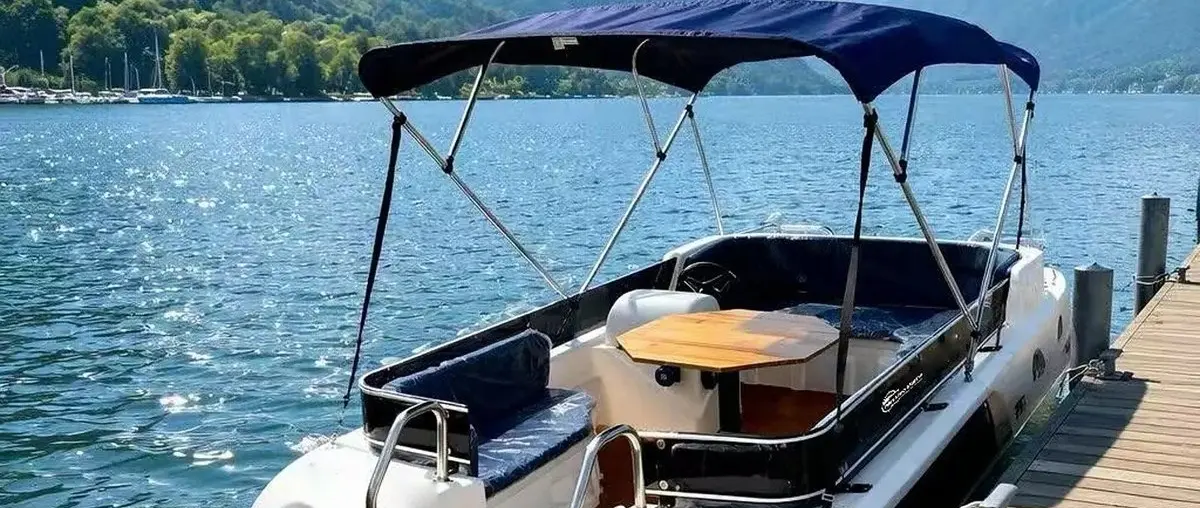
Massimo Group has announced a new Cove Series of entry-level recreational boats, expanding the company's marine portfolio with compact craft intended for casual family outings, inland waters and first-time owners. The 19 November 2026 company release identifies the Cove 6 and Cove 8 as the initial models and targets a January 2027 launch. The range is positioned around approachable ownership and flexible propulsion choices, with pricing indicated across approximately USD 8,000 to USD 20,000 depending on configuration. The announcement is particularly relevant to Leisure Boat Guide's under-12-metre audience because modestly sized boats can introduce owners to the practical responsibilities of boating without the scale, cost or complexity of larger vessels. The company's specifications and timelines are proposals for forthcoming products, not proof of deliveries or independent performance tests.
An entry point into leisure boating
Manufacturers frequently promote their flagship boats, but smaller craft can be more relevant to people who are considering their first purchase. Storage, launch arrangements, passenger comfort and routine maintenance may matter more than an extensive list of luxury features. Massimo presents the Cove range as an answer to those practical concerns. The company says the boats are intended for relaxed recreation rather than high-speed offshore passages. That framing should guide buyers' expectations. A short, inexpensive leisure boat can be enjoyable in suitable conditions, but it is not interchangeable with a vessel designed for open-sea cruising.
Two models serve different groups
The initial announcement names the Cove 6 and Cove 8, indicating options for different passenger groups. These are model designations, and buyers should verify the actual certified capacity and maximum loads on the production boats rather than infer them solely from names. A compact family craft may carry several people comfortably when conditions and equipment are appropriate, but available space changes once bags, safety equipment and other belongings are aboard. Anyone planning regular group outings should look closely at seating, movement around the cockpit and the permitted payload. The advertised passenger-oriented concept is useful context, not an independent assessment of the final boat's ergonomics.
Size affects where a boat can be enjoyed
The company's early information places the boats in the roughly fourteen-foot range. This makes them much smaller than the twelve-metre upper limit of Leisure Boat Guide's editorial focus. A short hull may be easier to transport or store than a larger cruiser, but dimensions alone do not establish towing weight or the ability to launch from every ramp. The owner's actual vehicle, trailer, boat weight and local regulations remain important. Small boats also respond differently to waves and passenger movement. Prospective customers should match the design with the water conditions they expect rather than assume compactness makes a craft suitable everywhere.
The proposed pricing requires caution
Massimo has indicated an approximate price range of USD 8,000 to USD 20,000, depending on model and equipment. Because the range is announced ahead of launch, it should not be treated as a current, binding quotation for any particular boat. Taxes, local registration, shipping, propulsion, optional equipment, trailer and dealership charges may alter the total. A buyer should request an itemised offer and establish exactly what is included. Entry-level prices can attract attention, but the more useful comparison is the complete cost of putting the boat safely on the water and maintaining it over several seasons.
Electric propulsion is one of the proposed choices
The release describes a compact electric propulsion option alongside conventional outboard configurations. For short, low-speed journeys, an electric motor may appeal to people seeking quiet operation and avoiding exhaust at the point of use. Yet the usable range depends on battery capacity, hull load, weather, speed and the nature of the journey. No independent endurance trial has been reported for the final production Cove boats. A responsible owner should establish realistic return margins and charging access before selecting an electric option. The presence of a motor description on an advance announcement is not a guarantee that every model will be delivered with the same equipment.
A conventional outboard remains relevant
Massimo also refers to conventional outboard propulsion, including Mercury options in the information provided. A petrol-powered boat may be more suitable for some usage patterns, particularly where charging facilities are limited, but it brings its own fuel, maintenance and ventilation considerations. The correct engine should be chosen according to the approved transom rating and the manufacturer’s final specifications. It would be misleading to assume a headline horsepower number can be installed on every variant. Buyers should confirm the recommended and maximum engine ratings, the expected performance and the service arrangements supported by their dealer.
Hull construction deserves closer examination
The Cove announcement highlights durable materials and an approach aimed at straightforward use. Materials alone do not establish long-term reliability. Moulding method, structural reinforcement, hardware installation and quality control can affect how a boat performs over time. Prospective owners should inspect the finished model rather than rely only on promotional claims about low maintenance. Sun exposure, abrasion from docks and repeated trailering can all affect an outdoor craft. A material may be resilient yet still require cleaning, inspection and repair. The eventual owner's manual and warranty terms will be important sources of practical information.
A boat for sheltered, recreational conditions
The Cove series is aimed at accessible leisure activities, which could include time on a lake or a suitable quiet coastal waterway. Buyers should not interpret such marketing as an assurance of safe operation in rough weather or strong currents. The production craft's design category, maximum capacity, flotation provisions and recommended conditions are vital details. Those figures need verification from formal documentation rather than inference from photographs. Personal flotation devices, communications, forecast checks and knowledge of local rules remain necessary at any price point. A modest boat still operates in an environment that can change rapidly.
The boarding experience matters to families
For first-time buyers, it is easy to concentrate on engine power or a favourable price while overlooking how people actually board and move around a boat. Children, older passengers and visitors with limited mobility may need suitable handholds and a stable boarding process. A smaller hull can make the relationship between passenger placement and trim particularly noticeable. The Cove concept appears intended for relaxed family use, so prospective buyers should assess the cockpit at a show or dealership. Images do not disclose every step, handhold or storage compartment. A practical visit can reveal more than a specification sheet.
Passenger loads are not simply headcounts
A boat's capacity depends on the combined weight of passengers, fuel, batteries, equipment and other items. A model name that suggests six or eight people should not be mistaken for permission to carry any group of that size regardless of weight. The final manufacturer plate and applicable local regulations are authoritative. Placing everyone on one side can affect stability, particularly when manoeuvring or photographing scenery. Owners should learn the vessel's trim and balance requirements before carrying the maximum permitted complement. Responsible recreational boating begins with understanding the limitations of the particular hull.
Electric and petrol ownership have different routines
An electric propulsion system may reduce some engine service tasks, but charging cables, connectors, batteries and mounting arrangements still require attention. Conventional outboards need inspections and servicing according to their manufacturers' schedules. Either system can become inconvenient if spare parts and support are difficult to access. A buyer should investigate service networks, warranty coverage and future battery replacement costs alongside the purchase price. These decisions are especially important for affordable boats, where an unexpected expense can represent a significant proportion of the initial investment.
Transport and storage determine total convenience
Compact boats may be suitable for a home or marina storage arrangement, but their dimensions and weight must be checked against available space. A trailer, if required, adds cost and introduces maintenance tasks involving tyres, bearings, lights and brakes where fitted. Launch ramps differ in gradients, water depth and parking conditions. Before ordering, a buyer should identify where the boat will spend most of its time and how it will be moved. A boat that looks easy to own can become frustrating if storage or launch access has not been planned. The Cove range's compact size may help, but it does not eliminate these obligations.
How the range fits the current small-boat market
Manufacturers have pursued different approaches to accessible boating, from small aluminium fishing boats to rotomoulded recreational craft and entry-level pontoons. Massimo's announcement adds another proposal to this varied segment. The right comparison will depend on what the boats actually deliver: seating, stable behaviour in intended conditions, propulsion efficiency and practical support. No independent head-to-head test exists for production Cove craft in this announcement. A claim of strong value should therefore remain attributed to the company until customers can inspect and use the vessels. Choice is valuable, but meaningful comparison requires more than launch imagery.
January 2027 remains a target
The manufacturer says it expects the Cove Series to reach the market in January 2027. That date had not arrived on 22 November 2026. It would be incorrect to describe the boats as already delivered or to announce a confirmed dealership stock position without further evidence. Production schedules, final configurations and distribution arrangements can change. Interested buyers may monitor Massimo's official channels and ask for specifications when ordering opens. An advance launch report is useful for awareness, but it should not be confused with a test of the completed boat or an assurance of immediate availability.
Questions to ask before placing a deposit
A sensible buyer would seek the final hull length, beam, weight, certified passenger capacity, motor limitations and trailer compatibility. Other questions concern the standard equipment list, warranty, parts support, charging or fuel arrangements and whether delivery and setup are included in the price. If the boat will operate in coastal waters, suitable classification and any relevant local requirements matter. An authorised dealer should be able to explain these matters when the model is ready. Avoid assuming that an attractive concept photograph confirms equipment that may be optional.
Why this matters to leisure boaters
Many people enter boating through small craft because they can share an afternoon on the water without managing a larger vessel. That accessibility is the central significance of the Cove announcement. A competitive price and simple layout could make the experience available to additional buyers, although affordability and value remain to be demonstrated in the real product. Leisure Boat Guide will assess further specifications, construction and usable performance when they can be verified. The story is relevant to small-boat users precisely because the proposed range addresses everyday recreation rather than the needs of a luxury yacht.
What Massimo has announced
The documented development is Massimo Group's November 2026 introduction of the Cove 6 and Cove 8 as forthcoming entry-level recreational boats, with indicative pricing and a January 2027 launch target. The release establishes the company's positioning and proposed propulsion options, but it does not amount to an independent sea trial or a final purchase quotation. Buyers should treat the announcement as an invitation to investigate a new choice for suitable inland or sheltered-water recreation. The eventual measure of the range will be safe design, practical ownership and the experience delivered on the water.
Official source: Massimo Group, company-issued release distributed by PR Newswire, 19 November 2026, *Massimo Group Expands Marine Portfolio with New Cove Series Entry-Level Boats*. Photographs: Massimo Group company press assets. Additional small-boat buying and safety context by Leisure Boat Guide.