
Marlborough reminds boat owners about identification
Marlborough District Council has reminded recreational boaters that its updated vessel-identification requirements apply to small craft on the region's waters this summer. The council issued the public reminder on 4 November 2026, with Harbourmaster Jake Oliver emphasising the practical value of being able to connect an unattended boat with its owner. The rule concerns more than powered motorboats. Jet skis, kayaks, paddleboards and other small craft are also part of the council's safety message, although the marking arrangements differ according to vessel type.
The requirement is not a national registration scheme newly introduced across the whole of New Zealand in November. It arises from Marlborough's Navigation Safety Bylaw 2025 and applies within the district's jurisdiction. Owners must check the wording relevant to their boat rather than conclude that a generic manufacturer logo or the familiar colour of a kayak is sufficient identification. The council's current notice offers guidance before the busy boating season.
A trailer boat needs a distinct name or number
The council says trailer boats should carry a name or other distinct identifying mark. Examples include a trailer registration, a vessel radio call sign, an approved sporting-body identifier or a Maritime New Zealand number. The mark needs to make it possible to distinguish the craft from others. Simply placing the builder's trade mark or a model name on the side does not identify an individual boat because many vessels may carry precisely the same lettering.
For an owner, the simple test is whether an authorised person can reasonably use the mark to establish which vessel is involved. A boat's nickname may be distinctive, but a common product label cannot serve the same function. Someone purchasing a used craft should also verify that any old name or number remains accurate after the change of ownership. The presence of a painted or adhesive mark does not prove that the contact information held elsewhere is current.
Visibility matters, not just the presence of a label
Boating New Zealand's report of the 2025 bylaw states that identification generally needs to appear on both sides above the waterline, with characters at least 90 millimetres high and readable in daylight from around 50 metres. There are alternatives for identification that complies with Maritime New Zealand, certain foreign authorities or approved sporting bodies. These details should be checked against the current bylaw and the vessel's classification before changes are made to the hull.
A small boat with a crowded bow or unusually shaped tubes may have limited space for lettering. The owner should select a position that remains visible when the boat is afloat and loaded, without obstructing important safety information or damaging its construction. A mark hidden behind a fender or obscured by equipment is of limited value in an incident. Durable marine-grade materials and suitable mounting methods are preferable to a temporary paper label that soon disappears.
Kayaks and paddleboards are treated differently
The council's reminder indicates that paddleboards, kayaks and similar small craft must have the owner's details written somewhere on the hull. These vessels may not carry a conventional registration mark or the same display arrangement as a powered trailer boat. Their small size and frequent use from beaches create a particular identification challenge, because an unattended craft can be carried away by wind or current without anyone aboard.
The harbourmaster has said that identification helps staff return lost equipment and contact owners. That is a practical safety benefit rather than simply an administrative aim. A kayak found drifting can trigger concern that a person may be missing, and responders will naturally need to establish whether the craft is unattended for an innocent reason or connected with an emergency. Owner information can help that investigation, though it cannot replace a proper search when someone may be in danger.
Free identification stickers are available
Marlborough's Harbourmaster's office says it has free stickers intended to help owners of smaller craft comply. Boaters can ask the patrol team while it is on the water. The notice does not promise that every patrol vessel will have unlimited supplies available at every moment, so anyone relying on a sticker should check arrangements in advance. A suitable mark applied before launch is better than trying to solve the problem after an enforcement officer has raised it.
A sticker should be fitted according to the instructions for the material and hull surface. Inflatable tubes, plastic kayaks and aluminium hulls may need different preparation and attachment methods. Good adhesion matters because salt, abrasion, sunlight and washing can cause inferior labels to lift. Owners should inspect the marking as part of their pre-season equipment checks. The underlying duty is to maintain acceptable identification, not merely to have received a sticker once.
Identification can support a quicker response
Small-boat incidents often require responders to determine the identity of a vessel and whether an owner or crew is missing. A registration or other recognised mark can reduce the time spent trying to connect a craft to its user. This is particularly relevant when a boat has broken free from a mooring or a paddleboard has drifted away from a beach. The harbourmaster's reminder gives that safety function as a main reason for the requirement.
An identifying mark does not guarantee that a lost boat will be recovered or that an emergency will be resolved. Rescuers still need accurate information about where the vessel was last seen and whether anyone might be involved. Owners can help by keeping contact details up to date and telling someone ashore their plans when setting out. The rule addresses one part of the safety picture and is best used alongside normal prudent boating practices.
Visiting skippers should check local requirements
Owners who normally keep a boat in another region may visit the Marlborough Sounds during summer. They should not assume that a mark accepted in their home area necessarily meets every local condition. The bylaw recognises certain approved forms of identification, but the details depend on the vessel and the authority under which it is marked. A visitor should verify compliance before the trip and consult the district council if there is doubt.
The same principle applies to a boat that is regularly trailered between lakes and coastal destinations. Rules can differ between local jurisdictions, and an owner may need to understand several sets of navigation requirements. Appropriate identification is usually a simple part of preparation compared with fuel, weather and safety equipment, but neglecting it can cause avoidable complications. A skipper should check other local rules too, including speeds, access and navigation directions.
The name must not be confused with a product badge
A common source of confusion is the visible lettering placed on a boat by its manufacturer. Words identifying the builder or model may be prominent and attractive, but they are not necessarily distinct to that vessel. The council specifically warns that a manufacturer's brand or model is not an acceptable substitute for unique identification under the general requirement. Two otherwise identical outboard-powered boats could carry the same model graphics while belonging to different people.
Owners should select or verify a mark that distinguishes the craft without making misleading claims about its official registration status. Where a boat already has a recognised number, it may be sensible to keep that identifier rather than introduce conflicting labels. If the vessel changes owner, the relevant administrative records should be updated as required. The aim is for the displayed identity to lead to reliable information, not to create a decorative nameplate alone.
A pre-launch check can prevent problems
Before the summer boating season, owners can look over the hull and make sure existing marks are legible, securely attached and visible above the waterline where required. Weathering, abrasion and repeated washing may make an old label hard to read. A person buying a second-hand dinghy or trailer boat should include the identification question in the handover rather than discover later that the boat carries only the previous owner's details.
The same walk-around can include checks of navigation lights, fuel lines, safety equipment, towing arrangements and the boat's general condition. Identification is particularly easy to overlook because it does not affect engine starting or steering. Yet it becomes important when a craft is lost, found or involved in an incident. Making it part of the same routine as checking the drain plug and lifejackets can help owners maintain compliance without unnecessary administration.
What is new in the council's November reminder
The verified news is Marlborough District Council's 4 November 2026 reminder that the vessel-identification requirements of its Navigation Safety Bylaw 2025 are in force. The rule covers powered craft and smaller paddle craft, using different marking arrangements according to category. The harbourmaster's team is making free stickers available for suitable small vessels and is emphasising the role of identification in returning equipment and contacting boat owners.
For Leisure Boat Guide readers, this is immediately relevant to boats, dinghies, jet skis and paddleboards operating in Marlborough this summer. Owners should consult the council's current bylaw and official guidance to establish what their craft requires. No report should claim that a local rule automatically applies across all New Zealand waters. Clear identification is a modest but useful measure within the larger responsibility of operating a properly prepared small boat.
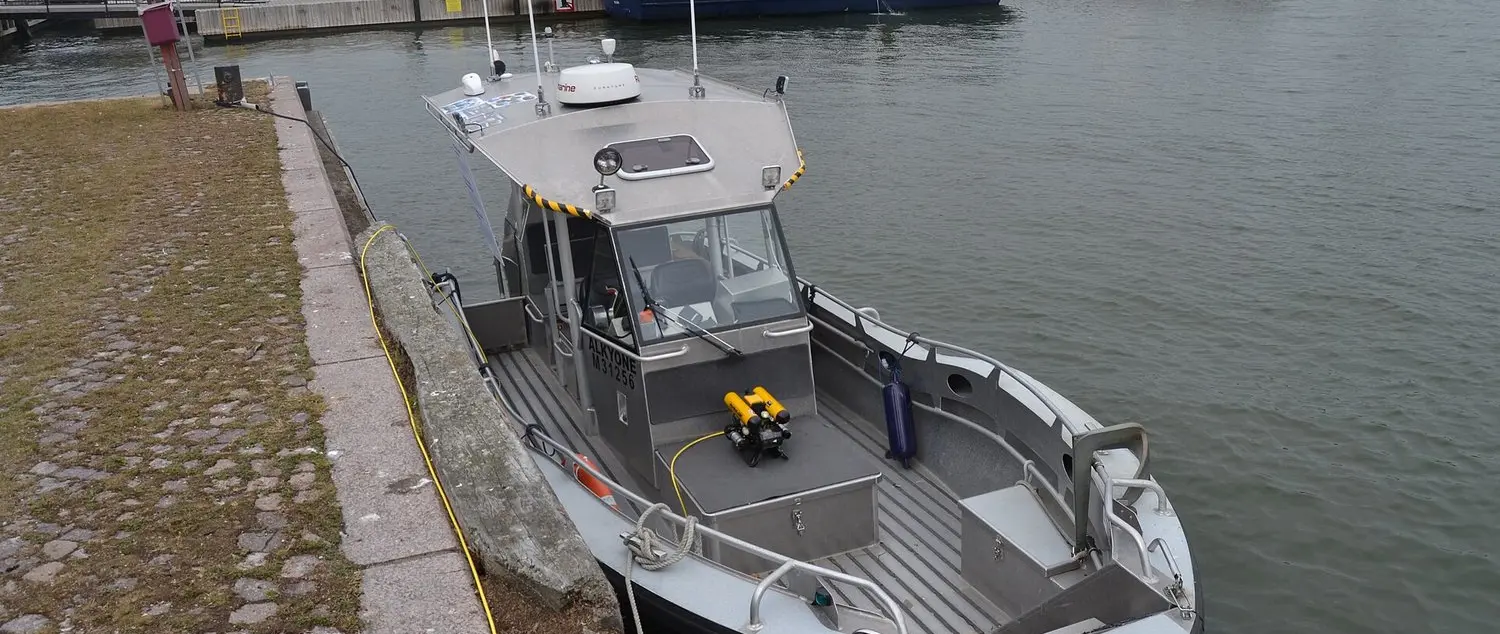
Sources: Primary original source and Independent contextual source. Photograph: a small vessel with registration markings by Antti Leppänen, Wikimedia Commons, CC BY 4.0; resized. This is a contextual photo and not the Marlborough enforcement programme.
