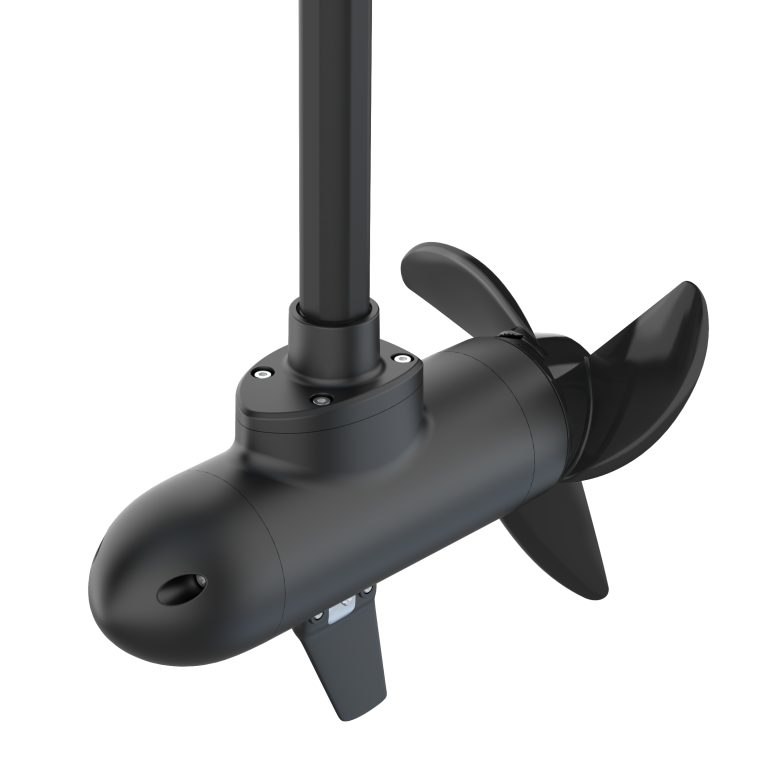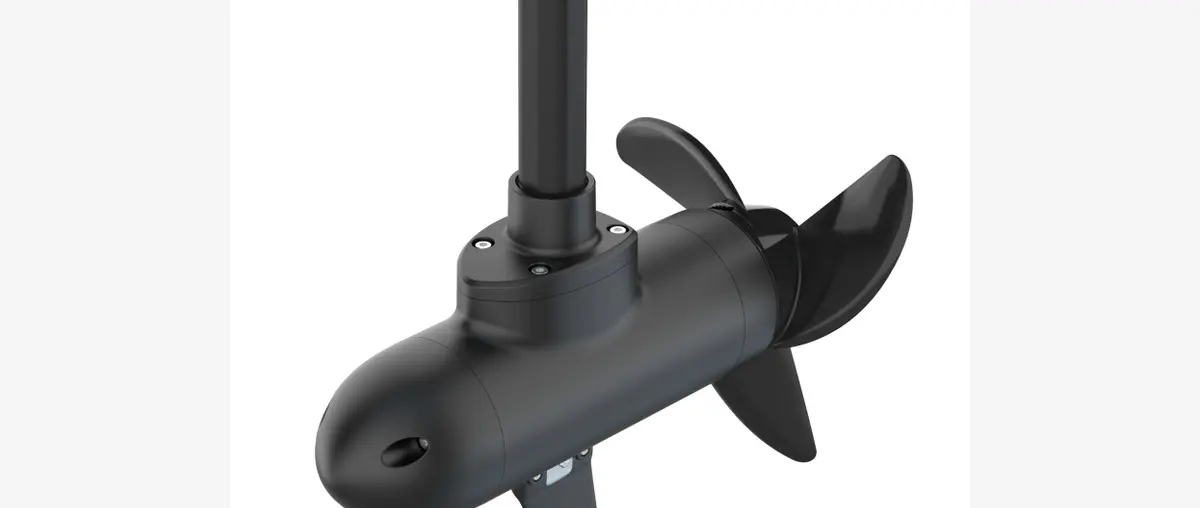
A bow-mounted motor for precise low-speed manoeuvring
Marine propulsion brand MARINEMIND, operated by Wing Dak Pte. Ltd., is presenting its M3 electric trolling motor in the 2026 METSTRADE exhibition portfolio and identifies the model as a nominee for the DAME Design Awards 2026. The manufacturer's own product information describes a bow-mounted system available in 12- and 24-volt configurations with a maximum stated thrust of up to 70 pounds, GPS-based holding modes and several methods of control. For recreational fishing craft under twelve metres, this technology is relevant because maintaining position at low speed can be as important as travelling quickly to a destination. A trolling motor may help an angler hold an approach or make small corrections without relying continuously on the main engine. Yet it is essential to distinguish manufacturer-reported performance from what a particular hull will achieve in wind, current and waves. The DAME nomination recognises an entry for consideration, not proof that the product won an award or independently demonstrated every claim.
Understanding the official technical information
MARINEMIND's product page describes its M3 as a 12/24-volt system with a claimed maximum thrust of 70 pounds and a published electrical power reference of 1,200 watts. It identifies a brushless motor and electric steering, with control options including remote, app, multifunction display and pedal. The site also lists multiple shaft lengths and a range of built-in operating modes. These are useful details, but the exact configuration should be confirmed before purchase because a nominal model family may have several variations. A manufacturer-reported thrust figure is not a speed rating and cannot be converted into a guaranteed number of knots. Actual performance depends on boat displacement, hull resistance, propeller selection and the conditions in which the boat operates. A suitable installation begins with matching the motor to the boat, not with treating the largest advertised thrust as a promise of universal control.
What the 2026 DAME nomination means
The manufacturer's exhibition profile states that the M3 is nominated in the propulsion and dynamics area of the 2026 DAME Design Awards. That provides a dated industry context for its appearance at METSTRADE, held from 17 to 19 November 2026. A nomination should not be confused with a category win, special mention or overall award. It also does not replace technical approval for a particular installation. Product awards can draw attention to features and design ideas, but owners should still request specifications and practical demonstrations. The M3 page emphasises control convenience, positioning features and the experience of recreational anglers. Those claims are a starting point for evaluation rather than a substitute for independent testing. For a buyer, the important question is whether the motor performs consistently on the boat in real fishing conditions and can be maintained over several seasons.
Why a bow mount can be useful for fishing
A motor at the bow can provide a different form of low-speed manoeuvring from a stern-mounted outboard. It may help guide the front of the boat during controlled movements and allow an angler to position the hull around a fishing area without frequently changing the main engine throttle. This can be useful on lakes, sheltered waters and some coastal trips where the equipment is approved. But the bow of a small boat can move considerably in waves, and a trolling motor must remain sufficiently immersed for the propeller to work effectively. The owner should examine the boat's deck structure, freeboard and expected loading before selecting a shaft length. A motor chosen solely from a boat's overall length may be too short or unsuitable for its operating environment. The product's advantages depend on the details of the installation and how the boat is normally used.
Selecting a shaft length
MARINEMIND publishes several shaft-length options for the M3 and provides guidance relating them to the boat's freeboard. That is important because the propeller needs appropriate immersion while the hull pitches and rolls. A shaft that is too short may allow the motor to draw air or leave the water, while an unnecessarily long assembly can create handling and storage difficulties. Buyers should measure the bow's height above the water in the boat's normal loaded condition and consult the manufacturer's sizing guide. The chosen length should also account for the intended waters and how the boat behaves with anglers and equipment aboard. A professional installer can check whether the deck and mounting bracket can safely support the unit. The catalogue description alone cannot establish the correct configuration for an individual hull.
The role of GPS position holding
The M3 information refers to satellite positioning and anchor-related operating modes. A motor using GPS can, under suitable conditions, make thrust adjustments intended to keep a boat near a selected position. This is often described as electronic anchoring, but it is not equivalent to a conventional anchor holding the hull through ground tackle. Position depends on satellite reception, available thrust, electrical power and the accuracy of the control system. A boat may drift when wind or current exceeds the motor's ability to compensate, or when the battery becomes depleted. The skipper should not rely on electronic holding as a sole safety measure near rocks, navigation hazards or other vessels. An anchor or another appropriate means of maintaining position may still be required. A useful GPS mode can reduce workload while fishing, but it should be treated as a manoeuvring aid with clear limits.
Satellite systems and the heading sensor
The manufacturer's technical page refers to GPS, BDS and GLONASS satellite navigation support, together with a built-in multiband heading sensor. A positioning system can use satellite data to estimate location, while heading information helps a controller understand the orientation of the boat and motor. Both are important to deliberate low-speed movements, but the actual quality of control depends on sensor accuracy, software and operating conditions. Electromagnetic interference, obstructions or unusual mounting arrangements can affect performance. The installer should follow the supplier's guidance on calibration and testing, particularly if other electronic equipment is positioned nearby. An owner should also know how the motor behaves when position information is poor or temporarily unavailable. A sophisticated list of satellite constellations does not guarantee that every GPS-assisted manoeuvre will be precise in every location.
Several methods of controlling the boat
MARINEMIND describes remote control, application, pedal and compatible multifunction display options for the M3. These choices may suit different fishing styles. An angler working from a raised casting deck might prefer a foot control, while someone moving around the boat could use a handheld remote under appropriate circumstances. The availability of an app does not mean that a phone is the correct primary control for every operation. Connectivity, device power and software compatibility should all be checked. The skipper needs a clear method of stopping the motor quickly and must understand which device has control if more than one is connected. An installation should avoid confusing transfers of authority between users. Training is important even when the interface appears intuitive because inadvertent throttle or steering input can create hazards in shallow or crowded water.
The difference between speed steps and boat speed
The published M3 specification mentions variable speed control with twenty steps and twelve operating modes. More steps can offer finer adjustments to motor output, but they do not mean the boat has twenty distinct speeds through the water. Actual movement depends on conditions and the boat's response. A small power correction may have little visible effect against a strong current, while the same input can move a light kayak quickly in still water. Owners should trial the equipment under controlled conditions to learn how the boat reacts. Any claimed feature such as quiet propulsion should be evaluated realistically. A brushless electric motor can reduce certain mechanical noises compared with a combustion engine, but water movement, mounting vibration and other sounds still remain. The manufacturer’s language should not be converted into a promise of complete silence.
Battery capacity and the real endurance question
The M3's 12- or 24-volt electrical arrangement needs a compatible battery supply, suitable protection and wiring selected for the actual current demand. The manufacturer's nominal power reference does not establish a universal running time. A battery's usable energy depends on its capacity, chemistry, condition, temperature and the power required during the session. GPS holding can demand more energy when wind and current increase, even if the boat does not appear to be moving. Owners should allow a reserve and avoid draining the same battery needed to start the main engine unless the electrical system is specifically designed for that use. The supplier should confirm the approved operating voltages and protection requirements for each configuration. A practical fishing plan estimates energy consumption conservatively and includes a reliable way to return to shore when the trolling motor is unavailable.
Freshwater use and exposure limits
The METSTRADE listing describes the M3 as a freshwater bow-mounted motor, and the manufacturer provides ratings for different parts of the assembly. That distinction should be respected when choosing equipment. An owner regularly fishing in salt or brackish water should not assume a freshwater model will tolerate the same corrosion exposure as a model specifically sold for marine saltwater use. The technical page refers to ingress protection for the lower unit and other components, but those ratings are not a licence to submerge the complete assembly or ignore cleaning requirements. The correct use and care instructions must be checked for the selected variant. Salt deposits and damaged seals can affect electrical equipment even when the motor has been designed for outdoor use. For a boat that changes between inland and coastal waters, model selection should reflect the most demanding environment it is likely to encounter.
The importance of the bow structure
A bow-mount trolling motor transmits steering and propulsion loads through a bracket fixed to the boat. A thin deck or unsupported moulding may not be suitable without reinforcement. The installer needs to examine the mounting pattern, available space and whether the motor can be deployed without striking rails, lockers or navigation lights. The stowed position matters just as much because the boat may travel at higher speed under its main engine. A poorly secured trolling motor can move or sustain damage when the bow meets waves. The manufacturer should specify compatible mounting hardware and any restraints required in transit. Owners should not improvise a different mounting arrangement merely because it makes the product fit a smaller bow. Safe operation depends on proper structural support and a clear area for the motor to move.
Maintenance and the service network
An electric trolling motor may require less routine attention than a small petrol engine, but its propeller, shaft, seals and electrical connections still need inspection. Fishing line can become wrapped around a propeller, and impacts with underwater obstacles can damage working parts. The owner should check the maker's instructions for safe isolation and cleaning before touching the lower unit. Software and electronic controls introduce other service considerations, including compatibility with connected displays and updates. MARINEMIND advertises a limited warranty, but buyers should confirm the terms applicable to their region and model. It is also sensible to ask which parts are stocked locally and what repairs require authorised service. The most useful motor is one that can be returned to service promptly when a problem occurs during an active fishing season.
What a practical trial should establish
A buyer should ideally test the M3 on a similar boat under realistic loading and conditions. Useful observations include deployment effort, motor immersion, response at low power, control transfer and the behaviour of GPS holding when wind changes. A trial should also confirm the response to loss of power or satellite positioning and the ease of returning to manual control. It is not necessary to create dangerous conditions to understand the system's limits; a competent demonstration in sheltered water can still reveal whether the interface is predictable. The owner should compare the experience against the current trolling arrangement, taking into account battery weight and space. A compelling product video is helpful, but it does not reveal every aspect of a real installation or how the equipment behaves after years of use.
Where the 2026 product stands
The MARINEMIND M3 is a manufacturer-documented trolling motor with GPS-related modes, a 12/24-volt electrical architecture and multiple control options, presented among the 2026 DAME nominees. The original technical materials provide more detail than the brief exhibition summary, but the stated performance remains subject to confirmation for a particular boat and configuration. For recreational fishing craft below twelve metres, it may be worth evaluating where precise low-speed positioning is important and the bow has sufficient space for safe mounting. The skipper should retain reliable conventional navigation and position-holding practices, with a realistic battery reserve. The attraction of modern trolling equipment is the possibility of reducing the manual work needed to stay near a fishing spot, not the elimination of wind, current or the responsibility to operate the boat safely.
Original industry sources and image credits
Reporting based on MARINEMIND / Wing Dak Pte. Ltd. 2026 METSTRADE official exhibitor listing of the 12V Freshwater Bow-mount Electric Trolling Motor M3, MARINEMIND original M3 manufacturer technical product page identifying the 12/24V operating range, 70lb thrust and 2026 DAME nomination.
Lead image: MARINEMIND M3 Puts GPS-Enabled 12V and 24V Trolling Control on Small Fishing Boats — original manufacturer product photograph. © MARINEMIND / Wing Dak Pte. Ltd.. Original supplier image.