Creating shade without building a permanent roof
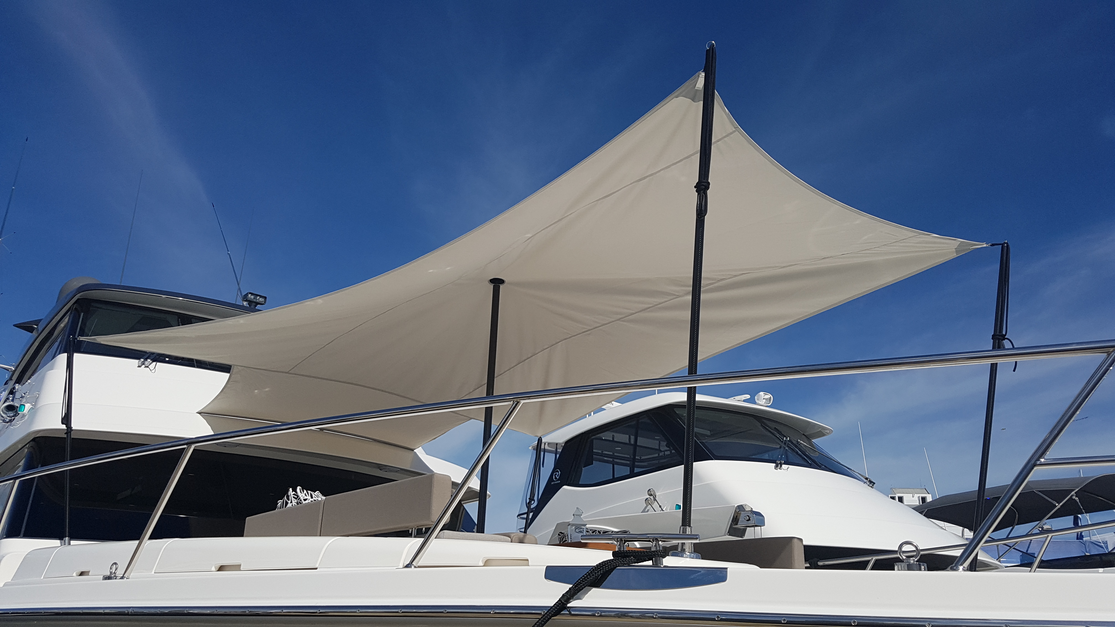
Makefast Ltd is showing a system of carbon poles, sail shades and stainless-steel deck hardware in its current METSTRADE product directory. The British marine equipment manufacturer describes an approach intended to provide additional shaded space aboard, using supporting poles and associated fittings selected to suit the deck. For owners of recreational motorboats and small cruisers under twelve metres, the principle is attractive: a cockpit or aft deck may benefit from temporary sun protection without the weight or visual presence of a permanent hardtop. But a textile shade is not simply a piece of fabric that can be tied wherever convenient. Wind forces, deck structure, attachment geometry and the route passengers take around the boat all have to be considered. The official entry does not publish a universal wind rating or prescribe a specific set of poles for every craft. This is an examination of the system's practical use and engineering questions, not an assertion that any leisure boat can accept it without modification.
What the first-party listing says
The product page identifies Makefast's Shade Sail system together with a range of carbon poles and stainless-steel deck fittings. It emphasises appearance, ease of use and the ability to create suitable arrangements for different designs. The listing does not establish a particular new launch date in November 2026 or give exact material weights, load capacities or supported span dimensions. Readers should distinguish those facts from the additional design possibilities discussed here. A manufacturer may be able to customise hardware for a particular boat, but each proposed configuration still needs specifications and approval. An owner considering the system should ask for a drawing showing the selected shade dimensions, pole positions, mounting points and the intended operating conditions. Without that information, the appearance of the product in a catalogue cannot establish whether it would work safely.
Why exposed deck space can be difficult to use
On a dayboat, seating may be arranged to provide an open view of the water, making the cockpit enjoyable during cooler hours but uncomfortable in direct midday sunshine. Passengers can move between swimming, eating and relaxing, often using the same part of the deck for several activities. A removable shade gives a different option from a fixed canopy, potentially allowing owners to keep an open arrangement during short passages and create shelter when the vessel is securely stopped. The coverage will depend on the shade's position and the angle of the sun, so even a well-designed installation will not necessarily protect every passenger throughout the day. The boat should retain its normal handholds and clear routes to boarding ladders, deck lockers and safety equipment. Comfort improvements are useful only when the deck remains practical to operate.
Carbon poles and their intended role
Makefast identifies carbon poles as part of the system. Carbon-fibre structures can provide useful strength-to-weight characteristics when properly engineered, but the material name alone is not enough to determine what load a pole can carry. Its dimensions, fibre arrangement, end fittings and the way it is supported all influence performance. A boat owner should avoid selecting poles simply because they appear slim or elegant in a photograph. The supplier must assess the actual fabric area, expected forces and geometry of the proposed installation. Owners should also be aware that a lightweight pole is not automatically suitable for use as a handrail or support for passengers. It is part of a shade structure and should only be used for functions approved by the manufacturer. Correct design and clear instructions matter more than the prestige of the material.
Stainless-steel deck fittings need suitable foundations
The official source also describes stainless-steel deck hardware for mounting the shade. Such fittings may look compact on the visible surface, but the load they transfer into the deck can be significant. A fitting installed into unsupported laminate may move, leak or damage the underlying structure when tension is applied. The boatbuilder or qualified installer should check the supporting structure and decide whether reinforcement or backing plates are required. Holes through a deck must be sealed appropriately, especially where a sandwich or cored laminate is involved. The placement of the fitting must also allow water to drain and should not create a toe-catching obstruction. An attractive shade system works best when the visible elements are matched by careful engineering below the surface.
Tension and the shape of a sail shade
A tensioned fabric canopy needs a deliberate arrangement of attachment points. If the fabric is too loose, it may flap or sag; if the tension is inappropriate, it can place unnecessary load on poles and fittings. The exact textile construction and recommended tension are not supplied by the short METSTRADE listing, so they must be established through the manufacturer. The shape and height of the canopy can also influence whether rainwater collects or drains safely. Owners should not assume that equipment intended for sun protection can support heavy rainfall. A shade system can be designed to look almost effortless, but its underlying geometry controls how it behaves in use. A professional proposal should demonstrate the installed shape in more than one view and identify limits for deployment.
Wind changes everything
A sail shade presents a surface to moving air. Gusts can create loads much greater than those experienced when the fabric is first tensioned in calm conditions. The supplier should specify a safe operating range and whether the shade must be removed before the boat moves or when wind rises. The public catalogue does not establish that a deployed Makefast shade can be used at cruising speed. The skipper should treat it as fair-weather equipment unless its documentation says otherwise. A safe arrangement needs a straightforward procedure for removal that can be completed before conditions become difficult. Waiting until a canopy is violently moving is an undesirable strategy, especially on a compact deck where crew may struggle to reach a pole safely.
Comparing sail shades with a bimini
A conventional bimini uses a folding frame and a fabric cover, often providing a practical solution for small boats. A separate shade supported by poles may create a different shape or leave part of the deck more open when removed. Each approach has advantages and costs. A bimini can be straightforward to deploy and may remain attached to the boat, but its frame can affect access or sightlines. A sail shade may look less permanent while requiring more preparation and individual attachment points. Owners should compare the usable shaded area, setup time, storage requirements and permitted conditions rather than deciding from photographs. The ideal solution depends on how often the shade is used and whether the boat's typical activities require a clear overhead space.
Storage and handling on a compact boat
A boat under twelve metres has limited lockers. Carbon poles, fabric and associated fittings need an assigned place when not deployed. A removable system can become inconvenient if pieces must be stored loose in the cockpit, where they may roll, scratch finishes or obstruct passengers. The owner should ask about pole lengths, any approved storage bags and whether the fabric can be packed away while damp. A shade used only occasionally should still be easy enough to retrieve that crew will choose to use it. If installation requires several people or lengthy adjustments, it may not suit a family dayboat with a small operating crew. The practical benefit depends on the entire sequence, from storage to setup and removal.
Passenger safety and deck movement
A shade pole may be positioned near a walkway or boarding area. Passengers may instinctively reach for it as a handhold, particularly when moving between seats. That use should not be assumed safe unless the fitting has been designed and approved for the load. Likewise, tension lines and corners can create snagging or tripping hazards if poorly placed. A thoughtful installation keeps the deck route clear and avoids sharp fittings at head height. The canopy should not obstruct the skipper's view from the helm, the navigation lights or access to emergency equipment. These considerations are especially important on a small vessel because the available space is limited. Adding shade should increase comfort without requiring awkward manoeuvres to reach basic boat functions.
The relationship with swimming and tender use
An aft deck may serve as the main platform for swimmers entering and leaving the water. A shade that covers this area can make the boat comfortable between swims, but its attachment points should not obstruct the ladder, rescue equipment or movement around the transom. If a small tender is carried or launched from the same space, clearance must also be assessed. A canopy stretched over the route for lifting an outboard or boarding a dinghy could create a complication. The builder should review the boat's normal sequence of activities rather than treating shading as an isolated design problem. Different operating modes may call for the shade to be removed, which reinforces the importance of convenient storage and predictable handling.
Fabric care and the effects of salt
The Makefast page does not supply the exact cleaning requirements for every fabric or pole arrangement. In ordinary marine use, salt, sand and sunscreen may accumulate on a canopy. Cleaning should follow the approved guidance to avoid degrading coatings, seams or attachments. Fabric that is stored wet for extended periods can develop problems, while abrasive particles may cause wear where the shade moves against a fitting. Owners should inspect tension points and stitching periodically. Poles and deck hardware should also be checked for damage, corrosion at connections and movement in the supporting structure. The fact that a canopy can be removed does not mean it is maintenance-free. Simple care may help prevent small defects from becoming failures during use.
Choosing a suitable layout
A custom system is most valuable when its design begins with the owner's needs. Someone who mainly eats and relaxes in the cockpit may prefer shade over a table, while a fishing boat owner may need unobstructed space for casting and rod movement. A family using the aft deck as a swimming platform may value shelter only when stopped. The installer should prepare alternative layouts and explain the effect on movement, handholds and visibility. A larger cover does not automatically produce a better solution because its structural and storage requirements also increase. A carefully positioned smaller shade may offer more practical comfort. The right design creates shelter where it matters without changing the character of the boat unnecessarily.
A distinct option in Makefast's current range
Makefast's carbon-pole and sail-shade system differs from the company's retractable cassette awning: it is a configurable shade supported by poles and deck hardware rather than a mechanism stored in an aluminium housing. Both address sun protection but require separate design and installation decisions. The current manufacturer catalogue identifies the principal components and the intended flexibility, while exact operating limits must be obtained for each configuration. For Leisure Boat Guide readers, the value of the system lies in making exposed deck space more usable during suitable weather. It is a possibility worth considering during a new build or refit, provided the support structure, wind loads, storage and safe crew movement have been properly evaluated.
Original industry sources and image credits
Reporting based on Makefast Ltd first-party Carbon Poles and Sail Shades current 2026 METSTRADE manufacturer product listing; current catalogue presentation without unverified launch date..
Lead image: Makefast Carbon Poles and Sail Shades Offer Flexible Deck Shelter for Smaller Motorboats — producer original product photograph. © Makefast Ltd. Original supplier image.