
Maine's first electric watercraft forum reports results
The inaugural Electric WaterCraft Forum held at Lyman-Morse in Camden, Maine, on 22 and 23 October 2026 brought more than 125 people from the marine industry together to examine electric propulsion projects that are moving beyond the concept stage. The turnout figure was reported after the event, which makes this a development beyond the pre-event programme announced earlier in October. Organisers say they are planning a second edition for 2027. For owners of smaller recreational boats, the most relevant message is the emphasis on working installations, charging and the engineering of real craft rather than speculative future designs.
The gathering involved designers, boatbuilders, propulsion suppliers, regulators and technology businesses, with five case studies forming the main programme. The venue at Camden Harbor was chosen partly to allow vessel displays and on-water demonstrations. These details distinguish the reported outcome from a conventional showroom display. Delegates could discuss how propulsion systems perform when fitted to actual hulls, how installation decisions are made and why supporting infrastructure matters. None of this establishes a universal solution for every small powerboat, but it provides a useful view of what the early market is tackling.
Wattson brings electric power to a working skiff
Among the projects examined at the forum was Wattson, an electric working skiff developed for the Spruce Head Fishermen's Co-op. A compact working boat is a particularly useful test case because practical tasks can reveal whether propulsion, battery capacity and charging systems match the owner's daily routine. Such craft may make repeated short movements, carry equipment and work close to shore where reducing noise and local exhaust emissions has potential benefits. The forum's public report identifies the project as a case study but does not publish a verified specification with motor power, battery capacity, range and final operating costs.
That limitation is important for readers comparing electric boats with conventional outboard-powered skiffs. A working vessel's results cannot be extrapolated from its name or from the fact that it has been demonstrated. Range depends on speed, displacement, weather and loading, while a boat intended to make short predictable runs may be better suited to present battery technology than one required for lengthy passages at sustained high speed. Owners should request measured performance data from an actual installation before considering a similar conversion or purchase.
Isobel shows the runabout side of electrification
The forum also featured Isobel, a custom electric runabout designed by Stephens Waring Design, offering a recreational contrast to the working-skiff example. Electric propulsion can appeal to dayboat users who value quiet movement, simple low-speed control and the experience of travelling without a conventional combustion engine's exhaust at the transom. A runabout may also present opportunities to package the propulsion system differently from a familiar petrol outboard. The event report does not supply a complete independent test of Isobel or specify a standard retail production version.
Prospective buyers need to understand the difference between a custom project and a mass-market boat that can be ordered from a dealer. A tailored runabout demonstrates technical and design possibilities, but its construction costs, maintenance access and charging arrangements may not translate directly to a production model. The key ownership questions remain familiar: comfortable seating, safe handling, realistic cruising range and support when components require service. Electric power changes the engineering but does not eliminate those basic requirements.
Five case studies were selected for practical lessons
Lyman-Morse says the two-day programme centred on five case studies examining regulatory, technical and commercial aspects of electric watercraft. The selected projects included small craft as well as larger passenger vessels. The latter gave engineers a way to discuss certification and integration at a scale that is not directly comparable with a family leisure boat. One panel considered the 49-foot electric passenger catamaran Firefly, and other discussions addressed electric transit ferries under construction. Those vessels are outside Leisure Boat Guide's under-12-metre focus but provided context for what more complex systems demand.
The useful lesson for a small-boat owner is that electric propulsion requires coordination across disciplines. A hull designer, motor supplier, battery specialist and installer may each hold different pieces of the solution. Safe operation depends on those pieces working together, including charge management, wiring protection and the way the boat responds under load. A programme that invites these groups to compare real installations is valuable even when no new small production model is announced.
Charging infrastructure was a recurring theme
Participants discussed shore charging and the practical challenge of keeping electric craft available when their next trip begins. For a small dayboat, battery size is only half the question: the owner must also establish where, when and how the energy can be replaced. A boat used for one predictable outing before returning to a private berth may have a very different charging pattern from a charter craft making several trips per day. The forum included discussion of solar-powered charging, pointing to possible integration with wider renewable-energy systems.
These discussions should not be treated as proof that solar panels can recharge every electric powerboat while it cruises. Available deck area, weather and daily energy use determine how much electricity a small system can supply. A charger also needs suitable shore electrical protection, approved equipment and an arrangement that is compatible with the marine installation. Realistic planning begins with an energy budget and measured usage. Good infrastructure can make an electric boat convenient, while inadequate access can limit the usefulness of an otherwise capable hull.
Sea trials make a different impression from brochures
The Camden programme included on-water demonstrations, giving participants a chance to experience electric propulsion directly. A quiet ride can be appealing in a sheltered harbor where crew members can converse without raising their voices. The immediate feel of electric torque and precise low-speed movement may also matter in congested berths or near docks. Yet a short demonstration in calm water cannot establish all the performance characteristics that a prospective owner needs to know over a season of different weather and loading.
A proper assessment should test the boat's ordinary cruising speed, energy consumption, return reserve, noise, steering response and behaviour in the conditions it is intended to encounter. If a builder quotes a range, ask at which speed, load and environmental assumptions that figure was obtained. An electric boat can be excellent for a defined mission while less well suited to another. The forum's demonstrations are evidence of the technology being operated, not a guarantee that every system described is ready for every recreational use.
Technical education extends to boatyards
Several discussions focused on conversions and installation choices, which matter to small-boat yards that may be asked to replace an older engine with electric equipment. A conversion is not just a matter of fitting a motor where an outboard once sat. Battery placement affects weight distribution and trim, while cables, protection devices and charging equipment need appropriate routing and access. An installer also needs to establish how the equipment will be maintained and how the boat's safety arrangements should be documented.
Retrofitting can be particularly complex when the original hull was designed around the mass and movement of a petrol or diesel engine. For a compact boat, even moderate extra weight can alter performance, carrying capacity or the way the transom sits in the water. The most successful conversion is one assessed as a complete vessel rather than as separate components with appealing specifications. The Maine forum's engineering focus reflects this broader understanding of electric propulsion as an integrated system.
The market still faces commercial questions
More than 125 attendees is an encouraging result for an inaugural technical event, but it does not measure the number of electric boats sold or establish that commercial adoption has reached a particular percentage. Organisers described the value of bringing together companies and individuals working on charging, propulsion and vessel design. The reported discussions also identified remaining obstacles, including regulation, infrastructure and the practical economics of installing and maintaining electric systems.
Manufacturers need confidence that customers understand what an electric vessel can and cannot do. Dealers must be equipped to explain range and charging without promising unrealistic results. Boatyards require parts and training, while marinas need to decide whether electrical facilities can support higher demand. A new event can help connect these groups, but the real test will be the number of reliable installations and satisfied owners that follow. A forum is the beginning of a technical conversation, not the conclusion.
A return event is already being planned
Reporting published on 4 November states that the organisers intend to stage a second Electric WaterCraft Forum in 2027. That is a useful indication of continued interest after the October pilot, although the available reports do not establish the dates, admission arrangements or programme for the next event. Readers should not treat 2027 as a confirmed repeat of the same harbour demonstrations or specific vessel line-up until the organisers publish those details.
One of the inaugural forum's strengths was the presence of people directly responsible for designing and operating the vessels under discussion. Maintaining that practical emphasis could help separate measured progress from marketing claims in future programmes. For small-boat builders, access to genuine case studies may improve decisions about batteries, motors, wiring, service and hull design. Owners ultimately benefit when those choices are tested and documented before a boat reaches the showroom.
What this means for leisure boats under 12 metres
The verified news from Maine is that the Electric WaterCraft Forum took place on 22–23 October, drew more than 125 industry participants, examined five case studies and is expected to return in 2027. Its most directly relevant projects for Leisure Boat Guide were Wattson, an electric working skiff, and Isobel, a custom runabout. The event also provided on-water demonstrations and technical discussion of charging and integration. These points show tangible activity in electric marine technology without proving that every conventional small boat is ready for conversion.
For a buyer, the questions remain straightforward: does the boat complete the journeys actually needed, can it be recharged where it is kept, how will the battery and propulsion system be maintained, and who is responsible if a fault occurs? For a builder, the response involves careful specification and integration. Maine's new forum has created a venue for working through such issues. Practical electric boating will advance through credible installations and useful evidence rather than optimistic range claims alone.
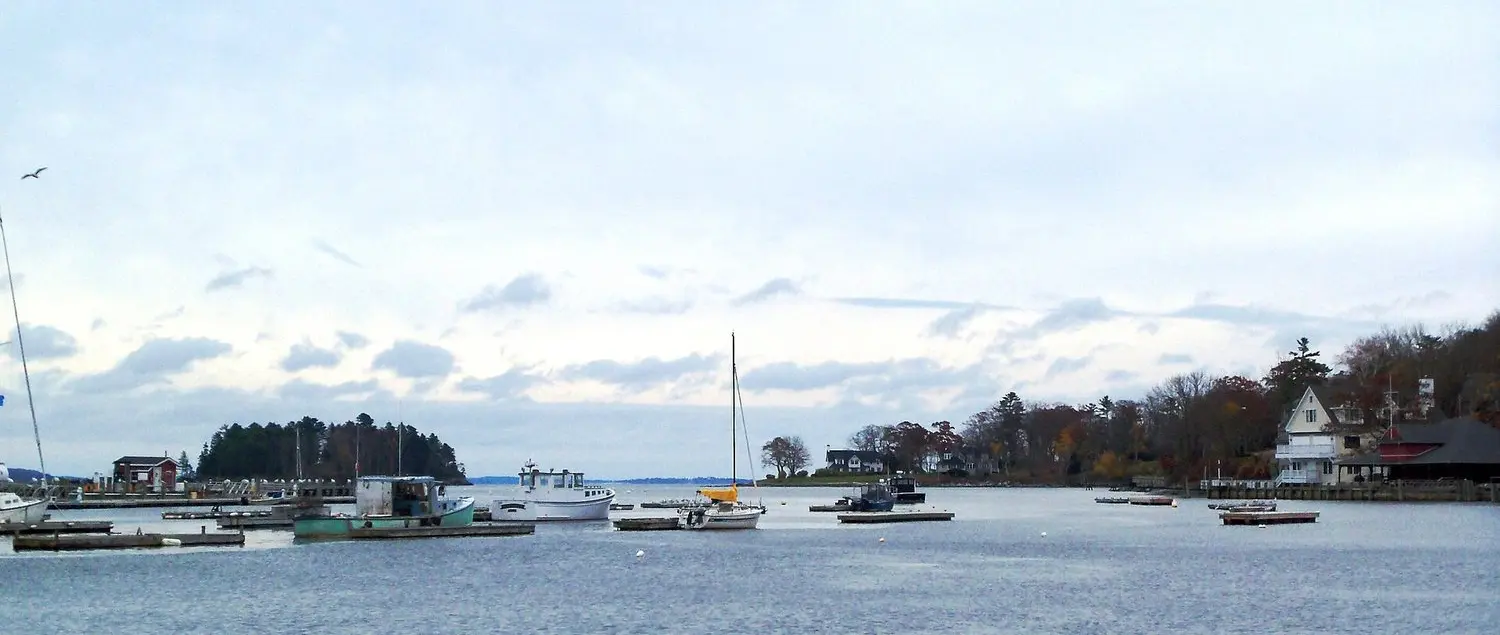
Sources: Lyman-Morse post-event report, and Marine Industry News, 4 November 2026. Photograph: Camden Harbor by Idawriter, Wikimedia Commons, CC BY-SA 3.0, resized. This illustrative harbour photograph does not depict the forum.
