
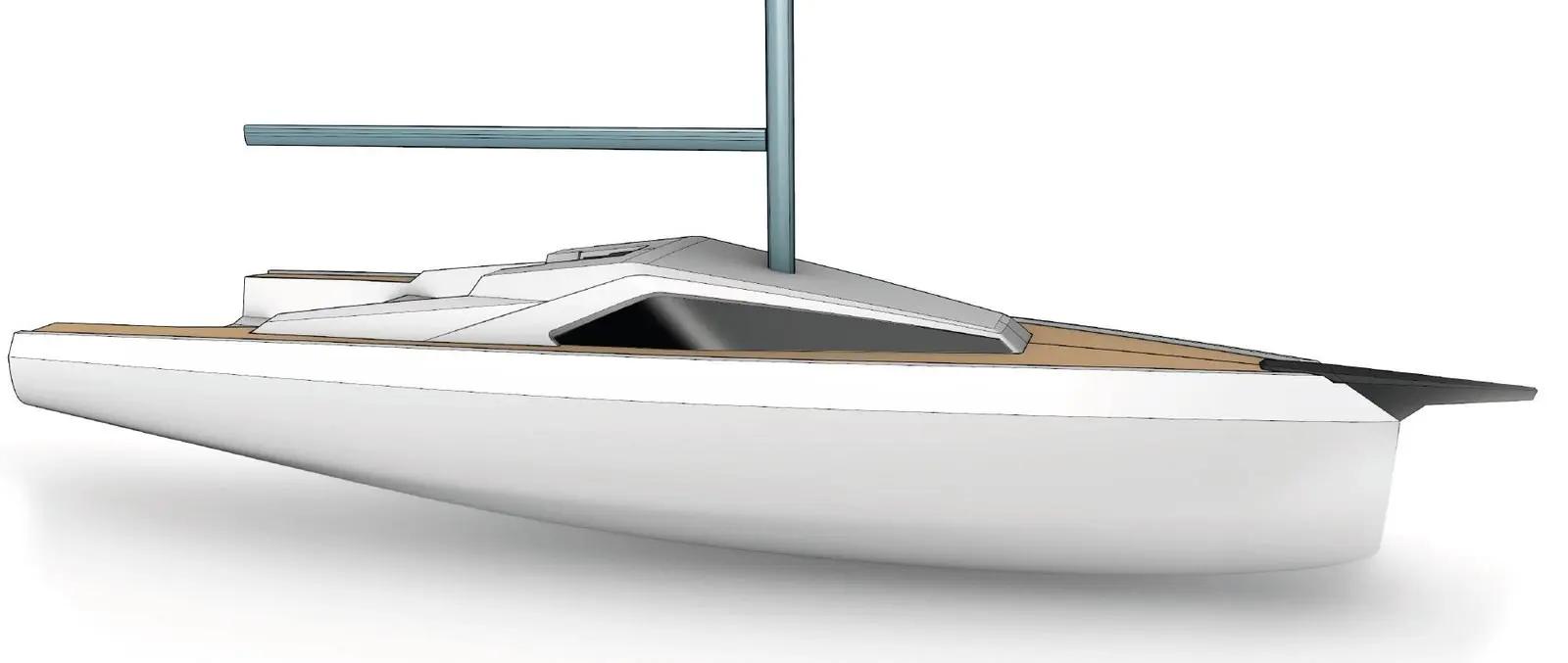
A home debut for a new kind of weekender
The Lyra 35 has arrived at the 2026 Valencia Boat Show for its first appearance at a boat exhibition, according to the show's announcement dated 30 October. This is a significant public step for the locally developed sailing project, which was already launched during the Trofeo de la Reina regatta but is now being presented directly to the wider leisure-boating audience. Lyra Works founder Luis Alonso Pomar set out to combine the responsiveness of a racing yacht with the comfort expected from a fast cruiser. The result is a 10.9-metre sailboat whose published dimensions and construction details provide a clearer picture of the ambition than an untested claim of speed.
The project has a Valencian identity but a broader design pedigree. Lyra Works names Michele Molino as its designer, while Náutica Aza is responsible for commercialisation and took part in development. Rather than positioning the boat solely as a lightweight regatta machine, the company offers two layouts with different ownership priorities. The Venturer targets those who want to cruise as a family; the Racer leaves the aft cockpit more open for sailing-focused owners. Both use the same underlying idea of a relatively light platform that can cover water efficiently under sail.
What the figures say about the hull
Lyra Works specifies 10.90 metres overall, 9.90 metres hull length, 8.75 metres on the waterline and a maximum beam of 3.35 metres. The published draft is 2.15 metres, with displacement of 3,300 kilograms and ballast of 1,200 kilograms. These are particularly useful numbers for anyone comparing the Lyra with conventional production cruisers. A relatively deep keel affects where the boat can berth or anchor, while ballast and displacement deserve consideration alongside the sail plan. Neither the displacement figure nor a promotional description on its own proves actual performance in varying wind and sea states.
The official specification lists 35 square metres for the mainsail, 29 square metres for the jib and 120 square metres for the asymmetric spinnaker. These are sail-area figures, not an assurance of what every owner will carry in all conditions. The designer's challenge is to keep a sporty boat manageable when the wind rises or when the crew is small. Prospective owners should ask about reefing arrangements, control-line positions, self-tacking or conventional headsail options, and the handling characteristics of the sail inventory actually supplied. A proper trial should cover tacking, downwind work and returning to harbour, not only a quick run on flat water.
Composite construction and the weight question
The event organiser describes a carbon deck and an epoxy-resin hull produced using infusion techniques, a combination intended to control structural weight while supporting the boat's fast-cruising role. Lyra Works likewise emphasises composite materials and modern production methods. The exact laminate schedule, quality-control process and survey documentation matter more than general claims about premium technology, however. Buyers should establish which structural components are carbon, what the standard build includes and whether extra equipment or cruising stores significantly change the boat's sailing trim.
Light displacement is attractive for reaching speed in modest wind, but it also changes the practical ownership conversation. Water, anchors, spare sails, batteries, safety equipment and personal luggage each add weight. A demonstration boat prepared for a regatta can feel different from a weekender loaded for a family trip. Owners should request a realistic cruising-displacement estimate and identify where heavy items are stowed. The builder's quoted 3,300 kilograms is a valuable benchmark, yet the eventual sailing experience will depend on the delivered configuration and the people and equipment carried aboard.
Hybrid assistance without overclaiming autonomy
Lyra's own technical page identifies a 20-horsepower diesel-hybrid power system, a 10-kilowatt lithium battery specification and 150 litres of water capacity. The Valencia Boat Show release adds that the hybrid propulsion uses Vetus technology. This is an auxiliary propulsion arrangement for a sailing vessel, not evidence that the boat can complete long passages solely on electricity. The public material reviewed here does not provide a tested all-electric range, charging rate, battery usable capacity or energy-use curve in specific conditions, so those figures should not be inferred from the nominal hardware descriptions.
An interested owner should ask exactly how the diesel engine, electric machine, shore-power connection and onboard loads are integrated. Where are battery management and isolation controls located? What redundancy is available if one component becomes unavailable? Can the system maintain a safe reserve for entering harbour after refrigeration, electronics and hotel loads have been running? Those questions are especially relevant to a hybrid installation in a compact hull, where every kilogram and compartment competes with cruising storage. The attraction is potentially flexible energy management, but a clear wiring and operating manual must support it.
Venturer comfort or Racer cockpit freedom
The most conspicuous distinction in Lyra Works' public description is not an engine upgrade. It is the choice of aft-deck philosophy. The Venturer is pitched at family cruising and incorporates an unusual garage intended to hold a tender with electric propulsion. The Racer has a more open transom cockpit for owners who put competitive sailing and active crew movement first. These layouts may serve different crews even when the hull, keel and core sail plan are related. Visitors should ask to see the exact deck arrangement being displayed and confirm which version the photographs portray.
For the family version, the important checks include access to the tender compartment, drainage, lifting arrangements, stowage while sailing and the weight of the dinghy plus battery. A garage can be a neat solution only if the tender can be handled safely with a small crew. The Racer's open working area may suit organised line handling, but guests will still need secure places to sit and move. Neither configuration is automatically superior. The decision depends on whether weekend guests, club racing, coastal hops or longer passages dominate the expected calendar.
The questions Valencia visitors can answer now
The 17th Valencia Boat Show runs from 28 October to 1 November at Marina Port Valencia, and Lyra Works' home appearance comes with a timely chance to speak with Náutica Aza and the project team. The organiser calls this a debut at a boat show, not the first time the yacht has touched water. That distinction is important: public presentation is a milestone, but performance figures, production scheduling and delivery terms should still be supported by documents. Prospective buyers can compare the builder's published sail plan and construction notes with the actual boat while the event remains open.
A useful visit would establish availability of both Venturer and Racer, engine and energy-system warranty, keel configuration, cruising displacement and the practical procedure for operating the tender garage. Ask for an inventory of standard and optional gear, service contacts and a trial under sail with a representative crew. The Lyra 35 is an interesting regional project because it seeks to bridge a genuine divide between sailing performance and weekending comfort. Its presentation in Valencia makes that proposition more tangible; a sea trial and transparent build specification will determine how convincingly it works for an individual owner.
Primary sources: Lyra Works official specifications and Valencia Boat Show's 30 October 2026 announcement and the Valencia Boat Show report. Specifications, performance and availability should be verified for the exact boat.