
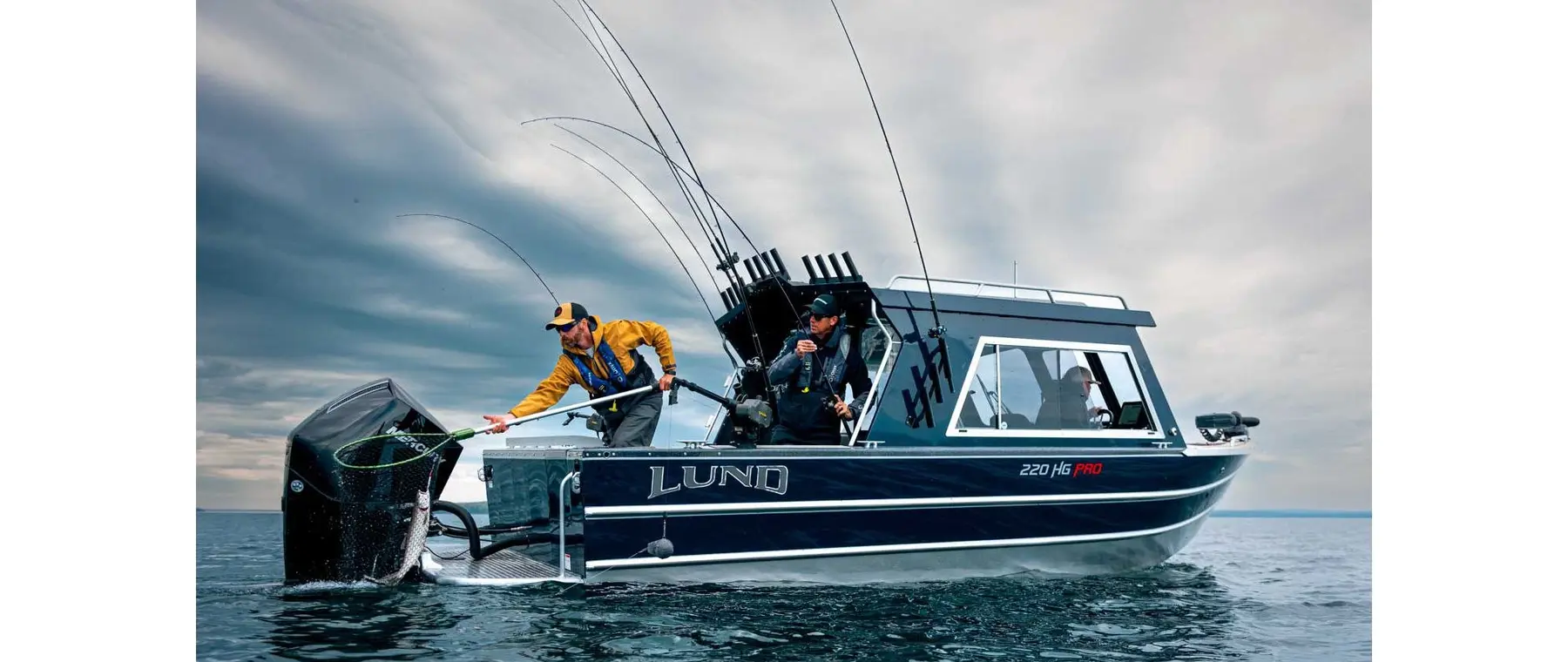
An expanded heavy-gauge family
Lund Boats has added the 220 HG Pro and 240 HG Pro to its model-year 2027 range, extending its heavy-gauge aluminium approach into larger hardtop fishing boats. The new pair is intended for anglers who encounter changing weather and need a platform that can handle long runs on substantial lakes or open waters. Lund describes the hardtop as central to the new design rather than a simple accessory.
The announcement offers a clear distinction from the builder’s more compact recreational fishing models. Here the emphasis is on shelter, gear capacity and endurance, with a layout built around the practical requirements of serious fishing. Prospective buyers should still assess the intended use carefully, since even a well-protected small boat has limits in severe conditions.
Two lengths, two different capacities
The 220 HG Pro measures 22 feet and is rated for up to 300 horsepower and eight people, according to Lund’s official 2027 information. The 240 HG Pro extends the length to 24 feet, with a maximum of 350 horsepower and a ten-person capacity. Both have a 102-inch beam and a published fuel capacity of 100 US gallons.
The difference is not simply two feet of additional length. More space and the larger passenger rating can affect how a boat works for a fishing party, while storage, towing and marina arrangements become more demanding. Buyers should examine the full rig dimensions including motor and trailer, not just the hull length advertised in a brochure.
Protection beyond a windscreen
Lund’s Pro hardtop cabin provides overhead shelter and a defined helm environment, with an optional Alaskan bulkhead and door intended to create a more enclosed space. Those features are relevant in regions where cold rain, wind or spray can otherwise shorten a fishing day. A further option for an auxiliary steering station may help with certain trolling and low-speed operations.
Shelter changes comfort, but visibility and ventilation remain crucial. Buyers should evaluate window arrangements, wipers, access through the cabin and movement around the fishing areas. The value of a bulkhead will vary with climate and fishing style, and additional enclosure should never compromise the crew’s ability to move safely when conditions deteriorate.
A heavy-duty hull construction
The company describes heavy-gauge aluminium construction, with 0.250-inch material specified for the hull and transom in its launch information. Wood-free construction is also part of the package, reflecting the expectation that these boats may spend long periods exposed to wet fishing conditions. The details will appeal to owners who prioritise ruggedness and straightforward maintenance.
Material thickness is one important measure, but not a complete description of a boat’s structural strength. Welding, reinforcement, loading and how the vessel is operated all contribute to long-term performance. Anyone considering demanding offshore or exposed-water trips should consult the builder’s operating guidance, limits and warranty terms before deciding the design is suitable.
Fishing equipment built into the platform
The HG Pro specification includes a 52-inch insulated, recirculating livewell with pump-out and extensive storage for rods and other gear. Together with the large fuel capacity, these choices indicate a boat intended for sustained trips rather than only a brief outing near the launch ramp. A properly arranged working cockpit can make fishing safer and more efficient when several people are handling equipment.
Anglers should compare the actual rod-storage dimensions, cooler and livewell arrangement with their equipment. The number of seats, access to hatches and placement of electronics can be more significant than a single volume figure. A boat show or dealer inspection with a realistic kit list is the best way to judge whether the arrangement suits a particular fishery.
Trailerability and the ownership equation
Lund says the new models are trailerable without special permits in their intended North American context. That is an important selling point for owners who want to fish different lakes and waterways. Nevertheless, an individual rig’s legal requirements depend on its final weight, width, towing vehicle, trailer setup and the rules in the places where it is driven.
Customers should therefore check local road regulations rather than treating the manufacturer’s general statement as universal. Fuel use, servicing and storage arrangements should also be considered before choosing the larger model. The ability to tow a hardtop fishing boat is only useful when the complete ownership system is practical.
Arriving with the 2027 range
The manufacturer’s 2027 preview says the HG Pro models are arriving at dealers, inviting interested anglers to contact the local network for current availability. Prices and final equipment can vary by country and configuration. The official specification is sufficiently detailed to begin an informed comparison, but a written quotation and a sea trial remain essential.
Lund’s launch underscores continued investment in specialist fishing platforms with more weather protection and substantial practical capacity. For anglers operating in challenging conditions, these boats are worth examining closely. Their suitability will depend on the waters being fished, the equipment carried and the owner’s willingness to make realistic decisions about weather and safety.