
Boating Industry recognises a marine AI leader
Boating Industry's 2026 Bold Moves recognition includes Howie Hecht, co-founder and chief operating officer of LOOKOUT, a company developing camera-based marine situational-awareness technology. The recognition appeared in a feature published on 6 November and identifies the operational work involved in taking an emerging product from development to practical use aboard boats. It is an industry leadership award, not a new certification of artificial-intelligence navigation or a declaration that a camera can replace the person at the helm.
Leisure Boat Guide's interest is what this kind of technology means for owners of smaller recreational craft. A compact centre-console boat or cabin cruiser can be difficult to operate in glare, rain, darkness or busy waterways, especially when a short-handed crew is also managing passengers, lines and navigation. Systems that help identify possible hazards can be useful, but they only add value when their limitations are understood and when the skipper remains responsible for a proper lookout.
LOOKOUT's product aims to improve awareness
The company's system combines cameras and software intended to detect and display information about objects around a vessel. Rather than simply presenting another video image, the technology seeks to draw attention to potentially important features of the scene. Such tools may become part of a modern helm alongside charts, radar and automatic identification systems. Each input has a distinct role, and an operator should avoid assuming that one source can always substitute for another.
A camera depends on what it can actually see, including lighting, obstructions and weather conditions. Radar may observe some objects differently, and AIS only provides information from transmitting vessels or other equipped targets. Marine vision software can support a skipper by organising information but cannot guarantee that every floating object, swimmer, unlit craft or hazard will be detected. Safe operation depends on integrating the tools with direct observation and sound seamanship.
The leadership story centres on practical deployment
Hecht's role, as described by the industry publication, connects engineering, manufacturing, distribution, installation and customer support. That is important because a promising marine electronics concept can still fail owners if it is difficult to fit, poorly supported or confusing at the helm. Marine equipment has to withstand vibration, moisture and electrical conditions that differ from those of an ordinary office device. Installers must understand the product as a complete system rather than as an isolated camera.
An owner selecting new technology should ask who is responsible for installation, whether the chosen display is compatible, how updates are supplied and what diagnostic support exists. A product that looks convincing at a boat show may be less useful if no local technician can maintain it. The operational work recognised by Bold Moves is therefore relevant to reliability and ownership, even though the award itself does not independently test the hardware.
LOOKOUT has been developed through several versions
The Bold Moves profile describes a commercial introduction in 2024 and a LOOKOUT 3.0 release in 2025. Features discussed include a synthetic three-dimensional aerial view and dynamic shallow-water boundary displays. These are product capabilities reported by the manufacturer and industry source; they should not be presented as independent evidence of perfect hazard detection. Software updates can add functions, but performance still depends on the camera arrangement, display and environmental conditions in a particular installation.
The synthetic perspective may be appealing to people trying to understand a busy harbour, but it is a processed interpretation rather than a direct view of the water. A skipper should distinguish between measured positions, mapped information and graphics inferred or generated by software. Misunderstanding that distinction can create false confidence. Training, clear user interfaces and accurate documentation help ensure that a useful aid remains an aid rather than a source of distraction.
Installation can be a barrier for smaller boats
A small recreational craft may have limited mast height, a crowded console and relatively little spare electrical capacity. Adding cameras and displays requires attention to mounting location, field of view, cabling, protection and power consumption. Equipment installed in a way that blocks navigation lights or interferes with another safety system can create more problems than it solves. An integrated installation needs to be reviewed as part of the complete boat.
LOOKOUT has described a combined camera and all-round white navigation-light arrangement as one way of reducing installation complexity. The industry profile says this approach received a 2025 IBEX innovation award in the OEM Electronics category. That award is evidence of recognition by an industry judging panel, not a blanket determination that every installation meets all local navigation-light requirements. Owners still need to verify the correct product and mounting configuration.
Navigation displays must stay understandable
One challenge with advanced marine electronics is the temptation to show every available signal at once. A helm full of alarms, overlays and animated targets can distract a skipper who is trying to steer through a narrow channel. Useful design puts important warnings in context and makes the underlying information accessible. A clear, appropriately placed display can support decisions, while excessive detail may make them harder. Human-centred design is therefore just as important as the number of sensors fitted.
Owners considering a system should request a practical demonstration in conditions resembling their normal boating. An artificial-intelligence feature that works smoothly in a quiet marina may behave differently in a crowded anchorage or strong backlighting. Questions about nuisance warnings, camera cleaning and display readability matter. The system should make safe navigation easier to understand rather than encourage a driver to watch the screen continuously.
Distribution and integration have expanded
The Bold Moves profile refers to LOOKOUT's wider distributor and dealer network and its route-synchronisation work with Argo Navigation. These developments aim to make the technology fit existing boating workflows rather than require operators to abandon familiar tools. For small-boat owners, compatibility can reduce the need for multiple displays or duplicated navigation entries. However, specific integration depends on product versions, supported equipment and software configuration.
A company partnership does not guarantee that every boat already has the function enabled. Owners should check exact model numbers, licence requirements, installation specifications and any subscription or update terms. Where route information is transferred between systems, it should be verified before departure. A displayed route may be useful planning information, but the skipper still needs current charts, depth awareness, weather information and an appropriate reserve route.
The award is about leadership, not autonomy
The 2026 recognition describes Hecht's work on the organisational infrastructure necessary to bring marine AI products to customers. It also highlights experience in technology and boating. Those contributions are distinct from claims about autonomous operation. A recreational boat equipped with an advanced vision system is not automatically self-driving or permitted to operate without a watchkeeper. The applicable collision-prevention and navigation responsibilities remain with the operator.
This distinction is particularly significant on short-handed small craft. A new system may provide extra time to notice a developing hazard, but it cannot assume legal responsibility for avoiding another vessel. Sailors and powerboat skippers need to understand the International Regulations for Preventing Collisions at Sea where they apply, along with local rules. Marine AI can complement sound judgment and attentive operation, not redefine their importance on its own.
Owners should assess data and maintenance
Any camera-based system can involve storing, processing or transmitting information about the vessel's surroundings. Buyers should understand what the device records, whether footage leaves the boat and how access is controlled. The available award profile does not provide a complete privacy or cybersecurity assessment. Such questions should be addressed using the manufacturer's current product documentation, especially if a device connects to existing navigation networks or receives updates.
Maintenance also matters. Camera lenses may collect salt deposits or moisture, electrical connectors can deteriorate and software may require updates to remain compatible with displays. A plan for cleaning, inspection and troubleshooting should be clear. A device marketed as intelligent still depends on ordinary marine engineering. A neglected camera is not made reliable by sophisticated detection algorithms.
What the November recognition establishes
Howie Hecht's inclusion in the 2026 Bold Moves feature recognises leadership in turning marine AI vision technology into a deployable product. The article describes LOOKOUT's commercial development, recent system features and the partnerships needed to reach owners and installers. That is a genuine industry development, but it does not provide a controlled independent accuracy study or demonstrate that a particular small boat can safely use the system in every condition.
For Leisure Boat Guide readers, the practical issue is whether advanced awareness aids are appropriately installed, understandable and supported. The most valuable technology helps a skipper recognise danger while maintaining direct observation of the water. The award offers a reason to examine the broader progress in marine electronics, rather than a reason to hand over responsibility for a boat to software.
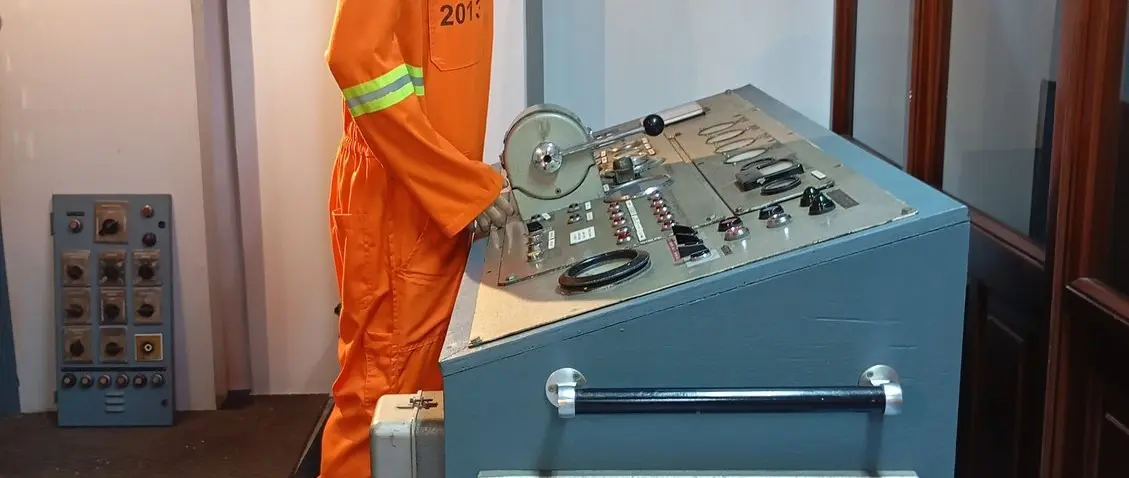
Sources: Boating Industry, 2026 Bold Moves recognition published 6 November, LOOKOUT manufacturer background. Photograph: a navigation-console simulation by AYANGMA BELEMENA, Wikimedia Commons, CC BY-SA 4.0; illustrative training image not a LOOKOUT installation or award photograph.
