
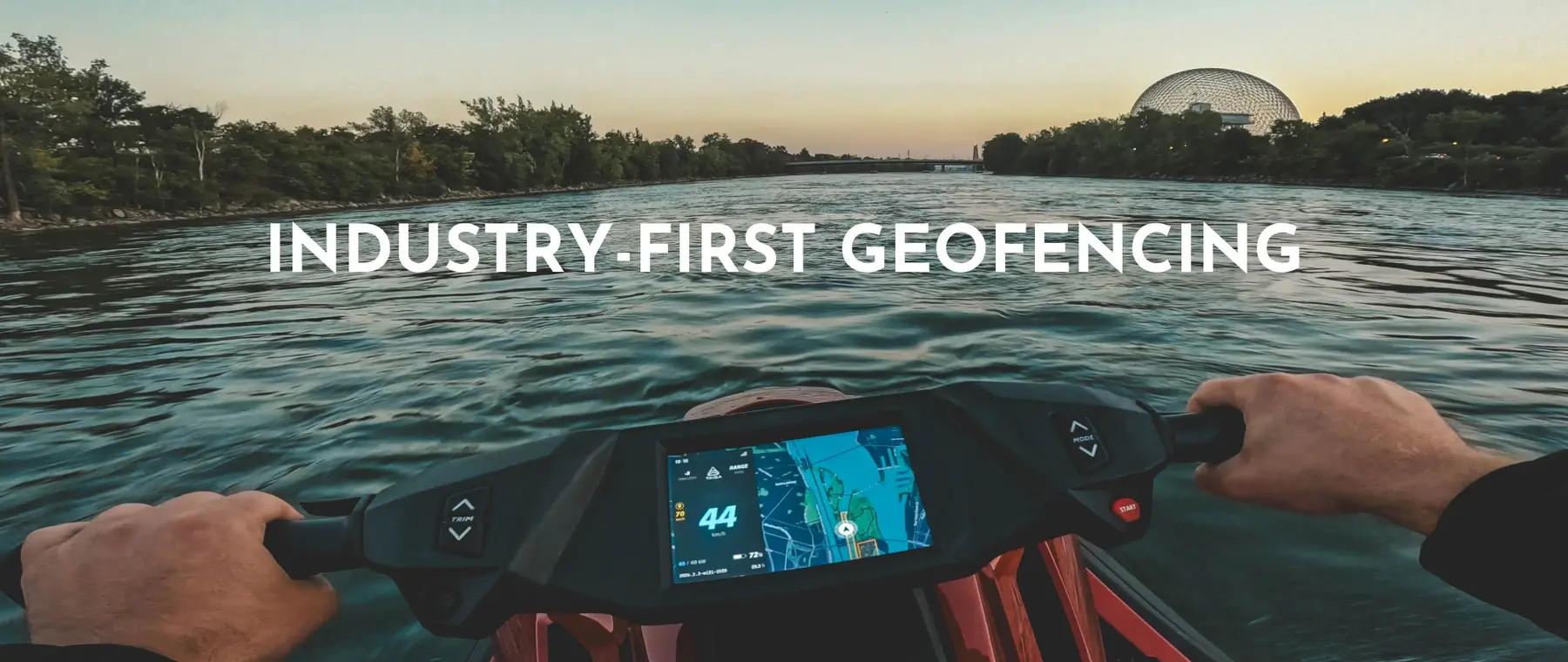
Technology used at the helm or in marine operations can be useful to smaller craft, but each product must be assessed for the actual boat and operating area. Taiga’s new OS-5 software adds built-in mapping and geofenced speed control to compatible electric Orca personal watercraft, with the update being demonstrated at Monaco Yacht Show 2026.
The original industry announcement documents the release, while this report considers its relevance to the under-twelve-metre boating market without assuming every model or installation is eligible.
Taiga has launched a major software update for its electric Orca personal watercraft, adding built-in mapping and geofenced speed control to the company’s software-defined vehicle platform. The OS-5 features are being demonstrated at the Monaco Yacht Show 2026 before being rolled out to compatible watercraft and snowmobiles through an over-the-air update.
The update is relevant to the superyacht tender-and-toy market because it moves speed management from a briefing or manual restriction into the vehicle itself. Owners and fleet managers can define areas where the watercraft automatically limits speed, creating a tool for controlling how guests or rental users operate close to shore, vessels or other hazards.
Owners can draw their own speed-limited zones
Taiga says custom geofences can be created for specific operating areas, with the vehicle automatically governing its speed when it enters the defined zone. That could allow a yacht team to establish slower areas around an anchorage, swim zone or launch point while leaving normal performance available farther offshore.
The company is also positioning the feature for rental fleets and guided routes, where different riders may have very different experience levels. A software-enforced boundary does not replace supervision or local navigation rules, but it can add another control layer when several watercraft are being used from the same yacht or watersports base.
Geofencing can also respond to sensitive shorelines
Taiga says it can work with local communities to create manufacturer-set geofences around sensitive ecological areas, wildlife habitats and busy tourist shorelines. In those zones the watercraft can automatically enforce low-speed operation, linking access management directly to the vehicle rather than relying solely on signs or rider awareness.
The approach may be particularly useful where quiet electric watercraft are permitted close to environmentally sensitive areas but speed or wake remains a concern. Any such deployment would still need to reflect the local authority’s rules, charted restrictions and the master’s own safety procedures.
Software becomes a larger part of the watercraft itself
OS-5 also adds mapping directly to the vehicle display and is intended as a foundation for future remote software updates. Taiga says the platform is designed to support additional capabilities over time, making the onboard software increasingly important to how the craft is managed after purchase.
For yacht owners, that changes the buying question from battery range and performance alone to software support, update policy and fleet control. The new system is on display in Monaco through 26 September, after which the first practical test will be how smoothly the features reach existing compatible Orca users.
What it means for smaller craft
Not every capability described for commercial vessels or larger yachts will be available on a small leisure boat. The manufacturer must confirm compatibility, supported displays, sensors and any subscription requirements.
Electronic aids complement rather than replace safe watchkeeping and sound seamanship. Owners should check the relevant operating instructions and maintain independent means of navigation or communication where appropriate.