
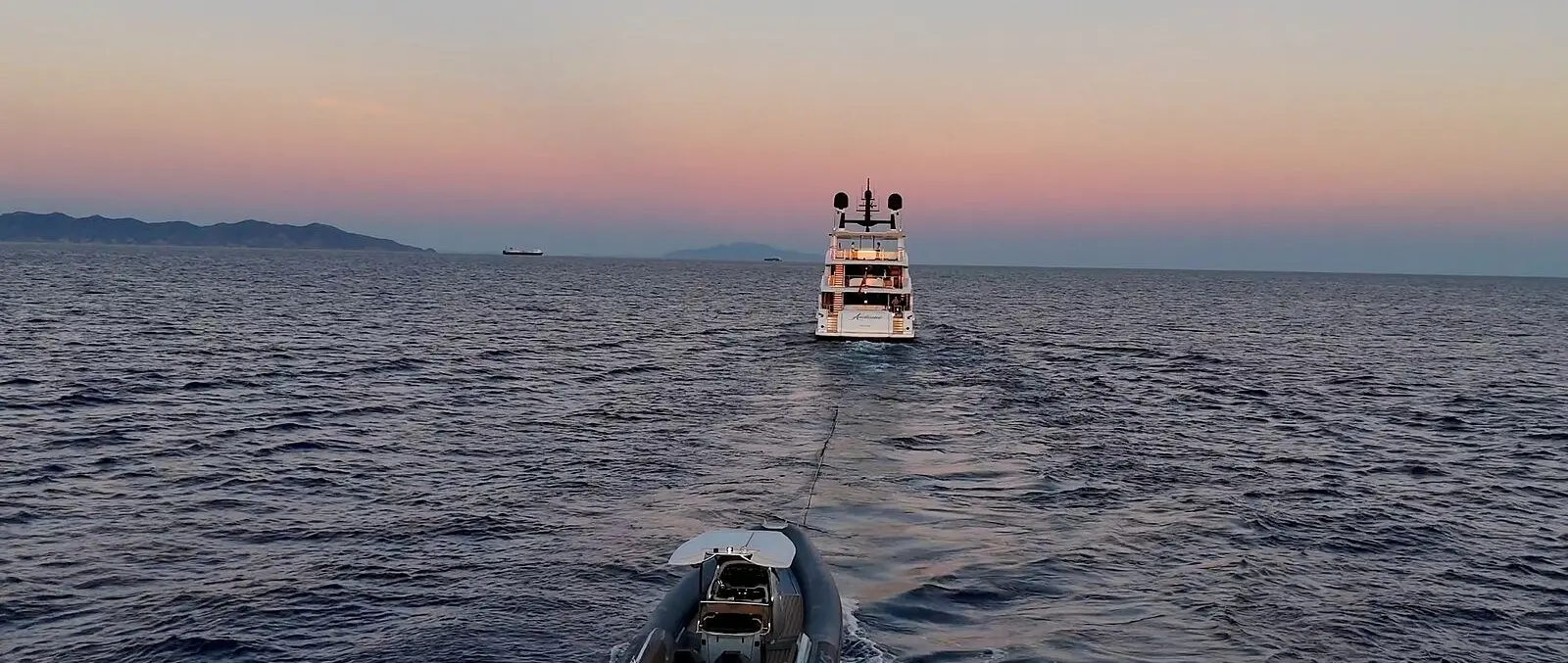
Tender monitoring goes beyond a position on a chart
Leisure Boat Guide reports this wider marine industry development for small-boat owners, operators and suppliers. Equipment, berthing and operating conditions may differ substantially from those of larger yachts. Pantaenius has highlighted the use of a dedicated tender-monitoring system aboard motor yacht ANDIAMO during extended operations and towing. Captain Jonathan Chell says Yacht Trace provided real-time information during a continuous 900-nautical-mile passage without adding complexity to normal bridge work.
A towed tender can be visible by position while still developing a battery, bilge or tow-status problem out of sight of the bridge team. Monitoring additional conditions can therefore give crew earlier warning than position tracking alone.
The system uses its own communications path
The two-way system reports the tender's location relative to the mothership together with tow status, bilge activity and battery condition. Pantaenius notes that it uses a dedicated communications network rather than depending solely on cellular coverage or AIS.
That architecture can be useful on offshore passages where cellular service disappears, but it should still be treated as one layer within the vessel's procedures. Physical inspections, tow checks and contingency planning remain necessary.
Night operations increase the value of remote awareness
Visual assessment becomes harder after dark or in poor conditions, particularly when the tender is being towed at distance behind the yacht. Continuous status data can help crew recognise a change before it develops into loss of the tender or significant damage.
Any alarm thresholds and procedures must be understood by the watchkeepers using the system. A device is most effective when the bridge team knows what information is reliable and what action each alert requires.
Insurance interest reflects operational risk
The insurer's interest in the technology reflects the cost and safety consequences when tenders or chase boats are lost, flooded or damaged during extended operations. For owners, the case is a practical example of prevention technology being assessed through actual yacht use rather than only a product demonstration.
The primary source is Pantaenius and includes the captain's experience with Yacht Trace. Leisure Boat Guide has linked the existing Pantaenius profile and does not infer that one monitoring product is required for every yacht. Readers of Leisure Boat Guide should verify vessel-specific applicability with the original supplier or organiser. No size, capacity or access claim is transferred automatically to a boat under 12 metres.