
Security incidents expose a camera's missing view
For owners and operators of small leisure boats, this marine industry development may affect services, suppliers or waterside facilities. Its application to a particular boat must be checked against that vessel and its operating area. For the 12.00–23.99-metre luxury-yacht market, this development has a specific place in the wider marine and travel picture. Panoblu has published a superyacht-security analysis focused on a simple limitation of pan-tilt-zoom cameras: they only record the direction in which they are pointed. The company says that can leave gaps when an intrusion, vandalism incident or other event occurs elsewhere around the yacht while the camera is watching another sector.
The July 2026 article follows comments from the CTO of M/Y Launchpad about the value of full-perimeter recording for post-event analysis. The argument concerns evidential coverage after an incident as much as real-time watchkeeping.
Continuous coverage changes the record
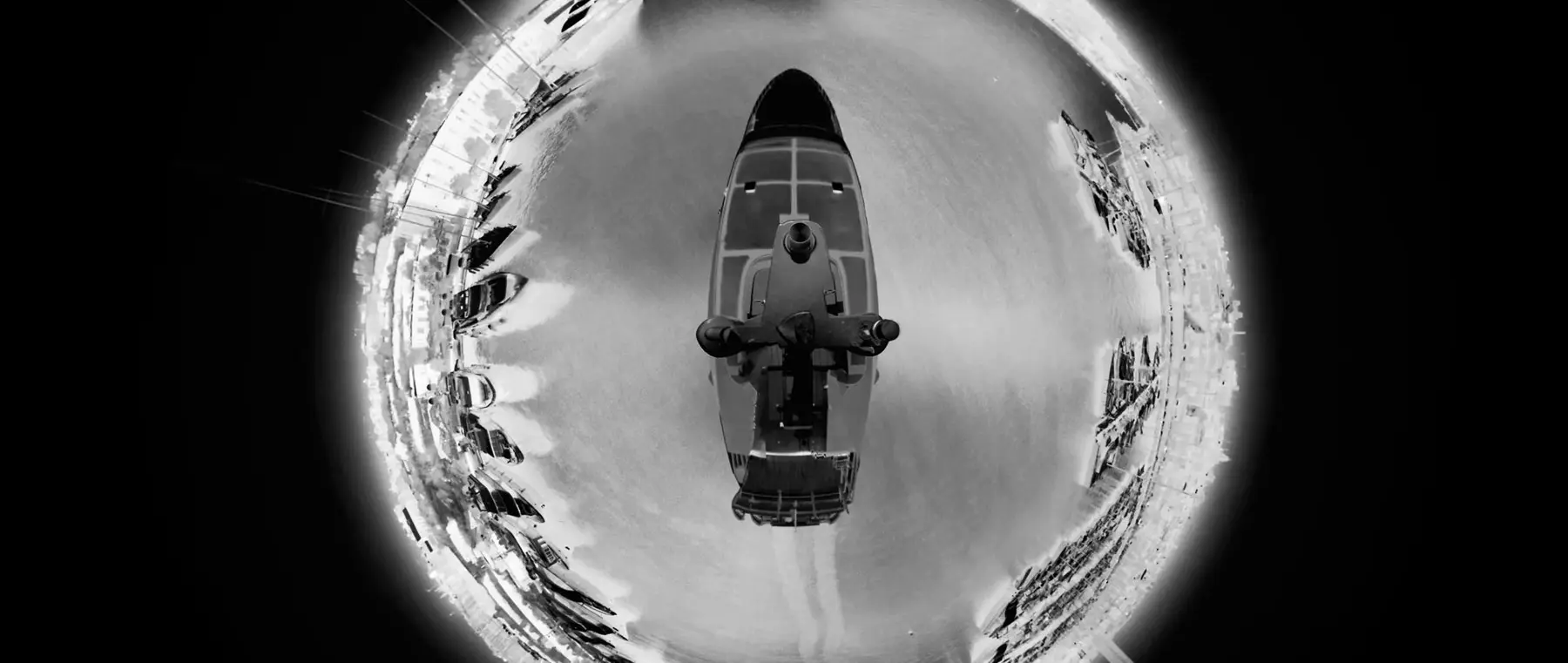
A fixed 360-degree imaging system records every bearing simultaneously instead of relying on an operator or automated patrol pattern to choose a direction. Panoblu says that means crew can review what happened around the whole vessel after the event rather than discovering that the relevant camera was facing away.
Continuous recording creates its own data-storage, privacy and access-control requirements. Yacht managers need clear retention rules and appropriate cybersecurity around any system holding detailed imagery of guests, crew and shoreside areas.
Thermal imaging extends the concept into darkness
Panoblu's current platform combines visible-light and thermal imaging options to provide full-perimeter awareness in day and night conditions. The company positions that coverage for navigation, security and situational awareness rather than as a replacement for radar or a proper lookout.
Thermal systems can reveal people or vessels that are difficult to see in darkness, but range and clarity depend on environmental conditions and the sensor itself. Crews should understand those limits before relying on any camera as part of a security plan.
A security system still needs procedures
A yacht can install extensive surveillance yet remain vulnerable if alarms are ignored, camera views are poorly positioned or nobody knows how to preserve useful footage after an incident. Hardware therefore works best as one part of access control, watchkeeping and incident-response procedures.
Panoblu's original article and official thermal image support this report. Leisure Boat Guide has linked the existing Panoblu company record and attributes the system-performance arguments to the manufacturer. For buyers and managers working with 12.00–23.99-metre luxury yachts, the practical question is how this development affects a vessel's operation, itinerary, equipment or service network. The announcement should be read against the exact yacht, local conditions and supplier terms rather than applied to every boat. Leisure Boat Guide covers this as wider industry news. Vessel dimensions, local conditions and supplier terms must be confirmed directly rather than assumed from a general announcement.