
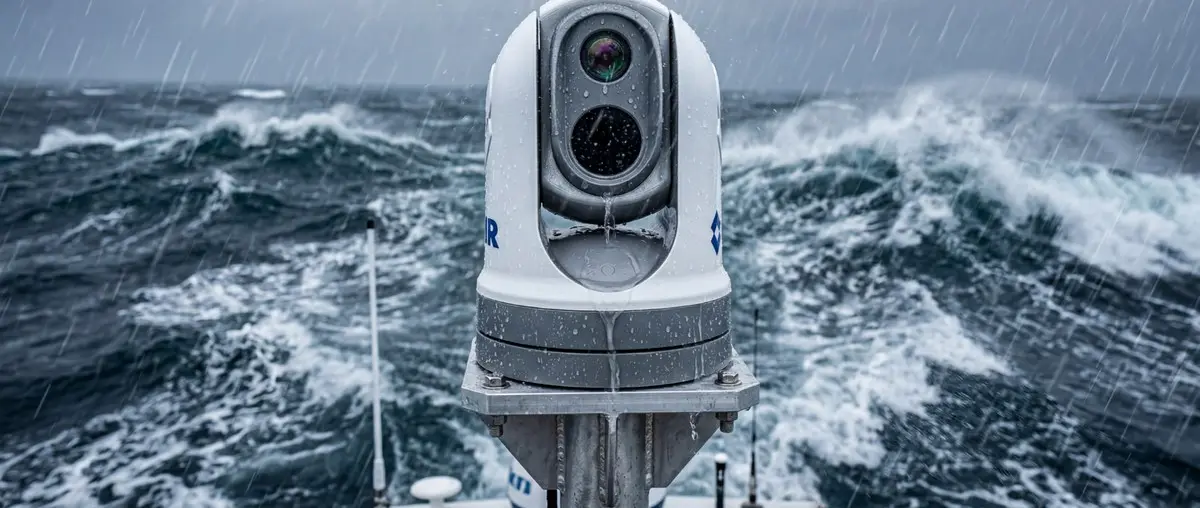
A camera designed for vessels without a person at the helm
Leisure Boat Guide reports this wider marine industry development for small-boat owners, operators and suppliers. Equipment, berthing and operating conditions may differ substantially from those of larger yachts. Teledyne FLIR Marine has introduced the M364C-USV, a multispectral camera system developed for autonomous and uncrewed surface vessels. The August 2026 product combines thermal and visible-light imaging in a platform intended to feed navigation, surveillance and remote-control systems with usable imagery in darkness, glare, haze and other difficult conditions.
Although the launch targets USVs, the technology is relevant to superyacht support craft and future remote-operation systems because the same challenges apply when a human lookout is not physically present at the sensor. It also provides a useful reference for yacht projects exploring remotely operated tenders or other autonomous support craft.
Thermal and visible channels serve different tasks
Thermal imaging can highlight temperature differences that remain visible in darkness, while a conventional visible-light channel provides detail and colour when conditions allow. FLIR combines those streams so remote operators or onboard software can draw on complementary information rather than relying on one camera type.
No optical system can see through every condition, and performance still depends on range, weather and installation position. Integration with radar, AIS and other sensors remains important for a complete operational picture.
Integration is part of the product brief
FLIR describes the M364C-USV as designed specifically for remote and autonomous operation rather than as a standard crew-operated camera adapted afterwards. Its interfaces are intended to make imagery available to vessel-control systems for navigation, obstacle avoidance, security, environmental monitoring and research.
That architecture may also interest yacht builders developing intelligent tenders or other remotely operated craft. Any safety-critical integration would still need testing against the intended mission, redundancy requirements and applicable class or flag expectations.
Uncrewed technology can feed back into yachts
Autonomous-vessel development often accelerates sensors and control systems that later appear in crewed applications. Better machine-readable imaging, remote diagnostics and camera integration can therefore influence superyacht bridge and tender systems even where the yacht itself remains conventionally crewed.
The official FLIR announcement supplies the launch details and exact product image. Leisure Boat Guide has linked the existing FLIR Marine company record and does not imply that the camera makes a vessel autonomous on its own. Readers of Leisure Boat Guide should verify vessel-specific applicability with the original supplier or organiser. No size, capacity or access claim is transferred automatically to a boat under 12 metres.