
Updated rules for eligibility in international sailing
World Sailing has revised its sailor Categorisation Code and the digital application system used to record eligibility for international competition. Its 10 November 2026 announcement clarifies how government or national-body support, paid race coaching and participation in certain professional events can affect a sailor's classification. The changes matter to small-boat and keelboat crews because class and event rules sometimes distinguish between categories of competitor. This is a regulatory and administrative development, not a declaration that every sailor who receives a lesson becomes a professional. The official statement explains particular conditions under which Group 3 applies and points to exemptions and review procedures. Competitors need to understand the precise code before entering an event whose eligibility depends on categorisation, rather than relying on informal assumptions about the meaning of amateur status.
Why a sailor category matters
Some organised racing uses a categorisation system to define which sailors can take certain roles within a crew or enter a designated division. It can help organisers distinguish the experience or professional involvement of entrants where that is part of the competition format. A category is not a direct measurement of whether someone is fast, competent or responsible on the water. It is a rule-based classification linked to the person's activities and circumstances. The applicable Notice of Race and class rules determine how the category affects a particular competition. A recreational sailor enjoying a club outing may never need to submit a categorisation application, while another competitor entering a restricted event might have to maintain accurate records. World Sailing's update is relevant because misunderstood classifications can cause problems when crews commit to regattas and discover that an important eligibility condition was interpreted incorrectly.
Support from national bodies can affect Group 3 status
The federation says it has clarified the existing principle that sailors receiving support from their Member National Authority, National Olympic Committee or government sources to train or compete may be classified in Group 3. This is connected with clause 2.1.2(a) of the updated Code. The support might include coaching, strength and conditioning services, psychology, physiotherapy or supplied equipment. World Sailing explains that such benefits can constitute effective remuneration under the rules, even where the sailor does not simply receive a wage. The word 'may' matters, since a classification depends on the applicable definitions and actual circumstances. The announcement should not be misreported as an automatic universal ban on publicly supported youth sailors or as a new cash-payment requirement. Competitors must consult the full code and obtain a formal determination when eligibility is important.
Paid race coaching receives an explicit provision
A new clause addresses sailors who have been paid for work that includes coaching competitors, crews or teams to prepare for or race in an event conducted under the Racing Rules of Sailing. World Sailing says this type of paid race coaching makes the person Group 3 under clause 2.1.2(e). That is different from merely helping a friend in the boat park or receiving basic sailing lessons. The scope is tied to paid activity preparing someone for or helping them compete in racing governed by the rules. Small clubs often employ instructors for different purposes, so the distinction can be especially relevant to people who both teach and race. A local coach should not assume that the same category applies to every task performed during a busy season. The actual nature of the work and applicable exemptions have to be considered carefully.
General learn-to-sail teaching is treated differently
The official explanation explicitly distinguishes paid coaching for racing from general skill development in a learn-to-sail environment. This is a crucial point for community sailing centres. Instructors may teach beginners how to rig a dinghy, launch safely, steer upwind or recover a capsized boat without preparing a competitor to race at a regulated event. World Sailing's statement does not say that every such instructor automatically falls into Group 3 solely because they are paid to teach sailing. Nor does it establish that all racing coaches are exempt if they describe their activity as educational. The actual work performed matters. Club managers should understand the difference and encourage instructors who also compete to check their status when entering events with categorisation requirements. Clear job descriptions and records may help explain the nature of the work, although the official categorisation decision rests with the relevant authorities.
A possible exemption for younger coaches
World Sailing also identifies an existing exemption route in clause 2.1.1(b)(ii) that may be available to coaches under 22 who work only part-time or casually. The wording is conditional. It does not say every instructor under 22 is automatically exempt from all Group 3 provisions. Eligibility depends on the precise requirements and a suitable application or determination. The detail is relevant to youth sailing clubs where enthusiastic older students sometimes earn money helping with coaching while continuing to compete themselves. These dual roles can provide valuable experience and supplement a young person's income, yet they may create categorisation questions. Before entering a restricted class or championship, the coach should use the official process rather than rely on another club member's interpretation. An exemption only helps when its actual conditions are met.
Certain major events establish Group 3 status
The updated Code now lists a number of competitions whose participation automatically places a sailor in Group 3 under clause 2.1.3. World Sailing names the Olympic Sailing Competition, the Ocean Race, the Vendée Globe, the America's Cup Series including its major stages, SailGP and the World Match Racing Tour. The list is not a description of events exclusively involving small boats; it spans very different parts of the sport. Its significance is the categorisation effect of participation in these specified professional or elite settings. It should not be expanded to include every regional club match-racing contest or every race run by the same organiser. Competitors should read the actual code and confirm what counts as participation under the rule. A headline alone does not supply all the definitions needed for a formal eligibility decision.
The code is distinct from event rules
World Sailing's Categorisation Code and the Racing Rules of Sailing serve different purposes. One addresses the competitor's relevant status; the other governs conduct on the water and the operation of a race. A crew can handle its yacht properly yet face an eligibility issue if it incorrectly declares a category. Conversely, having an approved categorisation does not excuse a sailor from complying with starts, right-of-way rules or event-specific requirements. The updated announcement specifically refers to competitors and events conducted under racing rules, but the correct context depends on the Notice of Race. This means an owner planning a season should not assume that every event uses the same classification restrictions. Boat classes and championships may impose additional requirements or none at all, and each should be checked separately.
A more accessible digital application system
World Sailing says it has made extensive changes to the database and website interface through which sailors apply for categorisation. The aim is a simpler and more usable process. Improved digital administration can help competitors submit information and review their status without unnecessary confusion. It does not mean all decisions will be automatic or that an application is approved the moment it is sent. The relevant commission retains responsibilities for review and decision-making. Owners and crew organisers should keep track of the current categorisation records of any participants whose status affects eligibility. Where a document is required at registration, it should be obtained through the official system rather than copied from an old screenshot or unofficial register. A clear digital process is useful, but accurate underlying information remains essential.
Information may reach a protest committee
An amendment to clause 2.2.10 permits World Sailing to provide information from a sailor's categorisation application and other relevant details to a protest committee where needed. That reflects the possibility that eligibility can become part of a dispute at an event. The statement should not be read as permission for the public to inspect private application data at will. Sharing information in a formal sporting process is different from unrestricted publication. The precise protections and circumstances are governed by the code and applicable procedures. Competitors should therefore provide truthful information when applying and understand that a formal committee may need to examine relevant facts. This procedural element adds weight to the importance of accurate declarations, particularly in a championship where a later challenge could affect results.
The Categorisation Commission's powers are clarified
World Sailing has also clarified the authority of its Categorisation Commission under clause 3.2. The organisation says the commission can review a sailor's categorisation, decide appeals and, in defined circumstances, change, suspend or cancel a status. That does not imply that a particular sailor has been investigated or that any named result has been overturned as a consequence of this update. The announcement explains the framework, not an individual disciplinary case. A person seeking a review should follow the official process and supply appropriate information rather than assume that a race committee can rewrite a categorisation informally. The existence of appeal and review provisions is important because people's work and sporting circumstances can change over time. A category should be supported by a formal decision rather than left to assumptions made years earlier.
Why the change matters for club fleets
Community sailing programmes often depend on people who combine several roles. A former competitive skipper may teach juniors, a university sailor may coach occasionally and a talented dinghy racer may receive limited support from a national body. Those situations are not identical under the Categorisation Code. The update makes it more important for clubs to distinguish paid race coaching, general introductory instruction and supported high-performance participation. It does not provide an excuse to discourage volunteers or casual teachers from helping beginners. A club that organises categorised racing should explain what entrants need to declare and direct them to the official application process. It should avoid making informal promises that an individual's employment or financial support can never affect their status.
Practical steps before a championship
A competitor should first check whether the relevant event requires a World Sailing categorisation and how the class uses it. If a category is needed, the sailor can review the revised code, provide accurate information about paid coaching, event participation and support, and use the official application interface. Any uncertainty about an exemption should be raised before a crew is locked into a championship entry. Owners and race organisers should resist the temptation to classify someone solely by reputation, age or experience. The code is more specific than those impressions. Where eligibility is contested, formal review procedures exist. These are general procedural suggestions based on the published framework, not individual legal advice or a substitute for an official decision on a particular sailor.
What the November 2026 update establishes
The confirmed changes are clarifications concerning national-body support, a new paid race-coaching provision, a revised list of automatically categorising elite events, information-sharing arrangements for protest committees and clearer commission powers. World Sailing also reports improvements to the online system. The update does not by itself determine the status of every amateur sailor and does not guarantee that all championships will adopt identical restrictions. A historical image of dinghy or keelboat racing, if used with this story, must be credited under its own licence and not portrayed as evidence of a categorisation dispute. The practical message for small-boat competitors is to check the current official code and disclose relevant circumstances accurately before entering an event where eligibility depends on the formal classification.
Original industry sources and image credits
Reporting based on World Sailing official rules announcement.
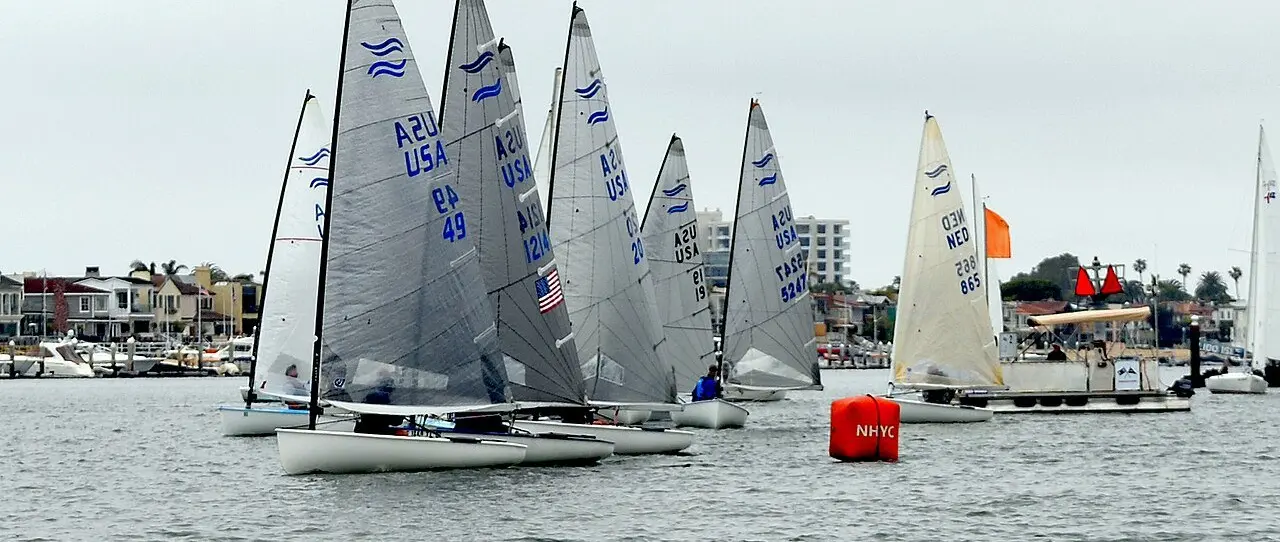
Lead image: Historical small-boat Finn-class racing; NOT evidence of a specific sailor categorisation decision or World Sailing meeting. Historical contextual photograph by Don Ramey Logan, File:Finns Racing by Don Ramey Logan.jpg, via Wikimedia Commons. License: CC BY-SA 4.0 (https://creativecommons.org/licenses/by-sa/4.0/). Image resized for editorial display. Historical small-boat Finn-class racing; NOT evidence of a specific sailor categorisation decision or World Sailing meeting. Original file: https://commons.wikimedia.org/wiki/File:Finns_Racing_by_Don_Ramey_Logan.jpg.. Licensed original image, author and terms.
