
An industry gathering focused on future leadership
Women in the Marine Industry International marked its fifth anniversary at METSTRADE in Amsterdam with a panel and networking breakfast attended by more than 200 marine professionals. British Marine reported on 25 November 2026 that the gathering took place on Wednesday 18 November at the exhibition's stage in RAI Amsterdam. The discussion examined the future of the marine workplace and how businesses can attract, develop and retain the next generation of leaders. The event brought together women and men from several parts of the global marine sector, including suppliers, manufacturers and related organisations. Its significance for Leisure Boat Guide is that the availability of capable people affects all branches of boating, from a local service workshop to companies supplying electronics and equipment for small craft. The anniversary itself is a confirmed event, while the long-term effect of the discussion will require future evidence.
Five years of professional connections
The organisation used the anniversary to recognise people who have contributed to its panel and networking format over several years. British Marine described the meeting as an opportunity to exchange experiences and explore ways to make the industry more welcoming to future talent. A fifth-anniversary celebration does not prove that every professional barrier has disappeared or that all participating companies have introduced new programmes. It does indicate that the network has sustained an international presence over successive exhibitions. Recurring gatherings can help people maintain relationships beyond one brief conversation at a boat show. For businesses whose staff may be spread across different countries, that continuity can be useful. The real value will depend on what participants do with the connections and ideas afterward, rather than the attendance figure alone.
More than 200 people attended
British Marine reports that the panel and breakfast attracted over 200 marine professionals. That is a meaningful number for a specialist industry event, but it should not be presented as the entire membership of the organisation or a verified total of women working in marine businesses worldwide. Attendees were drawn from different backgrounds and included men as well as women. The event's central question was how marine employers can find and support emerging talent in a changing workplace. A meeting can give people a chance to hear from experienced leaders, but it cannot measure the success of a whole sector's recruitment programmes in a single morning. Responsible reporting recognises both the confirmed turnout and the limits of what can be concluded from a well-attended discussion.
Four organisations hosted the meeting
The panel and breakfast were hosted by British Marine, METSTRADE, Soundings Trade Only Group and Marine Industry News. This collaboration reflects the way trade associations, exhibitions and specialist media can work together on industry development. Each type of organisation has a different role, from convening member companies to helping ideas reach a wider professional audience. The announcement does not present the event as a new governing body or a regulator with authority to impose employment rules. Its organisers provided a platform for conversation and networking. That can still be influential when participants are responsible for hiring, training and managing teams. For smaller boating companies without large human-resources departments, access to external professional perspectives may help managers consider approaches they would not otherwise encounter.
The main panel brought different perspectives
The three announced speakers were Paulee Day, President and Chief Executive Officer of West Marine; Fiona Richardson, Vice President of Human Resources at Navico Group; and Victoria Low, Chief Executive Officer of The Magenta Project. Michele Goldsmith, Vice President and General Manager of Soundings Trade Only Group, moderated the discussion. The participants represent different roles in the marine economy, including retail, technology and initiatives focused on professional opportunity. Their career experience cannot be reduced to identical advice, and the published report provides selected comments rather than a full transcript of every exchange. The common theme was that businesses should be deliberate about identifying potential and providing genuine opportunities for development. This focus is relevant across companies of very different sizes.
Moving beyond simply identifying talent
A central point of the panel was the need to help capable people gain experience and responsibility. Recognising that a colleague has potential is only the beginning; the organisation also needs a practical way to support learning and progression. Such opportunities might include responsibility for a project, access to training or introductions to people with relevant experience. These are illustrative management approaches rather than a list of actions formally adopted by every company attending. The published account highlights early conversations about where employees want to develop and how they can reach those goals. That may be especially relevant to technical marine businesses, where staff must acquire specialised knowledge before taking on complex production or service responsibilities.
Mentorship and sponsorship are different
The panel repeatedly emphasised mentoring and sponsorship. A mentor may provide advice, feedback and guidance, while a sponsor can use professional influence to help someone gain access to meaningful opportunities. Both can contribute to a person's development, but they are not interchangeable. Victoria Low highlighted the importance of using networks to open doors, while Fiona Richardson spoke about identifying talent and actively helping people move forward. These are the speakers' professional perspectives, not results of a controlled study presented at the event. A small-boat manufacturer or marine service business might consider how experienced staff can support colleagues, but the right arrangement depends on its size and operating circumstances. The verified message is that the panel encouraged more active development of emerging professionals.
Building workplaces that retain people
Attracting staff is only part of the challenge for marine employers. People also need reasons to remain and opportunities to progress. The event theme specifically included retaining talent in a changing workplace. A workshop or boatyard may invest considerable time in training someone on specialist equipment, so continuity can be valuable to the business and its customers. Yet the announcement does not provide an attrition rate or prove that particular mentoring schemes reduce turnover. Such claims would need separate evidence. The relevance for everyday leisure boating is practical: experienced staff help ensure that customers receive informed advice and equipment is serviced competently. Employers may therefore benefit from viewing professional development as part of long-term operational capability rather than merely an annual human-resources activity.
Audience participation was expanded in 2026
British Marine says the anniversary breakfast introduced more interactive elements, including real-time audience responses that brought additional perspectives into the conversation. This allowed the event to include views beyond those of the formal panellists. Audience interaction can make a professional meeting more useful because people may raise practical concerns not anticipated by the speakers. However, the report does not publish an independently audited survey sample or claim that the responses represent the entire global marine workforce. The innovation was part of the event's format, not a new industry-wide statistical study. Emma York of Fresh Approach Digital was among the attendees who welcomed the increased interaction. Her feedback is a participant's view rather than a measurable outcome for the whole sector.
Past panellists returned for the anniversary
Five former panellists returned for the celebration and received thank-you gifts, according to British Marine. The organisers also made an anniversary e-book available with selected observations from past and present speakers and partners. These elements acknowledge the continuity of the network over several exhibitions. A collection of personal experiences can be useful for inspiration and discussion, but it should not be mistaken for a formal technical standard or mandatory management framework. For someone new to the marine industry, hearing how experienced professionals navigated their careers may make possible paths more visible. Organisations can then decide which ideas are suitable for their own teams. The anniversary activities provide evidence of an established professional community without claiming that every story can be replicated.
A returning speaker discussed mentoring
Jemma Lampkin, Global Business Director for Yacht Coatings at AkzoNobel, returned to the event and reflected on the value of offering time to help others. Her role connects the conversation with the technical supply chain that serves both large and smaller recreational boats. Companies in coatings, equipment and related services often rely on people who combine product knowledge with customer understanding. Supporting colleagues to develop those skills is different from simply assigning them new responsibilities without preparation. The published comments show how one professional interprets mentorship, not a guaranteed improvement that will occur in every company adopting the idea. The broader editorial point is that professional networks can encourage experienced people to share knowledge with those entering or advancing within the sector.
A trade association leader stressed wider relevance
Joe Lynch, Chief Executive Officer of the International Council of Marine Industry Associations, described the breakfast as relevant beyond women alone. That observation fits the event's mixed attendance and its focus on opportunities across the workplace. Employers benefit when they understand the needs and potential of different members of their teams. An event highlighting women's careers need not exclude men from the conversation about better professional development. This interpretation should not be extended into a claim that all marine businesses face identical challenges or that the attendees agreed on a single solution. The confirmed development is a panel designed to encourage a broader discussion about future leadership. Its effectiveness will be reflected in later actions and sustained participation, not in a headline alone.
A charitable education goal accompanied the event
The anniversary also continued support for Room to Read, a global charity that works on children's literacy and girls' education. British Marine says the 2026 fundraising campaign aims to raise $25,000 towards helping support a school, building on activity earlier in the year. That amount is a fundraising goal, not verified donations already received. The cause has a different operational purpose from marine workplace training, so the two should not be merged into an imaginary scholarship scheme for boatbuilders. The initiative connects the event's interest in opportunity with education beyond the marine industry. Anyone considering a contribution should verify the current charity campaign page and its terms rather than assume a particular donation has already been matched or that the target has been met.
The link to recreational boating businesses
Small leisure-boat companies depend on capable people in several roles: designers, technicians, sales advisers, marina operators and managers. A discussion about leadership and retention may sound distant from a family motorboat or dinghy, but the quality of service and product development ultimately depends on skilled teams. A small employer may not have the resources of a large multinational manufacturer, yet mentoring and thoughtful career conversations can still be relevant. It would be misleading to claim that an event in Amsterdam has already changed employment practices at a named local club or workshop. The connection is a long-term one: the industry benefits when people can build expertise and find a pathway into responsibility. The panel offered ideas, not audited proof of adoption.
A discussion, not a new regulation
The 2026 METSTRADE meeting was a professional gathering. It did not introduce a legally binding quota, mandatory qualification or revised marine safety rule. Its published content centres on experience sharing, leadership development, mentorship and professional connections. The distinction matters because trade events can influence the tone of industry debate without having regulatory authority. Companies should consider what they can learn and make their own decisions in accordance with applicable employment obligations. A news report should credit the speakers and organisers for the positions they expressed, without presenting those positions as established scientific findings. The event's positive attendance and anniversary are verified, but future impact remains an open question.
The confirmed five-year anniversary story
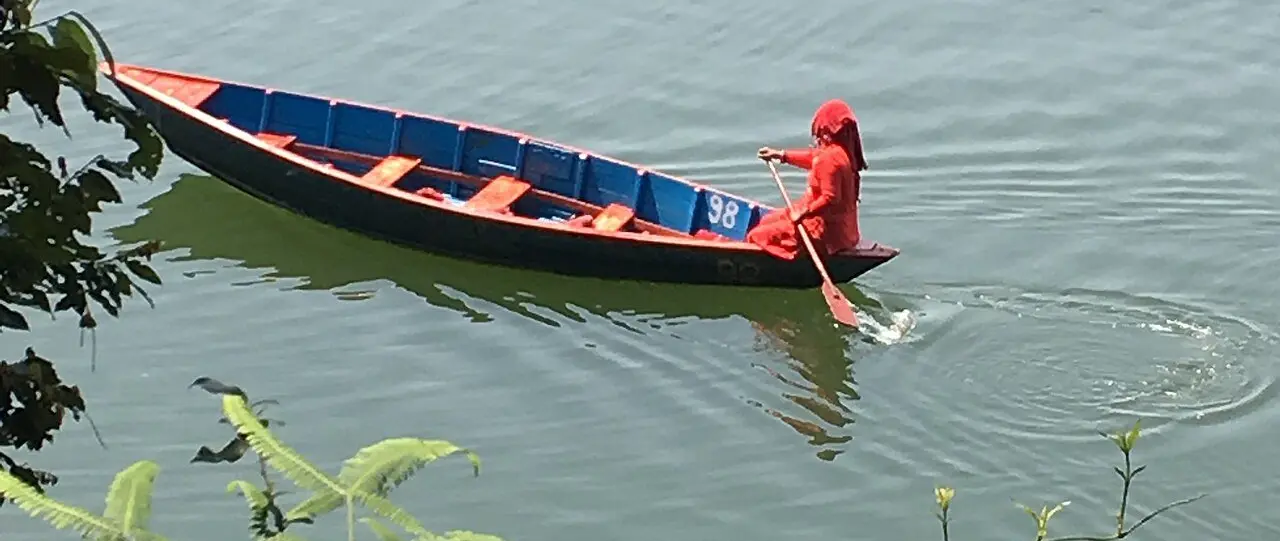
The verified facts are that Women in the Marine Industry International celebrated five years with a panel and networking breakfast at METSTRADE on 18 November 2026, attracting more than 200 participants. British Marine's 25 November report identifies the hosts, panel speakers, moderator, interactive format and Room to Read fundraising target. No new legislation or measurable change in workforce outcomes is claimed. A separately licensed historical photo of a woman operating a boat in Nepal may be used only as broader contextual boating imagery, not as a picture from the Amsterdam event or of its panellists. The importance of the anniversary is an established forum encouraging marine companies to help people develop their skills and take on leadership roles across the industry's diverse businesses.
Original industry sources and image credits
Reporting based on British Marine original industry announcement.
Lead image: Historical woman boating on Begnas Lake in Nepal; NOT a Metstrade panel participant or photograph of the 2026 marine-industry breakfast. Historical contextual photograph by Samirsangroula, File:Women sailing her boat for livelihood at begnas lake pokhara .jpg, via Wikimedia Commons. License: CC BY-SA 4.0 (https://creativecommons.org/licenses/by-sa/4.0/). Image resized for editorial display. Historical woman boating on Begnas Lake in Nepal; NOT a Metstrade panel participant or photograph of the 2026 marine-industry breakfast. Original file: https://commons.wikimedia.org/wiki/File:Women_sailing_her_boat_for_livelihood_at_begnas_lake_pokhara_.jpg.. Licensed original image, author and terms.
