
Thirteen wins and no defeats on San Diego Bay
William Stratton and crew Matei Meglic and Sidney Gathrid claimed the 2026 U.S. Match Racing Championship with a perfect 13–0 record on San Diego Bay. US Sailing reported the result on 20 October after the competition at San Diego Yacht Club, where ten teams sailed the club's J/22 keelboats. The title also carried a nomination to represent the United States at the 2027 Nations Cup in Cherbourg, France. The event belongs firmly within the small-boat sailing world: a J/22 is a compact keelboat, and the teams raced one another directly rather than comparing the performance of large yachts. A flawless record is unusual, but the official account shows that the racing was not always straightforward. Changing winds, a shortened competition format and a difficult final all played a part in the weekend.
Conditions forced organisers to adapt the schedule
The first two days were affected by competing influences from Santa Ana winds and the normal onshore sea breeze. Light and variable conditions made it difficult for officials to maintain a consistent racecourse. Principal Race Officer Randy Smyth and his team adjusted course orientation as the wind shifted and tried to complete as many fair matches as circumstances allowed. The ten-boat fleet managed only one round robin across those first two days. Because of that limited progress, the organisers removed the planned quarterfinal stage. This change should not be interpreted as a failure by any sailor. Race managers had to work with the conditions available, and a format adjustment was the practical way to progress the national championship. The official account provides the reason and outcome without suggesting that any unreported races took place.
A round robin established the semifinalists
At the end of Saturday's competition, Stratton led the standings without a defeat, holding a 9–0 record. Peter Joslin and Cameron Feves were level at 6–3, with Joslin ranked second after winning their round-robin meeting. Molly Carapiet secured the fourth semifinal position with five wins and four losses. Those figures show that the lead was clear but the competition behind Stratton remained closely contested. A round-robin classification is not a guarantee of what will happen during a knockout match, however. Sailors may encounter a different opponent strategy and changing breeze, so previous wins provide context rather than future points. For club racers, the distinction is important. A successful qualifying series places a team in a strong position, but championship honours still need to be earned in the prescribed subsequent races.
The Sunday breeze allowed the knockout to proceed
On the final day, more typical San Diego conditions arrived, with light morning air strengthening into a westerly breeze of roughly eight to ten knots around midday. Officials were able to run abbreviated semifinals, the petit final, abbreviated finals and a consolation round robin for places fifth through tenth. The finalists were determined in a format where two wins were needed to advance. That arrangement differs from the conventional fleet-racing system of accumulating points over a series. The race committee's decision to shorten the stages had been driven by the earlier lack of wind, not a desire to favour a particular participant. It allowed every team to continue meaningful racing within the remaining time. The official report makes the completed format clear, avoiding the temptation to describe a full planned schedule that never occurred.
Stratton selected his semifinal opponent
At the Sunday competitors' meeting, Stratton chose Joslin as his semifinal opponent. He then won two straight matches to reach the final. In the other semifinal, Feves won the opening contest against Carapiet, but she recovered to win the next two and secure the second final berth. This sequence illustrates why match racing can remain compelling even after an unbeaten qualifying performance. There are direct contests in which the crew has to respond to a particular opponent and the prevailing wind. A skipper cannot rely on a high overall ranking to carry them through automatically. The reported results show Stratton preserved his form while Carapiet demonstrated resilience after an opening defeat. They do not establish the details of every tack or tactical exchange; those would require race footage or verified first-hand analysis.
A separate battle decided third place
Feves and Joslin moved into the petit final after losing their semifinals. Feves took the first match, Joslin responded with a win in the second and the decider went to Joslin, who secured third place. He sailed with brother Jack Joslin and former Boston College teammate Nick Budington. The competition for bronze was therefore not decided by an arbitrary selection among semifinal losers. The teams raced for the remaining podium position under the championship's format. The outcome also shows that a crew could recover from semifinal disappointment and finish on the podium. Different stages of a match-racing championship create different goals once a team is eliminated from the title contest. Reporting those distinctions gives readers an accurate view of results instead of reducing the entire event to only the champion and runner-up.
Carapiet brought a strong crew to the final
Molly Carapiet entered the deciding match with Karen Loutzenheiser, Evan Cahill and Kate Gaumond. Stratton's three-person crew had to meet a team that had already responded to pressure in the semifinal. The report says Stratton won the first final match, putting him one victory away from the championship. That did not guarantee an easy second contest. Match racing is close-quarters competition in which positioning relative to a single opponent can matter more than sailing towards an apparently fast part of the course. A small keelboat's speed changes quickly when it loses wind or has to manoeuvre near another boat. The crew needs to combine tactical judgment with precise handling and rapid communication. Those general principles explain the format but should not be confused with a claim to know unreported crew conversations in the final.
A penalty became part of the decisive match
In the second final race, Carapiet carried a penalty up the first beat and for much of the downwind leg. US Sailing reports that she nevertheless maintained control and drove Stratton far enough beyond the gate to complete the penalty and lead him back towards the next part of the course. This was a notable tactical moment because it shows a penalised competitor trying to recover through boat positioning rather than simply conceding defeat. The details should be handled carefully: a penalty must be executed under the rules, and the official account confirms the action without supporting an invented claim about disputed judging. Carapiet's manoeuvre temporarily changed the race's balance. The story shows why a match can contain more than one reversal of advantage before the finish.
Traffic and chop then changed the contest
Following the penalty sequence, the report says an unfortunate mark rounding, other vessel traffic and chop from commercial boats slowed Carapiet's craft significantly. Stratton regained the lead by the next top mark and held on to win. This is a specific account supplied by US Sailing, not a general inference from the final result. It also highlights the role of conditions beyond the opponent's manoeuvres, particularly in a venue near a busy city waterfront. A small boat can be affected by disturbed water and traffic while the crew is trying to accelerate after a turn. Yet it would be wrong to assign a particular collision or rule violation without evidence. The official account describes the loss of boat speed and subsequent lead change, and that is the appropriate limit of the factual report.
Small J22 keelboats make a technical contest visible
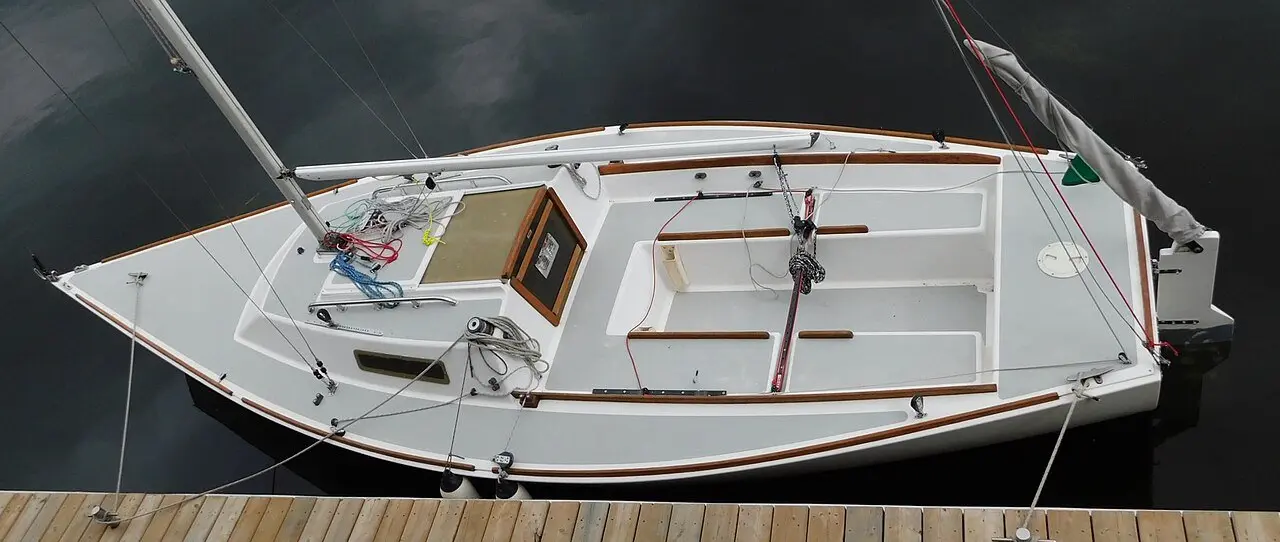
The host club's fleet of J/22s provided a relatively consistent platform for the ten competing teams. Close match racing in compact keelboats places weight on starts, trim, efficient tacks and rapid tactical responses. A crew accustomed to racing in a larger yacht may still face unfamiliar challenges when the margins between two boats are so small. The J/22 is also relevant to the wider club environment because the boat's scale is more approachable than that of a major offshore racer, although a competitive campaign still requires training, maintenance and resources. A supplied fleet reduces the need for visiting teams to bring their own boats. That does not remove every practical barrier, but it enables national competition to focus more directly on sailing skills across crews from different regions.
A perfect record is not the same as an easy championship
Stratton's thirteen consecutive wins are the definitive competitive statistic. They do not mean each match was effortless or that his opponents offered little resistance. The final included an opponent temporarily taking the lead after clearing a penalty, and the overall event experienced substantial changes in sailing conditions. A clean scoreline can conceal the work involved in managing those situations. The official report describes patient competitors during the early light-air delays and intense competition as the race programme developed on Sunday. It is more accurate to recognise consistent execution under pressure than to portray the championship as inevitable from the beginning. The result demonstrates an impressive unbeaten run while leaving room to acknowledge the quality of other competitors who reached the knockout stages.
Nations Cup nomination provides an international connection
The championship carried the nomination to represent the United States at the 2027 Nations Cup in Cherbourg, France, scheduled for September. That makes a national small-boat result part of a broader international match-racing pathway. A nomination is not the same as a completed appearance or a Nations Cup victory, and the future event's arrangements should be checked when they are officially confirmed. The significance is the opportunity created by winning a domestic title. Clubs can play an important role by maintaining match-racing boats and supporting crews who are ready to progress. National events provide experience against strong opponents, and international representation introduces further competitive demands. This pathway depends on sporting performance, available resources and eligibility requirements rather than any automatic assumption about career outcomes.
A verified result with no invented photographs
The confirmed winners are Stratton, Meglic and Gathrid, with Carapiet's team second and Peter Joslin's crew third after the petit final. The record is 13–0, the venue San Diego Bay and the class J/22. The competition took place before 26 November, and the reporting date should not be confused with the championship dates. A historical J/22 photograph used for context must be labelled as an older example of the class rather than an image of Stratton's winning boat. Readers seeking match-by-match rankings can consult US Sailing and the linked official match-racing results. The lasting lesson is that small keelboats can produce intricate and highly competitive national championships in which crew coordination, weather and individual decisions all remain decisive.
Original industry sources and image credits
Reporting based on US Sailing official announcement.
Lead image: Historical J/22 class sailboat photograph; NOT William Stratton or the 2026 US Match Racing Championship. Historical contextual photograph by Ahunt, File:J22 sailboat 2528.jpg, via Wikimedia Commons. License: CC0 (https://creativecommons.org/publicdomain/zero/1.0/). Image resized for editorial display. Historical J/22 class sailboat photograph; NOT William Stratton or the 2026 US Match Racing Championship. Original file: https://commons.wikimedia.org/wiki/File:J22_sailboat_2528.jpg.. Licensed original image, author and terms.
