
Ten boats begin an offshore season from Wellington
Ten yachts lined up on Wellington Harbour on Saturday 14 November for the Brothers Islands Race, the opening event in Royal Port Nicholson Yacht Club's Barton Marine Offshore Series. Yachting New Zealand reported on 19 November that Rascal Racing took line honours and the win on club handicap, ahead of ZigZag, FullStop and Gucci. Those are confirmed results, but the deeper development is the effort to make offshore racing feel possible for owners and crew who have not previously entered. Race organiser Geoff Herd, Deb Williams and members of the wider Wellington keelboat community have been working on information, support and practical preparation. The programme is not presented as a new fleet of identical small boats. It involves keelboats of different sizes, so an individual vessel's measurements should be checked rather than assumed. Its training approach is nevertheless directly relevant to smaller cruising and racing yacht owners.
Geoff Herd focuses on the preparation gap
The official account says Geoff Herd has established an Offshore Academy intended to help skippers and crew prepare their vessels, understand requirements and learn from sailors with previous experience. Herd was recognised with a Yachting New Zealand Service Award in 2026, but his current project is more practical than ceremonial. The challenge he identifies is that offshore competition can seem complicated before a newcomer has encountered the race instructions, equipment requirements and local navigation tasks. A prospective entrant may look at the list of preparations and conclude the event is only for highly specialised racers. The Academy aims to make that process easier to understand. It cannot remove the realities of weather, seamanship or regulations; instead, it helps people approach those responsibilities systematically. The distinction matters because welcoming new crews should never mean lowering the standard of safety preparation.
Cook Strait remains a serious piece of water
The Brothers Islands Race takes sailors out through Cook Strait, where conditions can demand careful planning and sound judgment. Wellington Harbour itself is a familiar training and racing environment for many local crews, but heading offshore changes the navigational picture. A vessel's suitability depends on its condition, equipment, crew and the specific event requirements, not solely the owner's enthusiasm. It would be wrong to infer the actual wind or wave conditions experienced during every moment of the 14 November race from the geography alone. The official report establishes that ten boats started and describes the wider programme, not an exhaustive meteorological analysis. For the leisure-boat community, the value of the story is the emphasis on preparation before committing to such a passage. Good coaching can make the unknowns clearer while leaving responsibility where it belongs: with a properly prepared skipper and crew.
Information can be as important as buying new equipment
A first-time offshore entrant may imagine that a competitive campaign begins with major spending on advanced sails or a faster hull. The Wellington organisers are emphasising knowledge sharing, preparation and support instead. That does not mean an existing boat is automatically eligible or that essential equipment can be overlooked. A skipper still needs to understand the event's rules and ensure the vessel meets them. But an owner may benefit more from learning how to review a safety checklist, plan a passage and coordinate the crew than from assuming a new boat is the only solution. Herd's reported message is that sailors should not feel they need the latest craft to take the next step. For owners of older small cruisers and club racers, the approach is encouraging precisely because it starts with assessing a real vessel rather than an idealised purchase.
A Farr 38 owner describes the barrier
Among the first-time entrants highlighted by Yachting New Zealand was Ingrid Harder, sailing the Farr 38 Amnesty. The report says she had wanted to take part in this type of racing for about eight years but found the preparation intimidating until members of the Wellington community helped her work through it. A Farr 38 is a roughly 38-foot design, putting the example close to the upper end of Leisure Boat Guide's under-twelve-metre focus, although the precise measurement of a particular yacht should always be verified. Her experience illustrates a problem that can affect many owners: the boat is available and the interest exists, yet the steps between recreational sailing and the start line remain unclear. Support does not replace personal responsibility, but it can provide an understandable route through unfamiliar tasks.
What an offshore academy can teach
Useful preparation can cover navigation, communicating aboard, interpreting the forecast, maintaining equipment and understanding how racing requirements differ from an ordinary local outing. Each topic can be treated as a set of decisions rather than as a test of whether someone already belongs among expert sailors. A new skipper may need to know what an event requires before assessing whether the boat is suitable. A crew may need practice dealing with a change in plan or a developing fault. These are general examples of areas that offshore instruction can address, not a list of unverified modules taught by Herd's Academy. The official report describes a focus on information sharing and navigating challenging waters. Its broader appeal is the idea that experienced sailors can make the necessary learning process more visible to those who are interested but uncertain.
From one novice skipper to a stronger fleet
The opening race's ten-boat entry is a promising starting point for the season, but it is not by itself proof of a long-term increase in participation. The organisers will need repeated involvement and clear follow-on opportunities if the fleet is to keep growing. A successful first experience may persuade an owner to return, bring a friend or introduce another crew member to offshore competition. Equally, a skipper might decide to remain with harbour racing after assessing the commitments involved. Both outcomes can be informed decisions. Yachting New Zealand describes the community's ambition to make offshore racing more achievable and welcoming. The test will be whether skippers can continue to access practical support and whether event structures remain understandable as they progress from the first race to later challenges.
A service award connected to current work
Herd's recognition with a 2026 Yachting New Zealand Service Award provides background to the Academy. Volunteer organisers and experienced club members frequently contribute expertise that cannot be captured in a simple race result. They may explain regulations, help newer competitors find information and encourage a culture in which questions are welcomed. The published story names Deb Williams and the wider Wellington keelboat community alongside Herd, which is important because programmes like this are not necessarily one-person enterprises. Knowledge sharing requires people prepared to teach and others willing to learn. The award is evidence of recognised service, not a quantified financial valuation of every hour contributed. Its relevance lies in the connection between volunteers and practical participation in a sport that can otherwise appear hard to enter.
The first race result has its own meaning
Rascal Racing was reported as taking line honours and the club handicap win, with ZigZag, FullStop and Gucci following in the official summary. Line honours concern the first boat to finish on the water, while a handicap classification applies a separate set of rules to compare eligible competitors. When a boat wins both measures, the achievements should still be described correctly. The Yachting New Zealand report does not include the complete time sheets or individual corrections for all ten boats, so none are manufactured here. The race result shows that the season has begun, not merely that a participation programme is planned. It also anchors the article in a real competition before moving to the less visible work that brought the fleet together.
The place for smaller cruising yachts
Many recreational owners use vessels that can handle local harbour or coastal passages when properly equipped and operated. The jump from an afternoon sail to an organised offshore race, however, involves formal eligibility requirements, longer planning and a clear understanding of personal limits. The Wellington approach may appeal to owners who are capable of more than their current sailing routine but are uncertain about how to progress. A boat's modest length should neither disqualify it automatically nor be taken as proof that it is suitable for an exposed event. Each yacht needs a vessel-specific assessment against the organisers' requirements. This is why practical guidance matters more than slogans. The goal is to help owners understand whether and how they can participate, not to encourage unprepared departures.
Creating a culture where questions are welcome
A club's attitude can affect whether a new skipper admits they do not understand a race instruction or equipment requirement. Experienced racers sometimes use abbreviations and routines that feel obvious to them but are unfamiliar to newcomers. An Academy or mentoring arrangement can make those details easier to discuss before they become operational problems. This is an interpretation of the programme's participation model, not a claim about particular training sessions that were not documented. The lesson is relevant beyond Wellington. A club with limited resources can still make practical knowledge more accessible by helping members understand the sequence of tasks and where to find authoritative information. Clear explanations need not dilute the seriousness of offshore sailing; they can make it more responsible.
What the early season cannot yet prove
Ten boats starting the Brothers Islands Race is encouraging, especially in the context of organisers trying to broaden participation. But a single event does not establish the size of the entire future fleet or demonstrate that every new entrant will become a regular offshore competitor. The available account also does not show a comprehensive cost comparison between new and older boats, nor does it identify every hull in the entry list. Those limits are important. It is reasonable to report the named winner, the starting number, the Academy's objectives and Harder's account. It would not be reasonable to invent savings, improved incident rates or later race results. Ongoing participation and safe progression will be the more meaningful tests of this approach.
A foundation for the next start line
The Wellington story combines a completed race with a forward-looking effort to expand who can take part. It demonstrates that a club fleet can build participation by making preparation more understandable rather than presenting offshore competition as a closed world. The expertise of organisers, volunteers and established skippers is treated as a resource to share. For leisure-boat owners, especially those who already sail regularly but have never entered an offshore event, that is a useful perspective. It should inspire careful questions about readiness rather than a reckless assumption that any boat can head into Cook Strait. Independently licensed historical yacht-racing images, if used, must be identified as contextual and not as pictures of the November 2026 Brothers Islands Race. The confirmed facts remain the opening ten-boat fleet, its reported race results and the Academy's work to lower the informational barrier to entry.
Original industry sources and image credits
Reporting based on Yachting New Zealand official report.
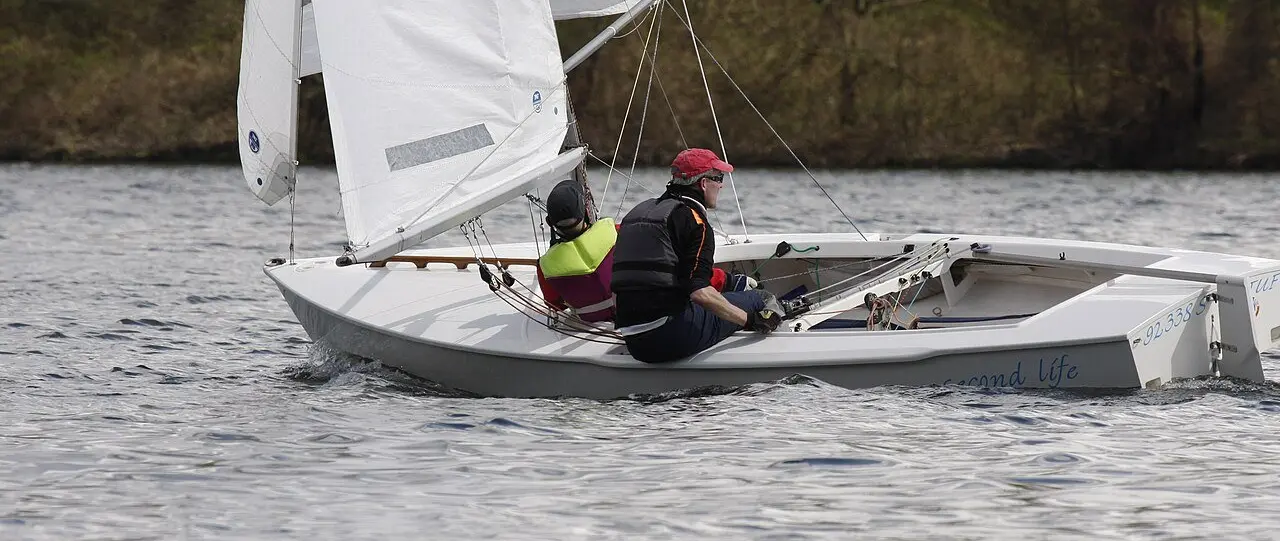
Lead image: Historical European keelboat racing in Kiel; NOT the November 2026 Brothers Islands Race in Wellington. Historical contextual photograph by Jens Haun, File:Kieler-vor-dem-wind.jpg, via Wikimedia Commons. License: CC BY-SA 4.0 (https://creativecommons.org/licenses/by-sa/4.0/). Image resized for editorial display. Historical European keelboat racing in Kiel; NOT the November 2026 Brothers Islands Race in Wellington. Original file: https://commons.wikimedia.org/wiki/File:Kieler-vor-dem-wind.jpg.. Licensed original image, author and terms.
