
A new season opens at Hobson's Bay
The 2026–27 Victorian Women's Keelboat Series is preparing to start on Sunday 29 November with Hobson's Bay Yacht Club hosting its Shirley Freeman Trophy programme on Port Phillip. Australian Sailing published details on 19 November and describes the series as the successor to the Port Phillip Women's Championship Series, with five clubs participating across the summer. The season is arranged to give women opportunities at the helm and in all-women crews, with experienced sailors and newcomers able to develop their skills in organised club competition. The scheduled opening event is news ahead of the racing, not a claim about its results. No winner, elapsed time or final entry total can responsibly be reported before the competition takes place. For owners of modest-sized keelboats and sportsboats, the series illustrates how a familiar local racing format can be used to broaden helming experience.
Five clubs share a programme rather than one event
Australian Sailing identifies Hobson's Bay Yacht Club, Royal Yacht Club of Victoria, Sandringham Yacht Club, Royal Brighton Yacht Club and Royal Melbourne Yacht Squadron as the host clubs involved in the 2026–27 season. Royal Melbourne Yacht Squadron is also named as the organising authority. A series distributed between clubs can expose participants to more than one course area and race management team, although the individual course plans remain subject to each host's published documents. The arrangement can make participation a continuing programme instead of a single afternoon's achievement. A sailor may learn from competing at another club, navigating different starting procedures and adapting to a varied fleet. None of this means every boat is a trailerable or under-twelve-metre craft: eligibility has to be checked against class, handicap and event requirements. The news is relevant to smaller-boat racing because the pathway is centred on active crew roles and practical skills.
The Shirley Freeman name has a history
The opening programme carries the Shirley Freeman Memorial Trophy name, a tribute to a pioneering member of Hobson's Bay Yacht Club. The club's Lady Skippers Race was renamed in 2015 in honour of its first female member, boat owner and successful ocean racer. Naming a contemporary sailing competition after someone who challenged an earlier barrier gives the event an additional significance. It connects the present opportunity to take the helm with the history of women who made such participation possible at the club. The story should not be reduced to symbolism alone: crews still need boats, time, safety preparations and support. But the memorial name is a reason to remember that access to yacht racing has developed through people as well as institutions. The organisers' current race documents and official club notices remain the authority for sporting rules, start times and prize eligibility.
Different trophies mean different conditions
Australian Sailing's preview lists the Shirley Freeman Trophy for female helms, the Lady Skippers Trophy for Hobson's Bay Yacht Club boats with a female helm, and the Alice Varady Trophy associated with a non-spinnaker division and female helm. These distinctions matter because an interested skipper could otherwise mistake an overall series entry for automatic eligibility in every trophy. A non-spinnaker option also changes the type of racing task: fewer sail changes do not necessarily remove the need for tactical decisions or good boat handling. It remains a competitive division with its own requirements. The official materials provide the authoritative divisions and entry details; anyone registering should read the host club's notice of race rather than rely on a promotional summary. Race formats, trophies and qualifying conditions may be updated through official notices before the starting signal.
Two routes into leadership aboard a keelboat
The series explicitly accommodates a female-helm category and opportunities for all-female crews. These are related but different approaches to participation. A helm-only entry can let a developing skipper take responsibility while sailing with a mixed or experienced supporting crew, potentially making a first competitive command less daunting. An all-female crew creates another environment for building a complete team, allocating roles and strengthening confidence together. Neither format guarantees a certain placing or a simple transition to offshore competition. Progress depends on time afloat, communication and practical decision-making. The useful point is that the series does not treat leadership as an abstract ambition. It creates racing conditions in which the person steering and the crew carrying out manoeuvres have defined roles and can test themselves over an organised season.
How crew communication affects race performance
On a keelboat, successful manoeuvres depend on communication before the actual sail or helm movement. A skipper needs to give instructions early enough for others to prepare, while crew members must be able to report problems without delay. This matters at the start, near a mark and when traffic reduces the room for error. A series designed to build helming skills can provide repeated occasions to practise those exchanges. Crews may prefer different styles of briefing, and nobody should claim a single method was used at the 2026 opening race before it has occurred. The general operational lesson is to assign duties, agree on clear calls and review what happened after each session. These are practical skills that transfer between many smaller sailing craft and club programmes, irrespective of the overall size or prestige of the fleet.
Port Phillip is more than a scenic backdrop
The Victorian clubs operate around Port Phillip, a busy and varied sailing area where races can challenge crews with changing wind, traffic and local conditions. Different club locations may create different approaches to the start and finish, giving sailors an opportunity to think beyond a familiar home course. The exact weather on 29 November is unknown in this advance report and must not be invented. Teams should consult official forecasts and event notices close to the date. The significance of racing around several clubs is less about predicting particular wind strengths than learning to prepare systematically for distinct venues. Local briefings, charts, safety requirements and a considered departure plan remain important. The practical preparation can build the same habits used in everyday leisure cruising, from communicating a route to confirming that gear is ready before leaving the berth.
The entry system requires attention to individual days
The series documentation described by Australian Sailing indicates that an entry to the Victorian Women's Keelboat Series includes the five race days and that crew lists must be supplied to the organising authority for each day. The preview also distinguishes the Port Phillip North Yacht Clubs women's series and casual entries for selected club races. This can seem bureaucratic to a sailor more interested in getting afloat, but the details prevent misunderstandings about crew eligibility, safety responsibilities and results. The right entry route depends on which events a boat intends to contest. Rather than guess about a competitor's status, organisers and sailors should use the current TopYacht entry material, notices of race and sailing instructions linked from the club or national federation. A properly registered crew can concentrate on the water rather than an administrative issue discovered late.
Opportunities for novices and experienced helms
A valuable feature of the organisers' description is its explicit welcome to novice female helms supported by their crews alongside more experienced skippers building all-female teams. The sport benefits when the programme makes room for both groups without pretending that experience is irrelevant. A newcomer may need structured practice in starts, close-quarters handling and rule awareness; an established competitor may be refining boat-speed management, crew organisation or higher-level tactics. Racing them in an appropriately managed fleet can create opportunities for observation and learning. The organisers, not an outside report, determine handicaps and the correct competitive divisions. The fact that participants have different experience levels is a reason to provide clear information and realistic expectations, not to claim that all boats or crews will be equally prepared on the first day.
Why a season matters more than a one-off trophy
A multi-event programme can help sailors build continuity. One isolated regatta provides a snapshot, whereas several meetings can encourage crews to examine progress from month to month. Teams might review where they gained places, how they handled sail changes, whether their communication improved or what new skills are needed. These are illustrative questions, not findings from events that have yet to happen. Repeated race days also create scheduling and maintenance responsibilities. Crews need to keep safety equipment current, plan availability and deal with equipment issues between sessions. A small boat can require considerable attention relative to its size. The Victorian series offers an organised framework within which regular practice and competition can be linked, while allowing different clubs to contribute to the overall calendar.
The link to the 2027 women's regatta
Australian Sailing connects the Victorian series to sailors who may wish to build teams for the 35th Australian Women's Keelboat Regatta, scheduled for the King's Birthday weekend of 11–14 June 2027. That is a future opportunity, not an assertion that participants have already qualified or entered. It gives the summer programme a broader horizon for people considering their first serious all-female racing crew. A calendar with several intermediate races may help a team decide whether it is prepared for a larger event. Yet it is equally legitimate to enjoy club racing without pursuing another championship. The role of the series is to create chances to participate and improve. Individual sailors will choose their own ambitions, available time and level of commitment according to their circumstances.
What interested owners should verify
Before committing to the opening race, a boat owner or prospective skipper should confirm that the vessel is eligible, identify the intended trophy or division and make sure the appropriate entry and crew information has been submitted. Insurance, safety and equipment rules should be checked in the event's official documents rather than inferred from this story. Australian Sailing's announcement fixes the opening event to 29 November 2026, with further meetings at the other participating clubs, but it does not announce race winners. Readers should also distinguish a boat's measured overall length from the size categories used by particular editorial publications. Not every boat in a keelboat series is automatically a small leisure craft. The news here concerns an inclusive racing pathway and the crew skills applicable across sailing, with primary authority remaining with the official organisers.
A meaningful opening without invented results
As the 2026–27 Victorian Women's Keelboat Series prepares to begin, the confirmed story is its multi-club structure, the new series identity, the named opening trophies and the opportunities for women to take leadership roles aboard racing keelboats. It is not yet a race report. Any result, participant count or claim of a successful finish would require evidence after competition. Historical or independently licensed yacht-racing photography used to illustrate this coverage must also be labelled as contextual, rather than presented as a record of the 29 November 2026 event. The wider significance is a sustained set of opportunities to steer, crew, learn and race over a season. For clubs seeking more active participants, an accessible calendar and clearly defined roles may be as important as a single major publicity event.
Original industry sources and image credits
Reporting based on Australian Sailing official report.
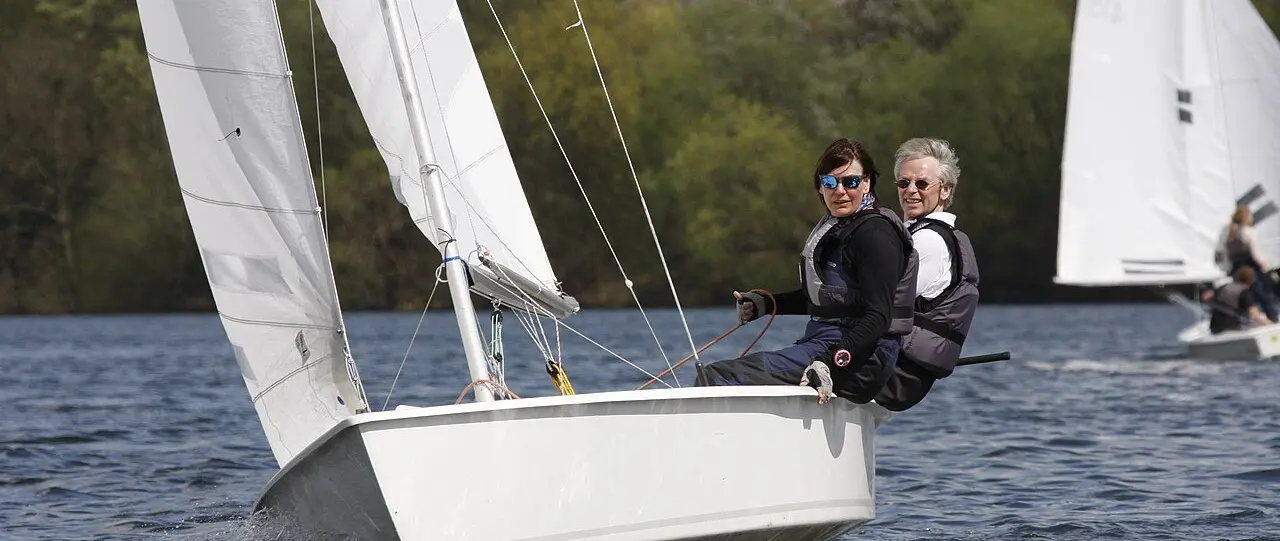
Lead image: Historical keelboat racing in Kiel; NOT the Victorian Women’s Keelboat Series or Shirley Freeman Trophy. Historical contextual photograph by Jens Haun, File:Kieler-auf-der-kreuz 01.jpg, via Wikimedia Commons. License: CC BY-SA 4.0 (https://creativecommons.org/licenses/by-sa/4.0/). Image resized for editorial display. Historical keelboat racing in Kiel; NOT the Victorian Women’s Keelboat Series or Shirley Freeman Trophy. Original file: https://commons.wikimedia.org/wiki/File:Kieler-auf-der-kreuz_01.jpg.. Licensed original image, author and terms.
