
Four days dedicated to better sailing programmes
US Sailing has released the agenda for its 2027 National Sailing Programs Symposium, scheduled from 20 to 23 January in Fort Myers, Florida. Its announcement on 18 November 2026 highlights sessions, speakers, demonstrations and opportunities for the people responsible for sailing schools, clubs and community programmes to exchange practical ideas. The gathering will be based at the Luminary Hotel & Co. in downtown Fort Myers. The organisation also says standard registration prices are due to increase on 1 December 2026. The symposium is a professional development event rather than a sailing regatta, but the topics are directly relevant to small-boat owners and the facilities that teach new participants. No future conference sessions have yet taken place, so this article reports the announced programme without inventing decisions or results from January.
A meeting with more than forty years of history
The National Sailing Programs Symposium traces its origins to 1984, according to US Sailing. Over that period the organisation says the event has brought thousands of sailing educators and administrators together. The history matters because challenges such as recruiting coaches, maintaining training boats and helping beginners progress to regular participation do not disappear after one successful season. A long-running forum gives organisers a place to compare approaches, though attendance alone does not prove that every idea shared will work everywhere. The 2027 edition aims to connect experienced programme directors with people new to responsibility for a club or community sailing centre. Such exchanges can be valuable when the daily work of keeping a programme operating leaves little time to examine how other organisations solve similar problems.
The intended audience is deliberately broad
US Sailing identifies instructors, race coaches, programme directors, administrators, volunteers, board members, parents, safety personnel and industry partners as potential participants. That range reflects how a small-boat school depends on more than the person steering a training dinghy. One group plans the curriculum, another maintains equipment and finances, while safety crews and volunteers help activities operate smoothly. Parents and committee members may influence the culture of the programme as much as professional staff. Not everyone needs the same level of technical instruction, so a varied agenda has to offer different practical perspectives. The announced meeting is intended to help organisations of different sizes rather than only large commercial training centres or elite Olympic programmes. The precise session attendance and outcomes will become known only after the event.
The agenda offers sessions and demonstrations
The official event page lists keynote talks, educational breakouts, roundtable discussions, industry exhibits and on-the-water demonstrations. These are categories of planned activity, not proof that every session will take place exactly as first advertised. Attendees should consult the latest agenda before making specific travel plans. The announced topics include instruction, coaching, safety, leadership, inclusion and programme development. Each can matter in a practical small-boat setting. A club that improves its incident procedures but overlooks volunteer support may still struggle to sustain activity, while one that buys new training dinghies without developing coaches may fail to use them effectively. A programme symposium can help organisers consider how these responsibilities fit together, rather than address each as an isolated problem.
Demo Day aims to connect ideas with equipment
US Sailing's agenda announcement highlights a Demo Day, alongside other practical learning opportunities. For a dinghy or community sailing programme, demonstrations may provide a chance to compare equipment and operational methods before making changes. The event description does not establish a final list of boats, products or manufacturers scheduled to appear, so it would be wrong to attribute attendance to a named supplier without confirmation. The useful principle is that hands-on experience can reveal considerations that are less obvious in a brochure. A training boat must be evaluated for its intended students, storage arrangements, maintenance needs and safety procedures. An attractive new design is only one part of a workable teaching fleet. Participants should use the confirmed event agenda to understand which demonstrations are relevant to their responsibilities.
Safety training is a continuing responsibility
Small-boat instruction operates in conditions that may vary rapidly. Coaches have to assess wind, weather, water temperature, the ability of students and the readiness of support arrangements. The symposium's advertised coverage of safety offers an opportunity to examine those decisions alongside programme operations. It is not a substitute for the official qualifications, regulations or emergency procedures applicable in a particular state or club. A conference presentation cannot certify that a participant is competent to teach a class or lead a rescue. Rather, it may encourage organisations to evaluate their practices and identify gaps requiring formal training. The difference between professional development and qualification is important because an attractive event agenda can be misread as proof that every attendee will leave with a credential.
Building an inclusive programme requires detailed planning
The conference listing also refers to inclusion and participation. Those objectives involve more than inviting a broader group of people to try sailing. An organisation may need to assess whether boats, access points, staff skills and course formats meet the needs of the community it wants to serve. Programmes for children, adults and people with different levels of mobility may call for distinct arrangements. The official announcement does not claim that a single technique will suit every club, and it does not publish the results of any new accessibility study. The value of a shared forum is the potential for organisers to learn what questions to ask and what practical approaches other programmes have used. Implementation still requires assessment of local conditions and, where appropriate, specialist advice.
Volunteers often determine the scale of activity
A club may have enthusiastic instructors but lack the volunteers required for boat preparation, administration or shore supervision. Leadership sessions at an industry forum can help managers think about recruitment, training and keeping people engaged. A volunteer who repeatedly receives an unclear task may eventually stop helping, while someone whose contribution is recognised may remain active for years. These are plausible management considerations, not findings from a new US Sailing survey. The symposium's focus on operations and leadership creates room to consider such matters. Maintaining a reliable programme usually requires clear responsibilities, realistic workloads and effective communication between paid and unpaid participants. Those systems affect the experience of learners even though they are less visible than the sailing itself.
The venue is in downtown Fort Myers
US Sailing names the Luminary Hotel & Co. as its event base and describes the conference as running from Wednesday 20 January through Saturday 23 January 2027. The organisation advertises a special hotel room rate of $289 per night, with a reservation deadline of Monday 4 January. A quoted group rate is not the total cost of attending the symposium: travel, registration, taxes and other expenses may apply. Hotel rooms at the stated rate are limited, so an article should not promise availability for every reader. Travellers must verify the current booking conditions and use the official event links. The dates are future plans as of 26 November, and the event could provide later updates through its official communications.
December brings a separate registration deadline
The 18 November news item warns that event ticket prices are scheduled to rise on 1 December 2026. This is distinct from the 4 January hotel reservation deadline. The announcement does not provide a complete table of every attendee category's registration cost in the text used for this report, so no fabricated ticket price is supplied here. Anyone comparing attendance options should consult the current registration page and read the conditions for their category. For a small club with a limited education budget, paying attention to deadlines can help avoid unnecessary expenditure. That is a planning observation rather than an endorsement of the event's commercial partners. An organiser should consider travel and the value of the relevant sessions before deciding whether attendance is the best use of club funds.
A film screening and welcome events feature
The public agenda announcement includes a screening of Mighty Mary, a welcome reception and other opportunities for participants to meet informally. These are part of the event's planned social and educational programme, not evidence of completed screenings or discussions. Informal conversations can be useful when a volunteer wants to ask how another club organises instructor schedules or boat maintenance, particularly if the problem does not fit neatly into a formal talk. The educational value of any conference depends on attendees returning with ideas they can evaluate and implement. A film or reception can help bring people together, but it should not obscure the need for practical follow-through. US Sailing's stated intention is to build connections among people who support sailing programmes across the United States.
Industry partners also have an interest
The symposium invites manufacturers, service providers and other industry organisations, recognising that community sailing depends on suitable products and support. A boatbuilder may gain insights into what schools need from training craft, while instructors can ask questions about equipment repair and durability. Such exchanges should not be treated as independent product tests or as endorsements by US Sailing of every exhibitor. A commercial partnership and a technical recommendation are separate matters. Clubs planning purchases can benefit from comparing options and asking about long-term service rather than focusing on a single demonstration. The announcement says the meeting will include exhibits; it does not list verified sales figures or state that a new technology has been adopted by all participating organisations.
Turning conference ideas into club practice
A small sailing centre cannot implement every concept presented across four days. Its staff might instead identify one or two changes that address a clearly recognised local need, such as better volunteer scheduling or a more structured progression from introductory lessons to regular sailing. Evaluating the result requires simple evidence: whether participants returned, whether staff workloads became manageable and whether safety processes were understood. These are suggestions for thinking about the symposium's value, not official prescriptions from the organiser. Programmes vary in climate, student background, club size and funding, so transferability should never be assumed. The purpose of a national meeting is to expose people to options and expertise they can evaluate within their own circumstances.
A verified announcement rather than a conference review
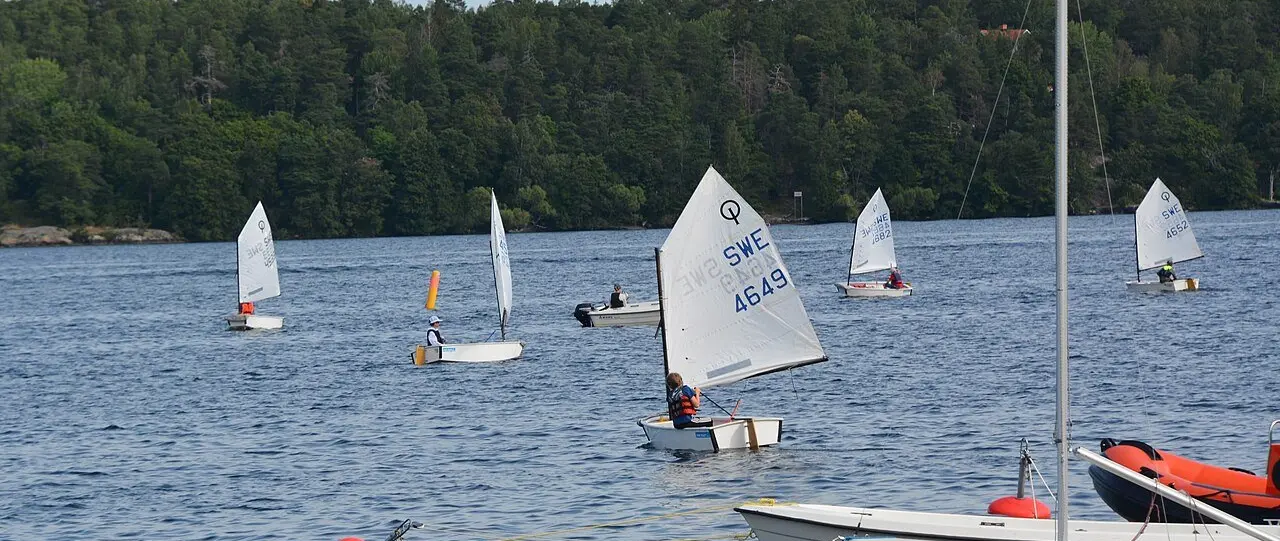
The confirmed story is that US Sailing published the 2027 symposium agenda on 18 November, with the event scheduled for 20–23 January in Fort Myers, a stated 1 December registration price change and a hotel booking deadline of 4 January. The programme lists keynotes, workshops, exhibits, a Demo Day and networking activities. It does not establish which ideas will be implemented by attendees or how many people will register. A separately licensed historical photograph of young sailors in small boats can illustrate the kind of programmes represented, but it must not be presented as a photograph of the future Florida conference. For the small-boat community, the announcement is an opportunity to examine how the organisations behind everyday sailing education can improve their work.
Original industry sources and image credits
Reporting based on US Sailing official programme announcement.
Lead image: Historical Optimist small-boat training photograph in Sweden; NOT a 2027 US Sailing National Sailing Programs Symposium session. Historical contextual photograph by Bengt Oberger, File:Optimistjollar Mälarhöjdens Kanotsällskap.jpg, via Wikimedia Commons. License: CC BY-SA 4.0 (https://creativecommons.org/licenses/by-sa/4.0/). Image resized for editorial display. Historical Optimist small-boat training photograph in Sweden; NOT a 2027 US Sailing National Sailing Programs Symposium session. Original file: https://commons.wikimedia.org/wiki/File:Optimistjollar_Mälarhöjdens_Kanotsällskap.jpg.. Licensed original image, author and terms.
