
Three Olympic classes feature in a new training opportunity
US Sailing and Oakcliff have announced the return of their Olympic Pathways Camps in 2027, starting with a three-day programme in Miami, Florida, from 8 to 10 January. According to the governing body's official announcement, participants will gain hands-on experience with the 49erFX, Nacra 17 and 470, together with information about the resources and day-to-day demands of developing an Olympic campaign. All three are small sailing craft, making the programme directly relevant to the training side of the leisure-boat sector. The organisers say the aim is to help sailors understand whether an Olympic pathway might suit them rather than to promise selection for a national team. As of 26 November 2026, the application deadline published for this particular Miami camp—20 November—has passed, while invited candidates are due to receive emails by 1 December.
Why sampling several classes matters
A sailor who has spent years in one dinghy or skiff may have limited first-hand experience of the other boats used at Olympic level. The differences extend beyond hull shape. The 49erFX requires close coordination between two crew members on a high-performance skiff; the Nacra 17 uses a foiling catamaran platform; the 470 provides a different two-person dinghy environment. Learning what each demands can help athletes make a more informed decision about future specialisation. That does not mean a three-day camp will turn a novice into a competitive Olympic crew. The opportunity is introductory and developmental, and the organisers describe it as a way to explore boat types and campaign realities. A single demonstration cannot replace sustained practice, suitable coaching or the longer work of becoming comfortable in demanding conditions.
The programme grew from a California camp
The 2027 activity builds on a previous Olympic Pathways Camp held in San Pedro, California, during the summer of 2026. US Sailing and Oakcliff say the experience showed value in giving potential campaigners direct access to boats, coaches and information. The next camp will continue that partnership in Miami. It would be inaccurate to invent how many participants from San Pedro have since launched campaigns or earned selections, because the official statement does not provide those outcome figures. The documented conclusion is narrower: the two organisations consider the earlier event worth building on. For the wider sailing community, this is an example of a national body and a training organisation collaborating to create an intermediate step between youth or college racing and the demanding world of high-performance competition.
Who the organisers intended to reach
US Sailing identifies several types of potential participant. They include sailors already active in one Olympic class who want to experience another, college students and recent graduates considering international competition, sailors transitioning out of youth programmes and passionate athletes who have not yet had a chance to try this level of equipment. The eligibility description is broad in sporting background but does not erase practical requirements or capacity limits. The organisers specify that training boats are limited, and the announced invitation process includes selection and registration. Readers should therefore not assume that everyone who expressed interest receives a berth. Because the published Miami application date was 20 November 2026, this account does not encourage late submissions on the assumption that the original window remains open. Current arrangements must be checked directly with the organisers.
Miami offers a compact programme of exposure
The 8–10 January dates create a three-day window in which organisers can introduce several boats and the knowledge needed to plan a serious campaign. A compact event has to balance useful practical experience with explanation; participants cannot expect to master three disciplines in that time. The most important immediate outcomes may concern understanding the physical demands, team relationships and costs that lie ahead. These are reasonable educational objectives inferred from the programme description, not a guaranteed schedule of specific daily sessions. US Sailing has not provided a minute-by-minute timetable in the announcement used for this report. Prospective attendees and invited sailors should rely on the detailed joining instructions supplied by the organisers. A small-boat camp can still be valuable even when its main achievement is helping an athlete make an informed choice about what to pursue next.
Financial planning is part of the Olympic conversation
Athletes sometimes imagine that moving into an Olympic boat is mainly a technical decision: pick a class, train harder and enter regattas. Campaigning also involves equipment, travel, coaching, maintenance, logistics, competition fees and time away from other commitments. The official programme explicitly includes learning about the planning and resources required for an Olympic campaign. That focus can prevent misconceptions, especially for sailors leaving a school or college racing environment where boats and many practical arrangements may have been provided. The governing body does not publish a universal price for an Olympic campaign in this announcement, and any such figure would differ considerably between classes and individual circumstances. The relevant lesson is that a realistic plan matters as much as an exciting first outing in a fast boat.
A published fifty-dollar registration fee
US Sailing says invited athletes will be asked to pay a $50 registration fee when registering for the Miami camp. The fee should not be mistaken for the total lifetime cost of sailing an Olympic class, nor should it be described as a charge that every interested applicant has already paid. The announcement says invitations will be emailed by 1 December and that invited athletes will register using the supplied link. These distinctions matter when reporting a programme whose application window has closed. Readers who did not apply on time should not be offered an invented late registration route. The governing body also indicates that other camps are planned later in 2027, making those future opportunities the more appropriate subject of enquiries once new official details are released.
Oakcliff brings facilities beyond the water
The partnership includes Oakcliff Sailing, whose Oyster Bay campus in New York provides infrastructure for training programmes. The official announcement describes a two-week Olympic Campaign Bootcamp scheduled for 5–15 June 2027, timed to fit a period when many high-school and college sailors are away from classes. The planned facilities include a sail loft, boat shop, gym, bunkhouse and kitchen, as well as coaching and opportunities to understand daily campaign routines. That list helps demonstrate why campaign education extends beyond steering a boat. Athletes need to maintain sails and equipment, prepare physically, organise meals and housing and manage an ongoing programme. The June event is a future plan, not a completed session, and details may change through formal organiser updates.
Training can reveal the importance of crew relationships
Two-person classes create a particular challenge for athletes accustomed to sailing alone. Partners have to communicate clearly, share responsibilities and develop trust while handling a fast, sometimes unstable platform. A sailor might discover that a chosen boat is exciting but that a different class better fits their strengths or preferences. Those are illustrative possibilities, not reported outcomes from the upcoming January camp. The value of exposure to a range of small craft is that it can make these differences tangible. Athletes can ask informed questions about crewing, training schedules and competitive opportunities before committing to years of preparation. For recreational sailors, the same principle applies on a smaller scale: a trial in different boat types can clarify what kind of sailing is most enjoyable and realistic.
How the 49erFX differs from the 470
Both are two-person Olympic-class boats, but their handling characteristics and competitive environments differ. The 49erFX is a high-performance skiff, placing a premium on synchronised crew movement and rapid response. The 470 represents a more traditional double-handed dinghy format with its own sophisticated demands for tuning, tactics and cooperation. The camp also includes the Nacra 17, whose catamaran and foiling characteristics introduce another set of skills. These short descriptions are useful for understanding the programme but do not replace class rules, specifications or practical instruction. A participant should not infer that experience in one class automatically provides full competence in another. That is precisely why access to suitable training boats and coaches can make a meaningful difference at an exploratory stage.
San Pedro returns later in the year
Beyond Miami and the June bootcamp, US Sailing and Oakcliff plan another Olympic Pathways Camp in San Pedro later in summer 2027. The official release does not give a confirmed start date or full application process for that later session, so it would be inappropriate to publish invented deadlines. It is more accurate to say that the organisations intend to continue creating opportunities across the United States. A series of events in different regions may give athletes options that are closer to their home communities, although travel and costs will still matter. A programme with several locations can also connect developing sailors with different coaches and facilities. Its success will ultimately depend on accessibility, the quality of training and whether participants can find viable next steps afterward.
What a training camp can and cannot promise
A camp can introduce equipment, explain a pathway and help sailors decide whether to pursue further training. It cannot guarantee selection, funding or a career at international level. Those outcomes depend on many factors beyond any one session. The official announcement makes no such guarantees. US Sailing's Olympic Development Program Manager Giselle Nyenhuis and Oakcliff's High Performance Director B Lindsay describe the objective as helping athletes explore what is possible and understand the support available. Their emphasis on information is notable because ambition alone does not provide a complete campaign structure. For the leisure-boat industry, creating intermediate learning opportunities can support participation in advanced small-craft disciplines without presenting every recreational sailor as a future Olympic competitor.
The practical next steps at the end of November
The confirmed Miami dates are 8–10 January 2027, with the published application deadline already passed and invitations expected by 1 December. The $50 registration fee applies to invited candidates, and capacity may be constrained by the available training boats. The June 5–15 bootcamp and a later San Pedro camp are announced as further opportunities, with detailed instructions to come from the organisers. This report should therefore not imply that Miami registration remains open to new applicants on 26 November. The right source for new opportunities is US Sailing or Oakcliff's official updates. Historical photographs of a 470, skiff or catamaran used to illustrate the article must be credited under their actual licences and not presented as images of the upcoming Miami camp. The story is a measured account of an expanding training pathway, not a promise of guaranteed entry.
Original industry sources and image credits
Reporting based on US Sailing official training announcement.
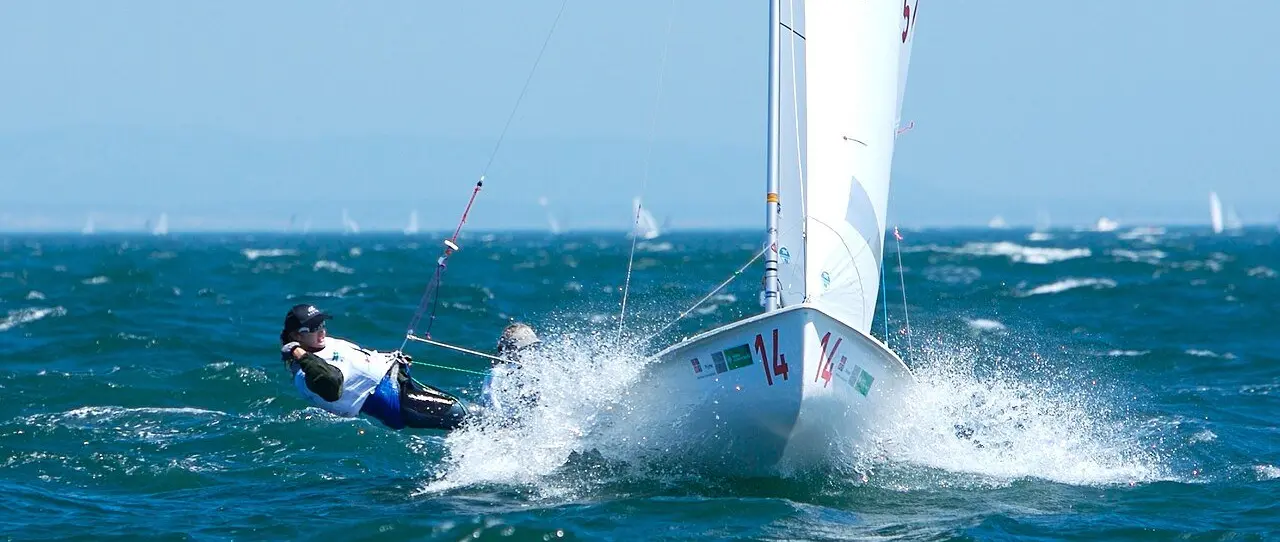
Lead image: Historical 470 dinghy photograph; NOT the January 2027 US Sailing and Oakcliff Miami training camp. Historical contextual photograph by HawaiianMama, File:470 dingy.jpg, via Wikimedia Commons. License: CC BY-SA 3.0 (https://creativecommons.org/licenses/by-sa/3.0/). Image resized for editorial display. Historical 470 dinghy photograph; NOT the January 2027 US Sailing and Oakcliff Miami training camp. Original file: https://commons.wikimedia.org/wiki/File:470_dingy.jpg.. Licensed original image, author and terms.
