
A specialist insurance option for marine professionals
US Sailing is promoting a marine licence and professional liability insurance programme for current members who hold valid United States Coast Guard credentials. The 360 Coverage Pros offering is arranged with marine insurance partner Risk Strategies–Brown & Brown and is intended for people undertaking work on the water, including sailing instruction, coaching and related educational activity. US Sailing describes possible cover for allegations of professional negligence resulting in third-party bodily injury or property damage, subject to the insurance contract. The programme is relevant to smaller leisure craft because many instructors, coaches and professional skippers work aboard dinghies, training keelboats and powerboats. This is a description of an available insurance option, not a promise that every incident will be covered or that the product replaces a vessel's existing policy.
Who is eligible to apply
The published application requirements include an active US Sailing membership and a current US Coast Guard licence. These conditions should not be ignored simply because an instructor holds a general sailing qualification or has many years of personal boating experience. A Coast Guard licence is a specific credential, while a club instructor's certification may be issued under a different system. The offer is intended for the qualified group described by US Sailing, rather than every recreational sailor who wants protection while taking friends on a boat. Applicants should confirm that their current credentials satisfy the terms before making a payment. The official notice also refers to advanced US Sailing certifications for an option with higher limits, but having one of those certificates does not necessarily replace the Coast Guard licence requirement.
A 15 per cent member discount
US Sailing says eligible members receive a fifteen per cent discount on base coverage rates. The announcement does not provide a fixed premium suitable for every individual, and the term base rate matters. A discount quoted on one component should not be applied casually to taxes, fees or other charges that may be outside the advertised base. Actual pricing can depend on the insured person's work, selected limits and the insurer's terms. The organisation indicates that monthly and annual policies are available, giving applicants more than one approach to arranging cover. A skipper should assess the cost of the whole policy and the coverage it provides rather than regard a discount percentage as the decisive feature. Insurance is about defined risks, obligations and financial limits, not merely the size of an introductory offer.
Cover for instruction and coaching activities
The programme description explicitly mentions sailing coaching and instruction, related work ashore or in a classroom, and volunteer activity on the water. That range is significant because the job of a marine instructor can extend beyond holding a tiller. Preparing students, explaining procedures, supervising a course and organising equipment may form part of the professional relationship. However, the press notice does not establish that every situation connected with those tasks is automatically covered. A policy can contain definitions, exclusions, conditions and claims requirements. Instructors should disclose the nature of their work accurately and review the contract before assuming it responds to a particular activity. The intended scope provides a starting point for comparison, while the written policy determines what protection is actually available.
Negligence allegations are a central risk
US Sailing identifies allegations of professional negligence arising from vessel incidents, collisions and related casualties as the types of situations the cover is designed to address. Professional liability is not the same as a comprehensive guarantee against financial loss in every accident. The outcome of an incident can depend on facts, contractual obligations, applicable law and the precise wording of cover. An instructor may be blamed for an event even when the circumstances require careful investigation. Suitable insurance may help manage certain risks, but this article cannot assess whether any hypothetical allegation would succeed or be paid. The official offer is about access to a particular product, not an opinion on the legal liability of a named skipper or club.
The boat still needs its own insurance
A particularly important condition in the programme description is that the vessel being operated from, or used for instruction, must have protection and indemnity and/or hull cover as specified by the policy. US Sailing presents this as a requirement for the professional liability coverage to be valid. That means the instructor's personal policy should not be mistaken for a complete substitute for insurance maintained on the boat. The wording of the underlying vessel insurance needs to be checked carefully, including whether commercial instruction or other activities are permitted. A boat owner offering the vessel for training may have obligations separate from the instructor's own protection. The right arrangement can involve more than one policy, and a professional broker should help clarify how they work together.
Owned and non-owned vessels
US Sailing says the programme is designed for work on owned or non-owned vessels. That is relevant to instructors who teach aboard a club's boat, a client's craft or a vessel they operate themselves. The fact that the design accommodates both categories does not mean every borrowed or hired boat automatically meets the underwriting conditions. The underlying vessel insurance and intended use still need to be compatible. A coach who moves between clubs may be tempted to assume that a single personal policy follows them without restriction. That assumption must be tested against the actual cover, geographic limits and declarations required by the insurer. The description signals intended flexibility, but the details belong in the contract and a suitable professional assessment.
Two levels of coverage are advertised
The online application offers standard liability limits for qualifying US Sailing members with Coast Guard licences. A higher-limits option is advertised for those who also hold specified advanced US Sailing certifications. The announcement does not give a single universally applicable monetary limit in its explanatory text, so none is invented here. The higher tier should not be considered a simple upgrade available to anyone willing to pay more. The advanced qualification requirement forms part of the eligibility conditions. Applicants should compare the written limits and exclusions for the exact option offered to them. Coverage needs can differ between a part-time club instructor working with small dinghies and a professional skipper undertaking other marine operations.
Which advanced qualifications are mentioned
US Sailing lists certain Master and Instructor Trainer qualifications for powerboats, keelboats and small boats among those accepted for higher coverage limits. It also names Keelboat Cruising Instructors, Powerboat Instructors and Small Boat Level 3 and 4 Coaches. The organisation indicates that certifications must be current and valid. These categories illustrate the range of teaching activity contemplated, from small boat coaching to more advanced cruising instruction. They should not be interpreted as an exhaustive explanation of every possible professional credential in the United States. Applicants need to use the programme's current certification list, especially if their training route or qualification title is unusual. The published information provides examples of recognised credentials, while the application process determines whether an individual is eligible.
The difference between liability and equipment cover
An instructor may also need to think about damage to the boat itself, equipment theft, personal accident cover or other exposures. The programme's headline professional liability purpose should not be extended into unsupported claims that all such risks are covered. The requirement for underlying vessel insurance illustrates why different insurance products can serve distinct roles. Hull insurance generally concerns the vessel subject to its policy terms, while liability arrangements address specified claims against insured persons or entities. These broad distinctions are for understanding, not a definitive legal description of the particular contract. An owner or instructor making a purchasing decision should obtain the full documents and ask targeted questions about the intended teaching activities, geographic area and vessels involved.
Online applications and policy durations
The federation says applicants can obtain information, request quotes and purchase through linked online options. Monthly and annual policies are both mentioned. Choosing a shorter period may appear convenient for seasonal instruction, but policy inception, cancellation terms and continuity of cover can matter when an allegation arises later. It would be irresponsible to promise that any particular duration automatically gives protection for past work or incidents after expiry. The relevant conditions must be read in full. Instructors should also ensure that their US Sailing membership and Coast Guard licence remain valid during the relevant period. A simple online checkout can make buying easier but cannot replace understanding the policy's responsibilities or reporting requirements.
Learning and licensing are related but different
US Sailing also refers readers to Mariner's Learning System as a route to Coast Guard licence training and says members may qualify for a separate fifteen per cent discount on eligible online licensing courses. That is distinct from the insurance rate discount and should not be merged into one combined financial offer. A training course may support an application for a credential, but completing it does not necessarily mean the licence has been issued or that the person is eligible for the liability programme. Licensing requirements are set by the relevant authority, not by an insurance marketing page. Prospective applicants should confirm the current Coast Guard conditions and what evidence is needed. This distinction protects consumers from treating a promotional training link as proof of a professional qualification.
Questions should go to the programme administrators
The official information directs policy and claim enquiries to the 360 Coverage Pros marine liability programme team. Separate contacts are provided for US Sailing certification questions and for its insurance partner. Those roles are important because a coach may need different kinds of clarification: whether a qualification qualifies, whether an activity is covered or how a potential claim should be reported. A news article cannot resolve such questions on the basis of a general announcement. The right contact is the administrator or specialist identified in the official documentation. Where the terms are complex or the insured work carries substantial risk, independent professional advice may also be appropriate. Proper understanding before an incident is generally preferable to discovering an exclusion afterward.
Why the programme matters to small-boat centres
Many recreational sailing centres operate through a combination of paid instructors, qualified volunteers and boats owned by the club. Responsibilities may overlap, and an individual can work at more than one venue. Professional insurance is one tool for managing the resulting risks, alongside appropriate training, operational procedures and maintenance. The US Sailing offering recognises that instructors' responsibilities are not confined to the most visible moment on the water. It may appeal to eligible professionals who want to compare specialist cover with existing arrangements. Yet an insurance product should never be framed as a replacement for proper supervision or risk assessment. Its value depends on how its terms interact with the actual activities carried out by the insured person.
What the official announcement establishes
US Sailing's published material confirms availability of a 360 Coverage Pros marine licence and professional liability option for active members with valid Coast Guard licences. It identifies a fifteen per cent member discount on base rates, monthly and annual arrangements, standard and higher-limit paths, specified advanced certifications and the condition that the vessel must carry appropriate underlying insurance. It does not guarantee protection for any particular claim or publish one price for every skipper. A properly licensed historical photograph of a sailing instructor, if shown with this article, is illustrative and not proof that the pictured person participates in the programme. For small-boat instructors and professional sailors, the useful news is another potential avenue for specialist cover whose written conditions deserve careful scrutiny.
Original industry sources and image credits
Reporting based on US Sailing marine insurance announcement.
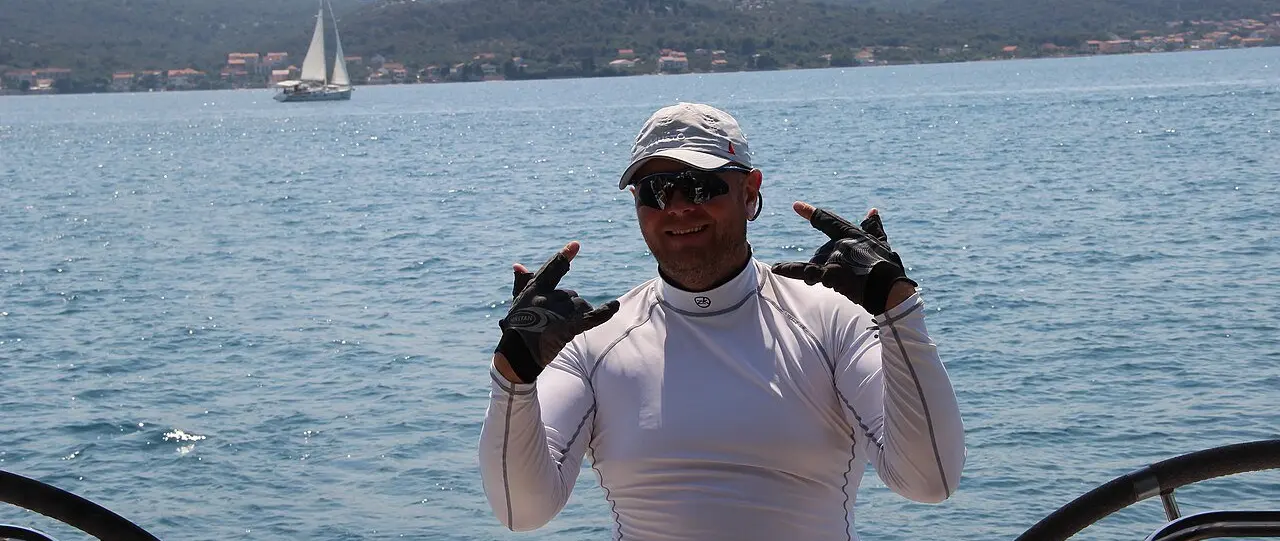
Lead image: Historic photograph of sailing instructor Dmytro Yarovyy; NOT a US Sailing 360 Coverage Pros insurance participant or promotion. Historical contextual photograph by Zirka01, File:Sailing instructor Dmytro Yarovyy.jpg, via Wikimedia Commons. License: CC BY-SA 4.0 (https://creativecommons.org/licenses/by-sa/4.0/). Image resized for editorial display. Historic photograph of sailing instructor Dmytro Yarovyy; NOT a US Sailing 360 Coverage Pros insurance participant or promotion. Original file: https://commons.wikimedia.org/wiki/File:Sailing_instructor_Dmytro_Yarovyy.jpg.. Licensed original image, author and terms.
