
Two new products, one integrated system approach
Torqeedo has introduced a 3 kWh Power 3 battery and a tiller-steered version of its Cruise 12.0 electric outboard as part of its METSTRADE 2026 presentations. The manufacturer described the products in a November announcement and displayed them in Amsterdam during the 17–19 November exhibition alongside Yamaha Motor. The Power 3 is aimed at smaller 48-volt installations, while the Cruise 12.0 Tiller brings a higher-power steering configuration to the same general family of electric marine systems. Torqeedo also announced new TorqLink connectivity gateways. These are manufacturer developments, not independent proof of range, safety certification for a particular boat or performance measured by Leisure Boat Guide. Owners should understand the intended system architecture and availability before planning a replacement engine or battery.
A three-kilowatt-hour battery weighing 21 kilograms
The new Power 3 has a stated energy capacity of 3 kWh and a weight of 21 kg. Torqeedo positions it as a relatively compact dedicated marine battery designed to integrate with its Cruise propulsion family. Energy capacity and maximum motor power are different quantities: 3 kWh describes stored electrical energy, while a motor's kW rating describes the rate of power use or delivery. The distinction matters when estimating runtime. A boat's actual endurance will depend on speed, hull resistance, loading, conditions, system losses and operating patterns. It is therefore misleading to divide the nominal figures and promise an exact range in nautical miles. The manufacturer's new battery may suit an owner seeking an integrated storage option, but the boat and motor have to be assessed together.
Compatibility is part of the announcement
Torqeedo says a Power 3 battery is designed to work with the Cruise 3.0 at 48 volts. Two Power 3 units connected in parallel can be used for a Cruise 6.0 installation or to increase available energy, according to the manufacturer. It also describes the arrangement as not requiring additional external fuses in the stated compatible configuration. That must not be interpreted as blanket permission to omit electrical protection in arbitrary marine installations. It is a product-specific compatibility claim and not a general wiring standard for all lithium batteries. Owners should use the current installation instructions, approved cables and safety equipment. A qualified installer can confirm whether existing equipment and charging arrangements are suitable for the new component rather than relying on assumptions based on nominal voltage alone.
Protection from water and salt exposure
The manufacturer describes the Power 3 as waterproof and saltwater-resistant, characteristics that are relevant when electrical equipment operates aboard recreational craft. Those claims should be understood according to the product's actual specifications and permitted installation conditions. Water resistance is not an invitation to submerge connectors or bypass maintenance instructions. Marine electrical equipment may face vibration, movement, humidity and occasional exposure, so housing and connector design are important. The announcement does not supply an independent long-duration corrosion test or an installation recommendation for every type of locker. A prospective buyer should therefore assess where a battery would be mounted, how it is secured and what access is required for inspection. Proper application matters at least as much as a headline feature on a product sheet.
TorqLink provides shared system information
The Power 3 communicates with compatible motors through TorqLink, allowing the total state of charge and other operating information to be displayed on the associated control interface and in the TorqView app. Torqeedo also refers to firmware updates through that connected system. For small-boat users, integrated information can be valuable because it reduces the need to interpret separate, potentially inconsistent battery and motor indicators. However, a display percentage is not the same as a guarantee of distance remaining. Load and conditions can change, and the skipper should still plan a suitable reserve. Software-based functions add convenience but require attention to compatibility and support. The announcement describes the intended information-sharing features; it does not establish that every previous Torqeedo installation can add the new battery without modification.
The Cruise 12.0 gains a tiller configuration
A separate announcement concerns the Cruise 12.0 Tiller, a 12 kW electric outboard with an integrated steering and control arrangement. Torqeedo compares its propulsive performance to that of a 25 hp combustion outboard. Such comparisons are application-dependent and should not be treated as an exact mechanical conversion of 12 kW into 25 shaft horsepower. Actual boat acceleration, top speed and efficiency depend on the whole propulsion system and hull. The tiller configuration will interest owners who prefer direct steering from an aft position rather than remote helm controls, although a motor of this output may be more appropriate to larger or heavier small craft than a lightweight tender. The user must verify the manufacturer's mounting, weight and boat compatibility requirements before choosing it.
The bigger outboard needs a different battery arrangement
Torqeedo says the Cruise 12.0 Tiller operates with two to ten of its Power 48 batteries, depending on the desired energy storage and runtime. That is distinct from the Power 3 arrangement described for the Cruise 3.0 and Cruise 6.0. The two products were announced together, but this does not mean one Power 3 battery can operate a Cruise 12.0. Confusing their intended combinations could lead to serious purchasing and installation errors. The correct approach is to examine the compatibility table for the exact motor and battery models. An electric outboard system includes protection, controls, cables and charging as well as a propeller. Nominal voltage is only one part of the specification. Leisure Boat Guide should not invent a recommended number of batteries for a particular hull without detailed engineering information.
A colour display on the tiller
The Cruise 12.0 Tiller features a revised TorqLink tiller control with a colour display and access to motor and battery data. Torqeedo says users can view relevant system information in real time and perform software updates with the TorqView app. The intention is to provide a familiar operating interface across several models in the wider Cruise and Travel families. Familiarity may make switching between craft easier for owners who use different boats, but it cannot replace training in the specific vessel's handling. Controls need to be understood before a skipper operates in close quarters, particularly when a heavy boat reacts differently from a small dinghy. Software convenience should be considered alongside reliable physical controls, clear labelling and access to manual instructions.
Harbour Mode is intended for precise manoeuvring
The manufacturer has added a Harbour Mode to the new tiller control. It is designed to provide more sensitive throttle response for manoeuvres in tight spaces, such as a marina or alongside a pontoon. That can be useful when a skipper needs small increments of thrust, but it does not make a boat immune to wind, current or mistakes. A feature name is not a substitute for practise and a safe approach plan. The motor can also be tilted up or down, according to Torqeedo, which may help around shallow water or docking situations when used correctly. A skipper should still follow the manufacturer's restrictions on tilt, operating speed and propeller clearance. The useful news is a more specialised control interface rather than a promise that difficult berthing will become effortless.
New TorqLink gateways extend connectivity
Torqeedo also presented gateways intended to connect propulsion systems with compatible third-party displays and management platforms. The company highlights monitoring and fleet-management functions, including integration of system information and remote oversight. These features may interest rental fleets and commercial operators who need to monitor several boats and coordinate maintenance. They also raise practical questions about connectivity, data access and the operating environment. The announcement does not establish that every recreational boat must connect to the internet or that remote features can replace direct supervision. Prospective customers should examine the intended gateway configuration and access controls. The manufacturer describes compatibility with its latest-generation propulsion systems, not necessarily every older unit without additional hardware.
Availability remains part of future planning
At the November 2026 announcement, Torqeedo said the Power 3 would begin rolling out from spring 2027 across individual markets. It expected the Cruise 12.0 Tiller to become available in Europe and the United States around mid-2027. Those are planned availability windows, not proof that retail stock is already on shelves in November 2026. Actual local pricing, installation services and supply timing need to be verified with authorised dealers when the products are offered. A boat owner considering a refit should not remove a functioning propulsion system solely on the assumption that an announced product can be delivered immediately. The manufacturer has not provided independent real-world endurance figures for a specific leisure boat in the source used here, so comparisons with a known petrol installation require further evidence.
The Yamaha connection
Torqeedo has been part of Yamaha Motor Group since April 2024 and describes itself as the group's global marine electrification centre. The November presentation used a joint exhibition presence to show how the electric systems fit into a wider marine product strategy. Corporate backing and a service network can be relevant to customers who need installation and maintenance assistance over the life of a motor. They should not be treated as a guarantee of local support in every harbour or the immediate availability of particular spares. Buyers still need to confirm their nearest authorised service centre, warranty conditions and the compatible equipment list. The manufacturer's broader range spans portable and more powerful propulsion systems, but choosing an appropriate model remains a boat-specific exercise.
What the figures do and do not prove
The official specifications confirm 3 kWh and 21 kg for Power 3, 12 kW for Cruise 12.0 Tiller, the intended battery configurations and the connected control functions. These figures are meaningful, yet they cannot alone predict how far a dinghy, tender or sportsboat will travel. Hull form, speed, propeller selection, water state and carried weight all influence energy use. Nor is an announced 25 hp equivalence a direct statement of equal consumption or top speed on every hull. Good reporting separates the manufacturer's product claims from independent tests that have not been performed. Owner decisions should be based on the actual boat, local operating requirements and a suitable safety margin. The same principle applies whether the propulsion is electric or combustion-powered.
A technology preview for smaller craft
Torqeedo's latest additions demonstrate how manufacturers are combining batteries, outboards and digital controls rather than selling entirely isolated components. The compact Power 3 addresses one end of the range, while the more powerful tiller-steered Cruise 12.0 targets a different need. Connected displays and gateways aim to make operation and fleet oversight more coherent, but proper installation and realistic expectations remain essential. A separately licensed contextual photograph of a small electrically powered boat, if shown with the article, must not be described as the new Torqeedo product unless its identity has been confirmed. The verified story is a November 2026 manufacturer announcement, with planned deliveries in 2027 and specific compatibility details that owners should check carefully before buying.
Original industry sources and image credits
Reporting based on Torqeedo original manufacturer press release.
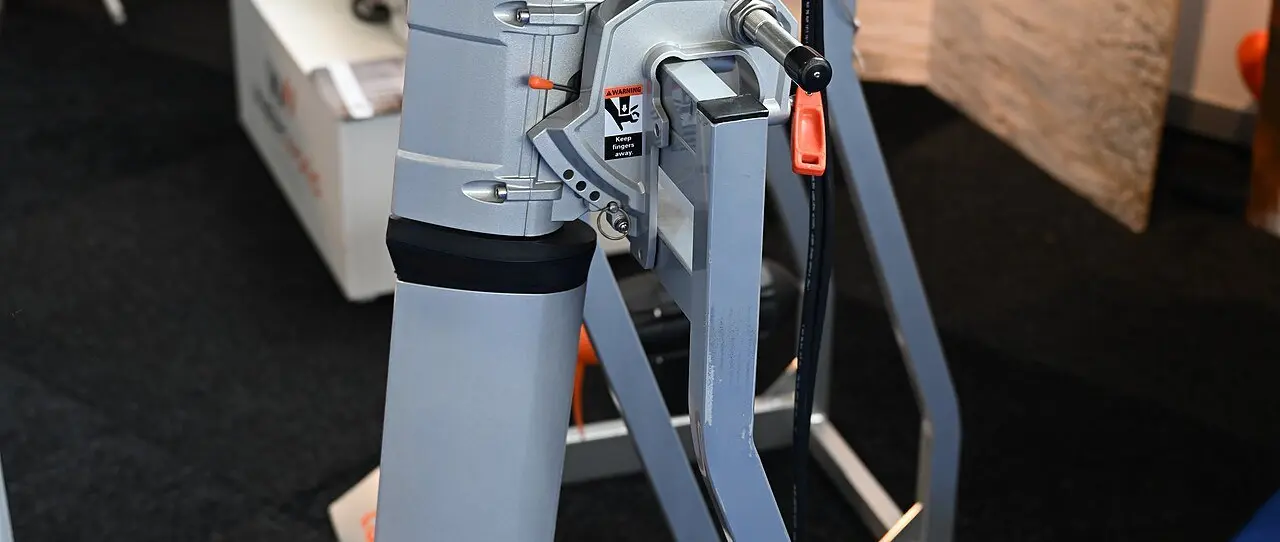
Lead image: Historical Torqeedo electric propulsion product photographed independently; NOT the new 2026 Power 3 or Cruise 12.0 Tiller product. Historical contextual photograph by Jan Ainali, File:Torqeedo-side.jpg, via Wikimedia Commons. License: CC BY-SA 4.0 (https://creativecommons.org/licenses/by-sa/4.0/). Image resized for editorial display. Historical Torqeedo electric propulsion product photographed independently; NOT the new 2026 Power 3 or Cruise 12.0 Tiller product. Original file: https://commons.wikimedia.org/wiki/File:Torqeedo-side.jpg.. Licensed original image, author and terms.
