
A two-day invitation to sail in Canterbury
Timaru Yacht and Powerboat Club is preparing for the 2026 South Island Sunburst Regatta, scheduled for 28 and 29 November on Caroline Bay in Canterbury, New Zealand. The event appears in Yachting New Zealand's official calendar as a Sunburst class fleet-racing meeting, organised with the Canterbury Sunburst Association. The published programme offers racing alongside shore-side prizes, a barbecue and a prizegiving, and the invitation is deliberately broad: women, junior sailors, Sea Scout crews and people taking part in Sailability are among those encouraged to attend. It is an upcoming weekend rather than an event whose results are already known. This matters because the small-boat calendar often receives less attention than big offshore races, even though community dinghy events provide direct opportunities for learning, friendship and regular participation.
The Sunburst is a small dinghy class
The Sunburst is a New Zealand sailing dinghy class intended for crewed small-boat sailing, a very different proposition from a superyacht or an offshore raceboat. The relevant class rules, rather than general descriptions of the design, govern equipment and eligibility for this regatta. The official event listing identifies only Sunburst as the class for racing, so it would be inaccurate to claim the programme includes an additional ILCA, Optimist or sportsboat championship. Participants need to consider their own boat's readiness, sails and gear for the conditions likely at Timaru. A simple centreboard boat can be rewarding to race, but it still demands attention to rigging, balance, wind shifts and boat-handling skills. A properly organised local fleet gives sailors the chance to practise those skills alongside peers using comparable equipment.
Caroline Bay provides the setting
The event is scheduled on the water at Caroline Bay, an established part of Timaru's coastal recreation setting. Sailing conditions will depend on the local weather and the race officer's assessment, so a listing that identifies the location cannot guarantee flat water or any specific wind strength. Small dinghies respond quickly to changes in breeze, and a crew must be prepared for the conditions of the day rather than rely on a general description of the bay. The published schedule gives a 9 am start to the event window on Saturday 28 November and a 4 pm finish on Sunday 29 November. These are advertised event hours, not an independently verified sequence of individual starting signals. Competitors and spectators should consult the organisers for race instructions and any updated shore arrangements.
Organising a fleet takes more than boats
A regatta relies on officials, volunteers, club members and practical equipment as well as the sailors who enter. Race management needs a workable course, appropriate safety arrangements, clear communication and the ability to respond when conditions change. For a two-day dinghy event, launching and recovering the fleet can be significant tasks, especially if participants have different levels of experience. The official announcement names Timaru Yacht and Powerboat Club and the Canterbury Sunburst Association as the organisations behind the meeting. It does not publish the precise number of safety boats, officials or confirmed entries. Those numbers should not be invented to make the event seem larger. What can be recognised is the community effort required to provide fair racing and a welcoming atmosphere across a weekend.
A deliberate invitation to all ages
The organisers say the regatta is open to people of all age groups and abilities. That is an encouraging approach for a class that can attract families, developing sailors and experienced competitors. It does not mean that someone without sailing experience can safely enter and race independently without a suitable crew or preparation. Age, ability and boat-handling skills still need to be matched to the activity and conditions. The value of an inclusive invitation is that it avoids suggesting only highly ranked adult racers are welcome. For clubs attempting to keep a small-boat class healthy, broad participation can make it easier to sustain a fleet and pass knowledge between generations. The official listing signals that ambition, while the practical details remain the responsibility of the organisers and participants.
Women and girls are specifically encouraged
The event notice calls on female sailors to take part. That explicit welcome matters because some small racing fleets have traditionally relied heavily on networks in which newcomers may not immediately know whom to contact. An invitation can help potential participants understand that they have a place within a club programme. It is not evidence of the proportion of women already registered for the Timaru regatta or a guarantee that every crew position will be filled. Those would require an entry list or another verified record. Clubs can support participation with clear information about crews, instruction and on-shore facilities, alongside a culture where people feel comfortable asking questions. The Sunburst notice is a small practical example of organisers spelling out whom they hope to reach.
Sailability participation is part of the invitation
Yachting New Zealand marks the South Island Sunburst event as inclusive of sailors with disabilities, and the organisers specifically mention Sailability crews. This should be reported precisely rather than treated as a blanket certification of every physical access feature at the venue. Participants who need adapted equipment, assistance launching or specific shore arrangements should contact the organising club directly before attending. Inclusive sailing depends on matching people, equipment and support in the particular setting. The event's public invitation indicates a positive intention to welcome a wider group, but it does not publish individual participants' health information or detailed accessibility plans. Respectful reporting focuses on opportunities and practical arrangements rather than making assumptions about what any sailor can or cannot do.
Sea Scout crews can gain regatta experience
The invitation also names Sea Scouts, whose activities often involve learning practical skills and working as part of a team. A dinghy regatta can offer an opportunity to apply those skills within a structured racing environment, provided participants have appropriate supervision and experience. Preparing a boat, understanding a start and navigating around marks all demand cooperation and awareness of surrounding craft. The organiser does not say how many Sea Scout crews have entered, nor does it assign a special prize solely for that group in the information available. The important fact is that Sea Scouts are welcome to enquire and participate where eligible. For young people considering a continuing involvement in sailing, an event can create a link between training activities and the wider club community.
Racing offers a way to learn quickly
A fleet race presents many small decisions: choosing the side of a start line, watching other boats and identifying a shift in wind direction. In a dinghy, crew coordination and balance can have an immediate effect on speed. Not every participant needs to be focused on winning. A newer sailor may learn a great deal simply by completing a course consistently and recovering from a difficult manoeuvre. More experienced competitors may be refining their tactics and equipment preparation. These observations are general features of dinghy racing, not accounts of specific actions in the November 2026 event, which has yet to start. A good regatta provides a fair setting in which the different experiences can coexist without making less experienced sailors feel that their participation is unimportant.
The shore-side programme supports community
The announcement mentions spot prizes, a barbecue and prizegiving alongside racing. These social details may seem minor compared with formal championship titles, but they help distinguish a friendly club gathering from a narrow selection trial. Families and volunteers may spend several hours on shore, and a chance to talk after racing can help participants make connections and compare experiences. A spot prize can recognise involvement without requiring someone to win a race. The official listing does not provide a menu, schedule for every prize or a list of sponsors, so none is invented here. The broader insight is that small-boat regattas can support a club culture by rewarding participation as well as performance, especially when many attendees may know each other from previous events.
Timing and entry information require checking
The official calendar states that the Notice of Race would become available when entries opened from 1 October. That date is already in the past by 26 November, but the listing does not guarantee that a late application will be accepted. Participants should check the current documentation, any limits on entry, safety requirements and the latest race instructions. The public event listing provides a contact address at scyouthsailing@gmail.com for questions. It also identifies Janene Adams as the event contact. Those are official details from the published calendar, rather than contact information guessed from a club directory. A skipper making travel plans for Timaru should verify the practical arrangements before setting out. The organisers may change timings if weather or operational circumstances require it.
A distinctive part of regional sailing
South Island dinghy sailing depends on active local clubs and class associations. A weekend regatta provides a reason to bring boats and crews together that might otherwise sail separately at their home venues. The Sunburst class has its own community and traditions, and an event in Canterbury helps keep those relationships active. No detailed economic-impact estimate or attendance forecast is given in the federation's announcement, so it would be misleading to assign one. The supported claim is simpler: Timaru is hosting a class-specific weekend with organisers who explicitly welcome people from varied backgrounds. That kind of gathering can play an important role in the routine health of recreational sailing even though it may receive less international publicity than a major championship.
What spectators should understand
A person visiting to watch Sunburst racing will see small boats moving in response to wind and crew decisions. Because boats are relatively compact, the difference between a clean manoeuvre and a poorly timed one can be easy to observe, although a spectator might not know all the racing rules. Visitors should respect the sailing club's guidance and avoid obstructing launch or recovery areas. The public listing does not establish a spectator admission charge, precise viewing location or guaranteed facilities, so those details should not be assumed. A straightforward enquiry to the club can clarify what is available. The opportunity to see local sailors in action can be a useful introduction to the sport, especially for someone considering a course or membership but unsure what club racing involves.
A verified preview, with results still ahead
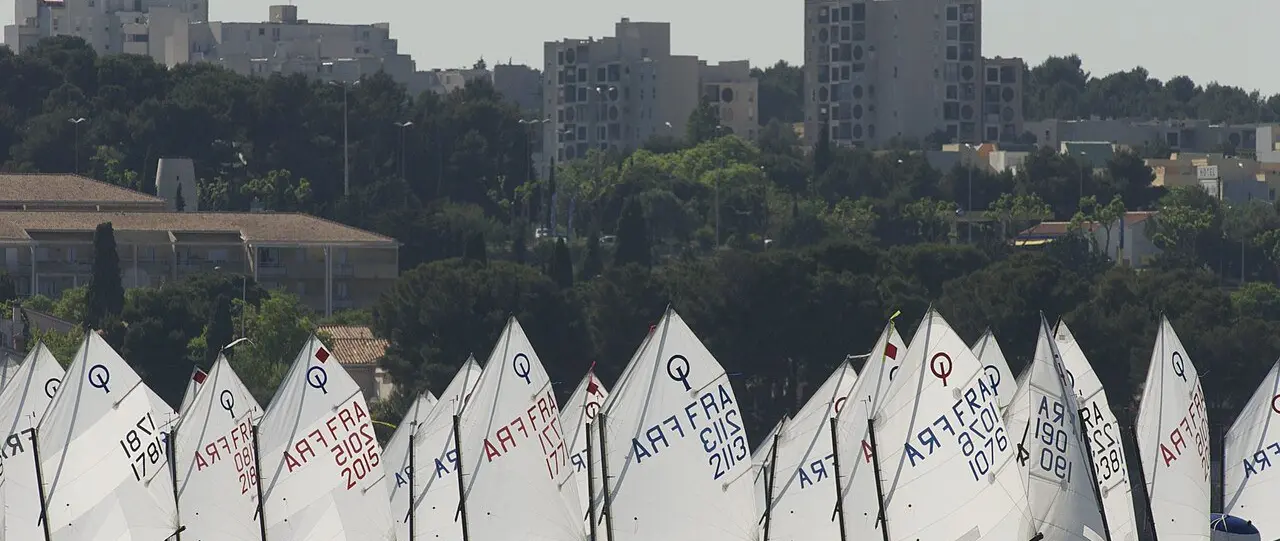
As of Thursday 26 November 2026, the confirmed facts are the 28–29 November dates, the Caroline Bay setting, Sunburst-only fleet racing, the organising club and association, and the broad invitation including female, junior, Sailability and Sea Scout sailors. No 2026 result, competitor count or podium has yet been reported in the official event listing. If this article uses a separate Creative Commons image of another dinghy class, it must be clearly identified as historical contextual sailing imagery and not a photograph of the Timaru event or an actual Sunburst competing there. For Leisure Boat Guide, the news is an approaching small-boat occasion built around a welcoming invitation, straightforward racing and the shared work of an active regional sailing community.
Original industry sources and image credits
Reporting based on Yachting New Zealand official event calendar.
Lead image: Historical Optimist dinghy racing in Martigues, France; NOT the 2026 Timaru Sunburst Regatta or a Sunburst-class boat. Historical contextual photograph by Idéfix2010, File:Régate optimist martigues.jpg, via Wikimedia Commons. License: CC BY-SA 3.0 (https://creativecommons.org/licenses/by-sa/3.0/). Image resized for editorial display. Historical Optimist dinghy racing in Martigues, France; NOT the 2026 Timaru Sunburst Regatta or a Sunburst-class boat. Original file: https://commons.wikimedia.org/wiki/File:Régate_optimist_martigues.jpg.. Licensed original image, author and terms.
