
A surprise finish for the Snipe fleet in Rio
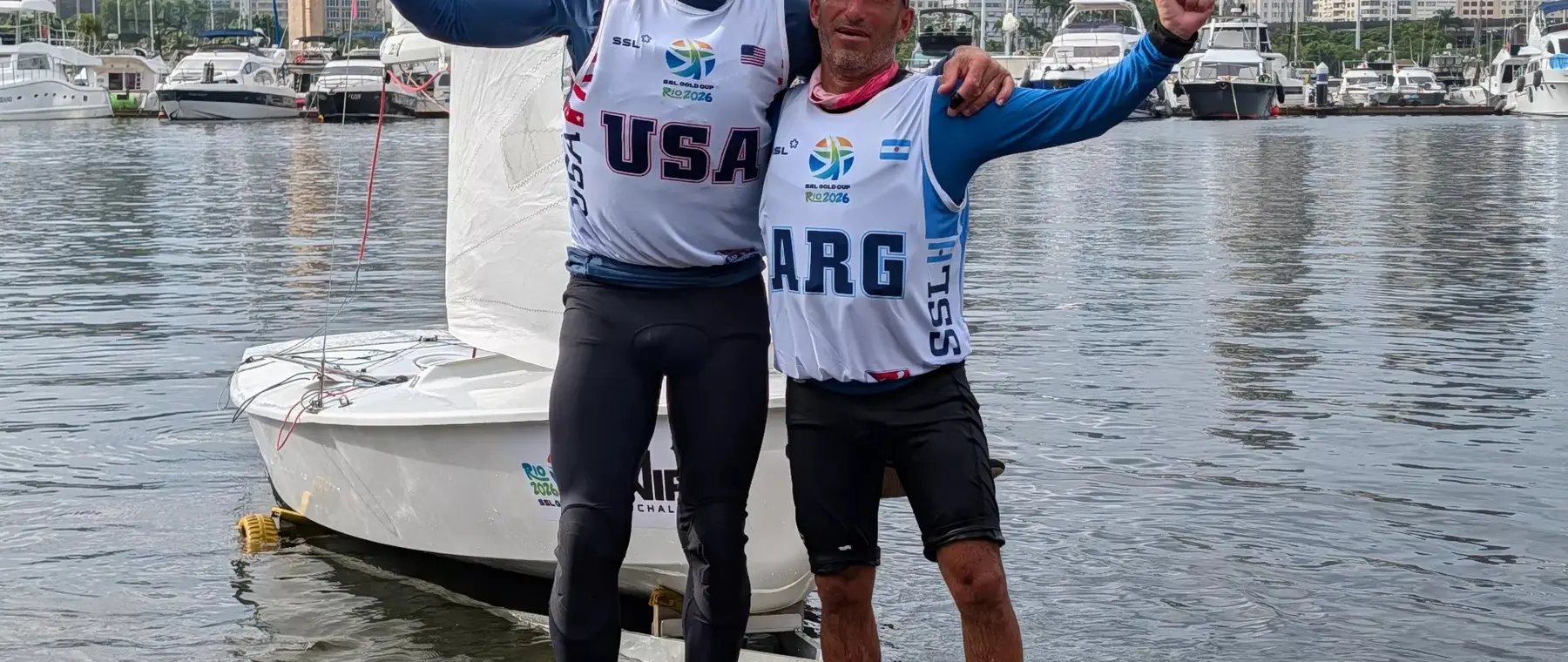
Ernesto Rodriguez of the United States and Argentine crew Diego Lipszyc have won the SSL Snipe Challenge in Rio de Janeiro, overcoming a difficult qualifying position to take the title in the final race. The World Sailing report dated 26 November 2026 describes a field of 32 Snipe dinghies competing at Axia Marina da Glória as part of the programme surrounding the Star Sailors League Gold Cup. Rodriguez and Lipszyc qualified ninth before working through the successive knockout stages and winning the decisive final. The result is a strong small-boat story in its own right, distinct from the much larger SSL47 keelboats used in the accompanying Gold Cup national-team competition. Snipe racing puts two sailors together in a compact dinghy where tactical choices, teamwork and boat handling can determine a result over very short margins.
The qualification format made every race matter
Thirty-two boats began the Snipe Challenge with a common qualifying series on Tuesday. The sailors were then sorted into subsequent stages with rules inspired by the wider Copa do Mundo da Vela competition. According to World Sailing's published account, the teams finishing 11th through 32nd faced a single repechage race, with just two spots available for further progression. Those two teams joined competitors who had qualified third through tenth for the quarter-finals. The programme continued through a semi-final and then a four-boat final that decided the title. This sequence is significant because it gave successful sailors several different tactical situations to navigate, from a large mixed fleet to tightly concentrated races in which a small error could end the campaign.
Ninth place was not an easy route
Rodriguez and Lipszyc reached the knockout stages from ninth in qualifying. That left them with more racing to do than the teams who had earned the leading positions, and it offered no guarantee of a place in the final. A competitor can sail well in a large fleet but struggle once the number of boats changes, because the tactical incentives and available space are different. In a qualification race, protecting a good overall position may be the priority; in a winner-takes-all final, the crew may need to take decisions that respond directly to just three opponents. The World Sailing report describes the winning pair as having saved their best for the last race. It does not establish that they were the quickest boat in every earlier round, and the outcome demonstrates why a knockout format can be less predictable than a conventional series.
The Snipe is a classic two-person dinghy
A Snipe is a small, two-person racing dinghy, roughly 4.7 metres long, suitable for class competition around the world. The design is much smaller than the offshore yachts and large keelboats that feature in some international sailing events. Its two-person arrangement requires close coordination between helm and crew, especially during manoeuvres and changes in wind pressure. Small differences in sailing angle, sail trim and weight distribution can affect performance. The class has a long history, but that should not tempt an observer to treat it as outdated: closely matched boats can create intense racing because tactical and handling choices are exposed. The Rio competition brought a substantial fleet into that environment, making it a useful indicator of competitive dinghy sailing rather than simply a sideshow to a bigger event.
Big fleets change the tactical picture
In the 32-boat qualifier, competitors had to manage the combined effects of traffic, wind shifts and their position relative to many other boats. A route that looks attractive on its own may become less useful if other dinghies block wind or occupy a favoured line. Decisions are rarely based only on a simple choice between left and right on the racecourse. A crew must also consider how quickly it can manoeuvre and whether a shift will affect those around it. The World Sailing story does not supply every leg-by-leg position or a complete tactical analysis of each race. The relevant point is that the qualifying competition demanded skills different from those needed to control three opponents in a short final. The winners' changing fortunes across the event illustrate that contrast.
A repechage gives some teams a second chance
The repechage element allowed crews who finished outside the top ten of qualifying to fight for two remaining quarter-final places. This is a distinctive part of the competition structure because it preserves a route forward without allowing every qualifying result to be ignored. A single recovery race is unforgiving, and sailors entering it may have different expectations from those who progressed directly. The World Sailing report says the repechage involved those ranked 11th to 32nd. That large group was racing for a very small number of spots, giving the event a clear knock-out character. Such formats can be exciting for spectators, but they also reward the ability to adapt to the rules rather than simply accumulate points over many races.
The quarter-final narrows the contenders
Two crews from the repechage joined those placed third through tenth in qualifying, and the next race determined which would advance. At that stage, finishing position mattered immediately because the field was reduced again. This is different from a traditional multi-day regatta in which a less successful race might be offset by stronger results elsewhere. The Snipe Challenge's structure magnified individual moments. A poorly executed start, a penalty or a loss of speed could bring an otherwise promising campaign to an early end. The official report does not give full detailed scores for every competitor in the qualification process, so it is inappropriate to invent a comprehensive ranking. It does establish the format and the route by which the eventual winners reached the final.
The final contained only four boats
The decisive race brought together four crews. World Sailing reports that the original top qualifier joined three competitors progressing through the previous stage, creating a compact final in which the title would be settled in one race. This is an unusual environment for someone who had just raced in a fleet of 32. Space and strategic choices can look different when the opposition is concentrated. A crew may be able to watch its main rivals more closely, but small tactical mistakes can become more expensive. Rodriguez and Lipszyc took advantage of the opportunity, delivering their winning performance at the moment when it counted most. Their success is documented as the event title rather than a claim that they dominated every qualifying round.
Penalties altered the outcome for early leaders
World Sailing reports that Bruno Bethlem and Daniel Claro had topped Tuesday's qualifying series and led the final before being penalised for excessive pumping downwind. The penalty moved them from first to last in the four-boat race, ending their chance of securing the title. This was a decisive moment, and it demonstrates how rules compliance is an integral part of sailing performance. The specific incident is reported by the organiser; it should not be embellished into an allegation of deliberate misconduct or explained through facts that are not in the official account. In dinghy racing, the relevant propulsion and sail-handling rules matter as much as the wind and the course. Crews need to understand what is permitted, especially when racing intensifies.
The eventual winners had a strong pedigree
Rodriguez is described in the World Sailing release as the reigning world champion in the Snipe class, while Lipszyc brings his own competitive experience as the crew member. Their title in Rio adds another result to an established international record, but it was not assured by that background. The pair had to work through the qualifying system from ninth place, which shows that past success and reputation cannot substitute for performance on the day. For young sailors following elite competitors, this is a useful lesson. Even experienced teams can have a difficult qualifier, and a poor early result may not determine the final outcome when the competition includes opportunities to progress. The meaning of the victory lies partly in that recovery.
Two sailors must work as one unit
A Snipe crew has limited space and time to coordinate. The helm may be concerned with steering and positioning, while the other sailor can contribute through trim, balance, observations and tactical decisions. Each role affects the other; a manoeuvre carried out at the wrong moment may be more costly than a small mistake in choosing a course. The Rio result is not accompanied by a complete account of Rodriguez and Lipszyc's private communication or their training routines, so those should not be invented. The class's nature nevertheless makes teamwork a central part of its competitive appeal. A victory achieved over successive knockout stages suggests an ability to manage different conditions while retaining the consistency needed to finish the decisive race strongly.
The Gold Cup provides the wider setting
The Snipe Challenge took place at the same venue as the Star Sailors League Gold Cup in Rio, where national teams compete in larger SSL47 yachts. World Sailing's 26 November article spends much of its space previewing the Gold Cup's 1/16 Finals, with teams from multiple nations entering the next stage. Those boats and their crew structures are different from the small Snipe dinghies being reported here. Maintaining that distinction protects the scope of Leisure Boat Guide: this article is about a 4.7-metre two-person class and its competition, not a detailed review of the performance of the much larger national-team yachts. The shared festival atmosphere provided a setting and audience for the dinghy competition, but the Snipe result stands independently.
An international gathering for dinghy sailors
The Snipe event brought together a large group of competitors while the marina hosted activity associated with a major international sailing tournament. Such gatherings can give a small-boat class valuable visibility beyond its normal circuit of class championships and club events. New spectators may discover how close racing works in an accessible two-person boat, while established enthusiasts can compare the tactics of experienced competitors. The announcement does not give an independent crowd count or state that a specific number of visitors later joined sailing clubs. The verified development is that the 32-boat competition took place and produced a winner. Its potential wider influence on participation should be evaluated through future evidence rather than claimed immediately from an event photograph.
What amateur crews can learn from the format
A recreational sailor considering race participation can take several practical lessons from the Rio competition. First, learn the rules of the event carefully; a penalty at a critical moment can decide the result. Second, practise in different traffic situations, because large fleets and small knockout fields require different tactical decisions. Third, keep the crew's communication clear, especially when a race begins to change quickly. Finally, understand that improvement over the course of a regatta may be as important as an early lead. These are general observations drawn from the published format, not a claim to reproduce the champions' personal coaching methods. A club sailor needs to apply them within the rules, weather and safety arrangements of their own class.
The photographic record needs careful interpretation
World Sailing illustrates its 26 November report with images supplied by the Star Sailors League. One of the original assets specifically identifies the Snipe Challenge winners; that subject-linked image is the appropriate lead for this article rather than a broad photograph of an SSL47 yacht in a separate race. The image does not establish independent details about wind speed, a precise manoeuvre or the timing of each stage unless those facts are given in the original caption. Preserving accurate attribution is important when an event page mixes photographs of different classes. The two-person dinghy competition and the national-team keelboat contest should not be confused merely because they were held at the same venue.
The result in the original organiser's account
The [official World Sailing report of 26 November 2026](https://www.sailing.org/2026/11/26/star-sailors-league-tough-tests-ahead-as-copa-do-mundo-da-vela-1-16-finals-open/) records 32 Snipe boats, the qualification and knockout format, Bethlem and Claro's penalty in the final, and Rodriguez and Lipszyc's win. It attributes the underlying event text and photographs to the Star Sailors League. No results from races that had not been completed at publication time are asserted. The significance for smaller recreational sailing craft is a compelling contemporary example of two-person dinghy racing at international level: disciplined execution, adaptability and respect for rules determined who succeeded, even among sailors with extensive racing experience.
Original industry sources and image credits
Reporting based on Original first-party World Sailing/Star Sailors League event report.
Lead image: Official Star Sailors League original photograph specifically of the 2026 Snipe Challenge winners. © Star Sailors League / original competition photographer. World Sailing current event press photo of Snipe Challenge winners.. Original supplier image.
