
Four distinct small-boat titles on one weekend
Royal Akarana Yacht Club's published 2026–27 racing calendar lists the Auckland championships for 12-foot and 18-foot skiffs, Flying Fifteens and sportsboats on 28 and 29 November 2026. The competitions form part of a busy summer programme centred on Okahu Bay and the wider Auckland sailing community. They involve genuinely small craft, ranging from highly athletic open skiffs to compact keelboats, rather than the large yachts typically associated with offshore racing. As of 26 November, these are upcoming events: the published calendar does not establish winners, exact entry totals or final race conditions. For Leisure Boat Guide, the announcement is a useful reminder that one waterfront club can serve a broad range of sailing communities by coordinating class-specific competition instead of treating all racing boats as a single category.
A club with long roots on Auckland water
Royal Akarana Yacht Club traces its racing history at Okahu Bay to 1895, according to the club's current season announcement. That longevity provides context for a calendar that now includes modern dinghies, skiffs, foiling activity, keelboats and team racing. A club's role can evolve as new equipment and training methods emerge, while regular events continue to bring together familiar groups of members. The published programme is intended to welcome academy sailors, experienced club racers and visiting competitors. It does not say that all entrants in this weekend's events must be club members or that every class has identical entry rules. The organiser's current race documents should establish those points. The important verified fact is that several Auckland titles are being presented together on the final weekend of November.
Twelve-foot skiffs demand coordinated handling
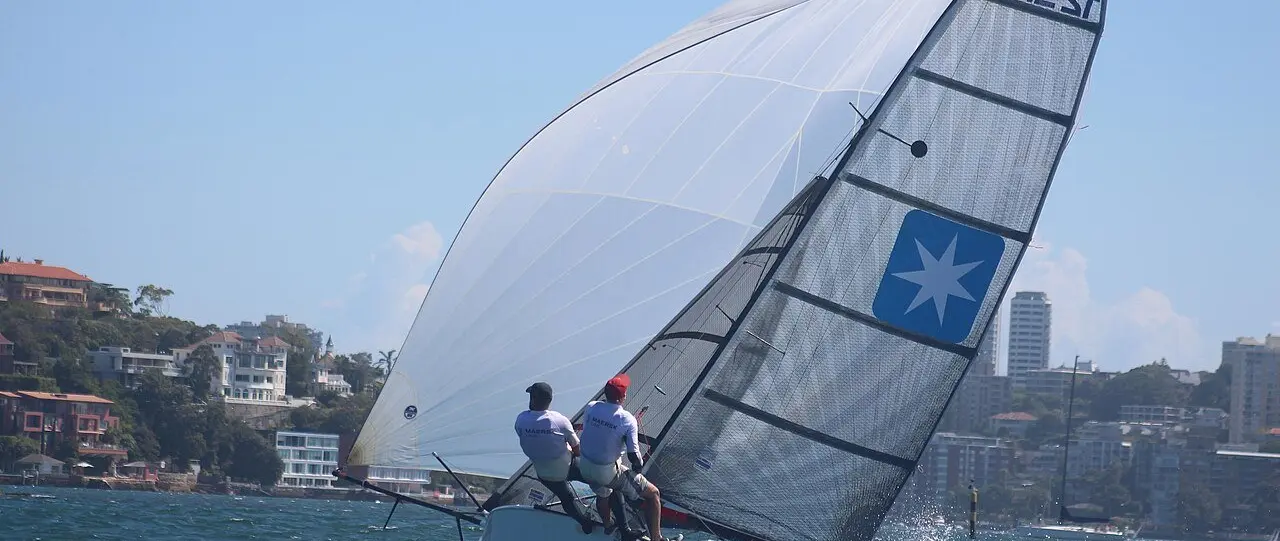
A 12-foot skiff is a compact high-performance sailing craft whose crew must work together to keep the boat balanced and moving efficiently. The class's scale makes it possible for relatively small changes in trim or crew movement to have a substantial effect on performance. It would be misleading to describe the class as a comfortable coastal cruiser or assume that its handling is interchangeable with that of a larger keelboat. Competitive sailors need to prepare the equipment and understand the rules and local conditions. The calendar confirms the 12-foot skiff Auckland Championship but does not publish a fleet list or identify a predicted champion. A preview should therefore focus on the nature of the contest and the dates rather than invent a title defence. The upcoming races will supply the results that should be reported afterward.
Eighteen-foot skiffs form a separate contest
The 18-foot skiff is another demanding small sailing craft, although its scale and rig arrangements differ from those of the 12-foot class. Its crews typically need precise communication and quick responses to variations in wind. A strong breeze can make the boat exciting to sail, but each event must still be managed according to actual conditions and the applicable instructions. Royal Akarana lists an 18-foot skiff Auckland title alongside the 12-foot event. That does not imply a combined fleet, shared scoring or identical course lengths. Small-boat racing depends on matching the programme to the equipment. Keeping class distinctions clear is especially important when reporting results or publishing photographs, because a non-specialist might otherwise confuse two boats with superficially similar open-skiff appearances.
Flying Fifteens bring keelboat skills into the mix
The Flying Fifteen is a two-person keelboat class known for close racing and careful sail handling. It differs from an open high-performance skiff because its hull, ballast and controls create a different balance between stability and speed. The calendar's Flying Fifteen Auckland Championship provides another opportunity for local crews to compare their preparation and tactical judgement. A club member may be interested in several of the weekend's disciplines, but eligibility must be determined under each class's published requirements. The club's announcement does not contain confirmed results or a list of skippers entered. It would be wrong to turn an event preview into a claim that one familiar crew is certain to win. The sporting value is a dedicated championship for a well-established compact keelboat design, hosted alongside other small-boat events.
Sportsboats widen the weekend's appeal
The sportsboat Auckland Championship is also scheduled for 28 and 29 November. Sportsboats can vary in design and measurement, often emphasising lively handling and efficient crew work. The precise entry requirements depend on the organisers and relevant class or handicap rules, rather than the general meaning of the word sportsboat. A boat owner should not assume that any fast trailerable vessel can enter simply because it resembles a sportsboat. The official entry notice is the appropriate place to establish eligibility, equipment and fees. The inclusion of this group alongside skiffs and Flying Fifteens reflects the range of competitive opportunities a harbour club can offer. It also creates a useful comparison between sailing disciplines without claiming they will share a single race or overall champion.
Events require different technical preparation
A weekend bringing several classes together creates opportunities for sailors to see how equipment choices differ. A skiff crew may spend much of its preparation on rig controls and efficient body movement, while a keelboat crew can face a different set of tuning and boat-maintenance concerns. All participants still need to consider personal safety, weather forecasts and the directions of race officials. The calendar identifies the championship dates but does not specify which boats will use each course, so those details should not be invented. Competitors should use the relevant Notice of Race and final sailing instructions to understand starts, divisions and safety arrangements. Having multiple classes at the same venue can be rewarding, but it also increases the importance of clear communications.
The club's wider November calendar provides context
The championship weekend follows several other events on Royal Akarana's published November programme. Earlier dates include Sawmill ILCA twilight races, Doyle Sails Akarana Spring Series racing and the Cavalli Islands Race in the previous weekend's schedule. These are distinct activities, not extra results to attribute to the forthcoming skiff championships. They show the variety of formats the club is attempting to coordinate during one season. A sailor who cannot commit to a full weekend may still have access to an evening club series, while someone seeking a regional title has a different objective. The calendar was issued ahead of the season and can be amended, so participants should check current information for each event. The breadth of scheduling indicates an effort to keep members active across multiple disciplines.
The November championships lead into summer
After the 28–29 November meeting, the published schedule continues with further keelboat and skiff events in December and January. Starling match-racing trials and 12-foot skiff Interdominion trials are listed in December, followed by an 18-foot Skiff Invitational Regatta and 12-foot Skiff Interdominion Championship in January 2027. Those future competitions have their own formats and eligibility requirements. They should not be described as automatic second rounds of the Auckland championships unless the official documents establish such a link. The calendar nonetheless shows how a weekend title can fit into a longer period of activity. Experienced sailors may plan around several meetings, while newer club members can use the schedule to observe and learn about classes they have not yet tried.
Volunteers underpin the racing programme
Royal Akarana explicitly recognises the importance of volunteers and parents, from race-management personnel and safety-boat crews to shore-side support. The club says it offers support and training for people who want to help and does not require all volunteers to arrive with advanced skills. That invitation is significant because multi-class regattas need practical assistance beyond the competing crews. A volunteer can gain experience with event operations, while sailors benefit from a well-organised start and recovery process. An invitation to volunteer does not authorise someone without training to perform a safety-critical role independently. The appropriate responsibility must match their skills and supervision. The announcement's emphasis on volunteer development reflects the relationship between a strong racing calendar and the people willing to make it work.
The academy provides another entry point
The club's wider programme includes academy coaching and pathways for junior, youth and adult sailors. Those activities are separate from the championships but belong to the same small-boat community. A beginner is unlikely to be ready for an 18-foot skiff title after one introductory lesson, yet observing experienced crews can help make the sport's possibilities more visible. A well-structured club environment can give people different entry routes, whether their interest is recreational sailing, volunteering or competitive events. The current season announcement does not specify a placement rate from academy classes into championship fleets. It is more accurate to recognise that a variety of programmes can coexist than to claim a particular number of future champions will result from the training.
A shared harbour is not an unlimited resource
Different classes moving around a busy harbour need race officers to choose safe course positions and practical launch schedules. On-water conditions may change, and other users of the harbour remain part of the surrounding environment. A racing programme advertised months earlier cannot guarantee that every start will occur at its original time. The organiser must consider the weather and the operational situation on each day. Small-boat crews should know their class instructions and the communications used by their race committee. The calendar is an advance guide to what is planned, rather than a substitute for the official notices. A responsible report will avoid assigning an exact course or wind-speed forecast without evidence. These considerations apply to any harbour club running multiple fleets over one weekend.
How visitors should approach the weekend
Someone interested in racing should check the club's current event pages and entry documents for the relevant class. Visitors wanting to watch should also confirm shore access and practical arrangements. It is easy to assume that a public calendar includes every detail, but event listings often omit information such as launching areas, registration times or parking arrangements. Those details can make a significant difference to a crew arriving with a trailer and limited preparation time. The club's season announcement offers a useful starting point, but direct organiser instructions take priority closer to the date. The exact number of boats expected in each fleet is not published in the source, so it would be misleading to describe a guaranteed turnout. Attendance and results will be clearer once the championships take place.
An active weekend for genuine small boats
The verified preview is that Royal Akarana's 2026–27 calendar places the Auckland championships for 12-foot skiffs, 18-foot skiffs, Flying Fifteens and sportsboats on the weekend of 28–29 November. The club also outlines a broader season of dinghy, keelboat and match-racing events supported by volunteers and academy activities. No race result has yet been established for the scheduled weekend. A licensed historical photograph of a 12-foot skiff could illustrate the type of boat involved, but it must not be described as an actual photograph from the Auckland 2026 championship. The central point for readers is the opportunity to see several distinct small-boat sailing communities gather for regional competition within a coordinated club programme.
Original industry sources and image credits
Reporting based on Royal Akarana Yacht Club official seasonal racing schedule.
Lead image: Historical 12-foot skiff sailing photograph; NOT the November 2026 Royal Akarana Auckland championship. Historical contextual photograph by N press, File:Maersk Line 12ft Skiff.jpg, via Wikimedia Commons. License: CC BY-SA 4.0 (https://creativecommons.org/licenses/by-sa/4.0/). Image resized for editorial display. Historical 12-foot skiff sailing photograph; NOT the November 2026 Royal Akarana Auckland championship. Original file: https://commons.wikimedia.org/wiki/File:Maersk_Line_12ft_Skiff.jpg.. Licensed original image, author and terms.
