
Four nominations cover different parts of the sailing community
Australian Sailing has confirmed four Queensland sailing representatives as finalists in the 2026 Queensland Sports Awards, with an announcement dated Thursday 26 November. The nominations cover coaching, junior competition, officiating and sports administration. Rafael Trujillo OLY is a finalist for Coach of the Year; Rory Meehan for Junior Athlete of the Year; Carole Gifford for Official of the Year; and Ben Callard for Sport Administrator of the Year. It is important to distinguish a finalist announcement from an awards result: the official article says winners are to be announced on 26 November and does not identify them. The news is nevertheless significant for small-boat sailing because three of the four profiles relate directly to dinghy or board competition, while the fourth concerns the clubs and participation structures needed to sustain activity. It recognises a wider ecosystem than podium results alone.
Rafael Trujillo's contribution to the ILCA class
Rafael Trujillo, described by Australian Sailing as a three-time national Coach of the Year, is recognised for his work with Olympic ILCA 7 sailor Matt Wearn and the wider training group. The governing body reports that Wearn won three Sailing Grand Slam regattas in his 2025–26 campaign and secured a seventh Australian ILCA national championship. It also credits Trujillo with supporting the performances of other Australian sailors, including Zac Littlewood and Ethan McAullay. These are attributed achievements within the nomination narrative, not independently measured effects of any single coaching technique. The ILCA 7 is a one-person dinghy and therefore especially relevant to the under-12-metre boat sector. It offers a reminder that even at the highest level, performance depends on a practical system of preparation, coaching and repeated execution.
What the coaching nomination represents
A coach's contribution can be less visible than the final placing of the sailor they support. Technical skills, equipment familiarity, weather interpretation and racing judgment must be developed through regular work rather than one-off intervention on the racecourse. The official citation for Trujillo also emphasises his willingness to share knowledge and contribute to the sport's wider development. From a leisure-boating perspective, this points to the continuity between international dinghy competition and ordinary club coaching. The goals, resources and intensity may differ substantially, but sound instruction and feedback matter in each setting. This should not be confused with a statement that club sailors can reproduce Olympic-level results by following a particular formula. The published nomination documents achievements and commitment, not a universal training prescription or a newly announced coaching programme.
Rory Meehan's international iQFOiL results
Junior Athlete of the Year finalist Rory Meehan is an emerging Australian iQFOiL competitor. Australian Sailing identifies him as its 2025 and 2026 Noakes Group Male Youth Sailor of the Year and reports that he won the Under-19 iQFOiL World Championship in Brest, France, against a field of 149 youth sailors. The governing body's summary also states that he placed 17th at the July 2026 Long Beach Olympic Class Regatta while competing in an international senior-level fleet. Those facts show why his name appears in the junior category even while he gains experience beyond junior competition. iQFOiL racing uses a compact windsurfing board fitted with a foil, firmly placing the activity within small-craft watersports. The nomination is about already reported results; it is not an announcement of selection to a future Olympic team.
A useful distinction between youth and senior fields
Meehan's season illustrates the difference between success in an age-limited championship and experience gained against an established senior field. Winning an Under-19 world title is a clear achievement, but results at a senior Olympic-class regatta are measured against a different competitive context. The Australian Sailing nomination draws attention to both rather than treating them as interchangeable. For readers following small-boat sport, this distinction makes results more meaningful. A finishing position cannot be properly assessed without considering the event, the calibre and number of competitors, conditions and the class rules. The source provides specific results for Brest and Long Beach, but it does not provide a detailed race-by-race analysis. This article therefore avoids attributing tactical strengths, equipment advantages or predicted future outcomes that are not documented.
Carole Gifford and the work behind racing
Carole Gifford, associated with Keppel Bay Sailing Club, is the finalist for Official of the Year. Australian Sailing highlights her work as a race officer supporting competition from club sailing to larger regattas. Its account lists the LT Windsurfer Nationals, Sail Bowen Regatta, Sabot National Championships and Airlie Beach Race Week among the activities in which she has contributed during the 2025–26 season. That mix is notable because it includes a range of classes and participant ages, with windsurfers and Sabot dinghies especially relevant to small-boat readers. Officials' responsibilities vary by event and appointment, and the source does not specify every duty she performed at each regatta. It does, however, establish that her service has crossed events and communities. The nomination acknowledges a person whose contribution can make racing possible without appearing on a competitor results sheet.
Why officials matter to competitors and clubs
A small-boat race depends on much more than boats arriving at the starting line. Courses have to be planned, notices and sailing instructions communicated, on-water activity coordinated and procedures applied fairly. Competitors may experience the event mainly through their own start and finish, but the reliability of the wider operation strongly influences confidence in racing. Australian Sailing's recognition of Gifford highlights the contribution of people who give time and expertise to that system. The organisation describes her leadership and service, without publishing an economic valuation of her volunteer work. Assigning an invented monetary figure would diminish rather than improve the precision of the report. The relevant observation is that competent race management supports enjoyable, fair competition and helps clubs offer a structured pathway from local events to national championships.
Ben Callard's participation-focused administration
Ben Callard is nominated as Sport Administrator of the Year. Australian Sailing identifies him as its Sport Operations Director and notes his experience in national and Queensland sailing administration. His profile explains that he held roles including National General Manager, Club Support and Acting Chief Executive before moving into his current position. The governing body particularly highlights his leadership of changes designed to involve more clubs in discussions about the sport. Administration can seem removed from the act of sailing a dinghy, but it affects how national programmes connect with the people who maintain fleets, provide instructors and recruit new members. The citation is not a claim that every club has benefited equally or that participation has increased by a particular amount nationwide. It describes a set of initiatives and their reported reach.
Sailing Summit expansion provides measurable evidence
A distinctive detail in Callard's nomination is the expansion of Australian Sailing's Sailing Summit programme. The organisation says it grew from eight traditional capital-city events to 26 meetings across metropolitan and regional locations in 2025. It attributes a 36 per cent rise in attendance and a 58 per cent increase in participating clubs to that wider approach. These percentages refer to the Summit programme, not to the number of people sailing or buying boats. Keeping that distinction clear is necessary for accurate industry reporting. The expansion is relevant because regional clubs can face practical obstacles to attending a single meeting in a major city. More locations create additional opportunities for clubs and volunteers to exchange information and contribute views, although the source does not quantify how every contribution affected later policy decisions.
A participation plan alongside competitive success
Australian Sailing also credits Callard with work on its Participation Plan, a participation review with GEMBA and the Spirit of S.A.I.L.I.N.G. Award within Zhik Youth Sail events. Taken together, those activities suggest that the organisation wants to address the experience of involvement in sailing as well as results at the top of the sport. That is a useful contrast with the nominations of an Olympic-class coach and an emerging junior athlete. Competition needs healthy club structures and trained volunteers; a participation strategy needs attractive activities and opportunities that keep people engaged. The source does not provide new funding totals, an implementation timetable for every initiative or proof of a direct causal increase in membership. Those omissions should be respected. The confirmed point is that the nomination recognises a particular approach to administration.
Different categories, one linked sporting system
The four nominations would be easy to report as separate short biographies, but their connection offers more useful context for readers. Trujillo illustrates the specialist knowledge supporting elite dinghy sailors. Meehan illustrates competitive development within a modern small-board class. Gifford represents the officials who sustain racing activity. Callard represents the administrative work that connects clubs to national programmes. These functions are not interchangeable, and none is more important simply because it is easier to measure through race results. For a local sailing club, success often depends on all of them in some form: access to coaching, a reason for younger members to progress, dependable events and administration attentive to participation. That is an editorial interpretation of the official nominations, not a separate claim that the four people are working on one specific project.
Why Queensland's small-boat scene is central
Queensland offers a broad mix of dinghy, windsurfing and club racing venues, making the range of finalists especially relevant to the state's sailing community. The named events include regional activity as well as high-profile performance pathways. It is tempting to turn this into a sweeping claim that one state's sport is growing faster than every other, but the source contains no comparable national membership dataset. It is more accurate to say the finalists provide examples of different contributions currently being recognised. The under-12-metre focus matters here: an ILCA dinghy, an iQFOiL board, a Sabot and a windsurfer do not require a large yacht to deliver meaningful competition. Access to these craft and to club-based organisations is part of the wider boating industry that Leisure Boat Guide covers.
Keep the awards result separate from the nominations
The announcement is dated 26 November 2026 and says the winners will be named that Thursday. The event's result should be reported only once it appears in an authoritative awards announcement. No finalist is described here as a winner of the Queensland Sports Awards. Equally, previous awards already identified by Australian Sailing remain distinct from this year's state sports awards. That distinction prevents a nomination headline from turning into a false victory claim as information is updated later in the day. Future reporting could add confirmed results, additional official quotations or ceremony details if the organisers publish them. This news article is intentionally limited to the four verified finalists and the achievements cited in the official announcement.
Recognition beyond the podium
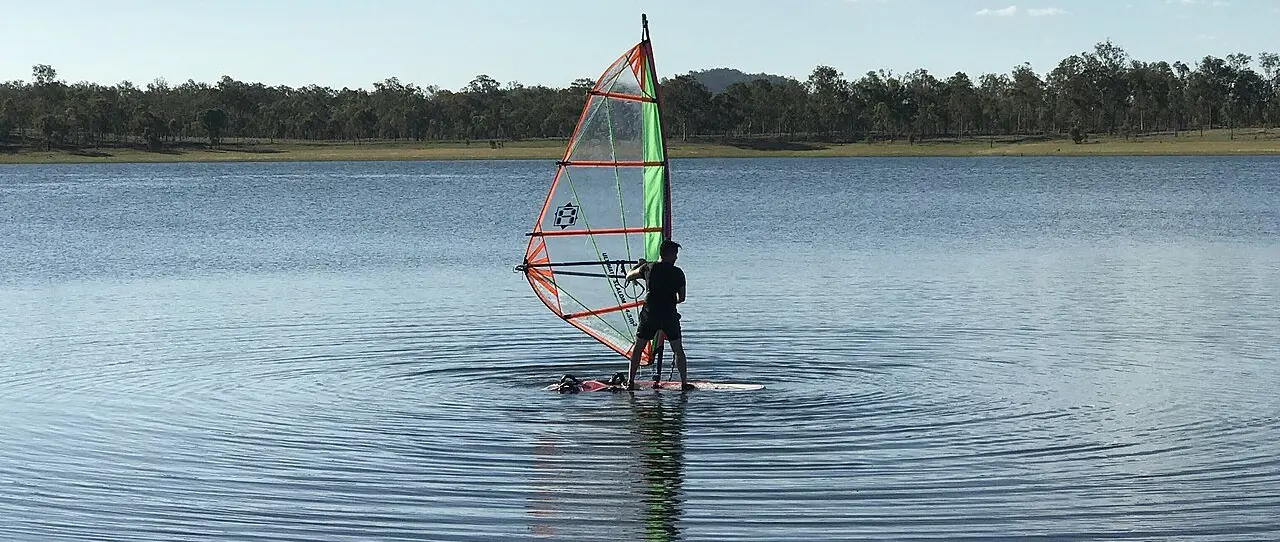
The broader significance of the four nominations is their mix of visible athletic performance and less visible supporting work. Small-boat sailing remains dependent on coaches who can explain technique, competitors who sustain class participation, officials who organise fair racing and administrators who keep clubs involved. Australian Sailing's publication provides a factual snapshot of those roles through the named Queensland finalists. Its evidence is strongest where it gives specific race results, events and Summit participation figures; it is appropriately more qualitative where it discusses commitment and service. A historical photograph of Queensland windsurfing accompanying this article is licensed independently and is not presented as an image of Rory Meehan or the awards ceremony. The confirmed news is recognition through nominations, with any later results requiring separate verification.
Original industry sources and image credits
Reporting based on Official Australian Sailing report.
Lead image: Historical windsurfing on Lake Wivenhoe in Queensland, NOT Rory Meehan, the Queensland awards or an iQFOiL race. Historical contextual image by Kgbo, File:Windsurfing at Lake Wivenhoe, Queensland 01.jpg, Wikimedia Commons; CC BY-SA 4.0 (https://creativecommons.org/licenses/by-sa/4.0/). Image resized for display; Historical windsurfing on Lake Wivenhoe in Queensland, NOT Rory Meehan, the Queensland awards or an iQFOiL race. Original: https://commons.wikimedia.org/wiki/File:Windsurfing_at_Lake_Wivenhoe,_Queensland_01.jpg.. Licensed original image, author and terms.
