
A title settled after the last race
Andy Beadsworth's Provezza Dragon won the 2026 Hong Kong Dragon Asia Pacific Championship on countback after finishing tied on eight points with Michael Zankel's EASY. The organiser's official report dated 22 November confirms that the event drew 55 entries representing 18 nations and took place from 17 to 21 November, with racing off Clearwater Bay. Beadsworth's Turkish-registered TUR 12 took the title, while Zankel's Portuguese-registered POR 90 finished second and Jan Secher's Swedish-registered Miss Behavior completed the podium on 15 points. The International Dragon is a small three-person keelboat, making this a directly relevant championship for Leisure Boat Guide rather than a superyacht or large-cruiser event. The striking result is that the top two boats finished level on points and had to be separated under the competition's countback rules.
An international field gathered in Hong Kong
Royal Hong Kong Yacht Club organised the championship as an important preparation event ahead of the Dragon World Championship carrying the 2027 title. The official release identifies 55 entries from 18 nations, evidence of the class's broad international appeal. Although the boats are relatively compact, assembling a fleet from many countries requires extensive transport, registration, measurement and shore-side organisation. Participation on this scale can also produce a high standard of competition because crews encounter opponents with different experiences and approaches. It would be incorrect to claim that each country sent an equal number of boats or that every entry represented a professional crew. The source establishes the overall fleet and national representation but does not supply that detailed breakdown. What matters to the sporting story is that a small one-design keelboat class attracted a genuinely international field to a demanding Asian venue.
The opening race rewarded an early lead
The first day's conditions on 19 November brought a northerly breeze of about 15 to 18 knots near the Ninepins Islands. Principal Race Officer Bill O'Hara set the first course, and the fleet started cleanly. Beadsworth led around the opening weather mark ahead of Christoph Toepfer and Ben Cooke before taking the race victory. Jens Christensen finished second and Secher third, according to the official account. That start gave Provezza momentum, although it did not settle the championship. One-design racing can change quickly as wind shifts and mark-rounding decisions create opportunities for other boats. The fact that Beadsworth retained his advantage in the opening race shows performance under those conditions, but it should not be turned into an invented description of his sail settings or conversations aboard. The organisers' report provides a race order, not a transcript of the crew's tactical discussions.
A course adjustment changed the second race
During Race 2 the wind shifted further left, prompting the race officer to adjust the course. Ferdinand Ziegelmayer on GER 1146 read the changes effectively and led from start to finish. Dirk Oldenburg took second, with Zankel's EASY third. The two opening races left Beadsworth at the top of the provisional standings on seven points, one point ahead of Ziegelmayer, while Zankel stood third on eleven. This order shows how close the competition was already becoming. It is tempting to predict the winner from an opening-day lead, but a championship remains unsettled while several races are yet to be sailed. The later tie on points demonstrates why a provisional standings table should always be labelled as such. It captures a moment in the competition, not necessarily the final outcome.
The Friday cancellation was a safety decision
The official account reports that racing was abandoned on Friday when mean winds reached about 25 knots, gusts approached 30 knots and the sea state became severe. The race officer's assessment was that even an improvement in the wind later might leave the water too rough for safe racing. This is not evidence of poor sailing skills among the crews or a weakness in the Dragon design. It illustrates the responsibility of race officials to evaluate the combined effects of wind and waves rather than use a single figure as an automatic decision rule. A relatively small keelboat can handle challenging conditions when properly operated, but an organised championship must consider the complete fleet and available safety resources. The cancellation compressed the sporting schedule and increased the importance of Saturday's remaining races.
The final day brought another change of weather
By Saturday morning the northerly breeze had moderated to around ten to twelve knots, with warmer conditions and sunshine returning to Clearwater Bay. As the scheduled start approached, wind shifts required a short postponement while the course was reset. Race 3 began on a course axis of 060 degrees with support from the Vakaros race-management system. The official report records 21 boats identified as over the line at the start, all of which returned and restarted correctly. Those details are important because a mass early start can alter a race dramatically, yet the procedures allowed the contest to continue. The information does not support inventing penalties or individual disputes. It shows the need for clear starting signals, consistent rule application and a race management team able to adjust rapidly.
Denmark takes the third race victory
The leading boats at the first weather mark in Race 3 included Jan Woortman, Jan Secher, Bo Sejr Johansen and Michael Zankel. Shifting breeze allowed positions to change during the race, and Johansen on DEN 428 ultimately took the win. Woortman finished second and Zankel third. That outcome brought different crews into the day's competitive picture and helped set up the title decider. It is another example of why a large one-design fleet cannot be described accurately through a single dominant skipper. Different combinations of wind, start quality and handling can create opportunities across the field. The official summary provides the finishing positions but not an exhaustive leg-by-leg record of every yacht. Responsible coverage should distinguish confirmed rankings from general tactical analysis.
The championship came down to Race 4
The fourth and final race started at 14:20 in wind ranging from ten to seventeen knots. Lorand Gombos on HUN 63 led at the first mark, followed by Zankel and Beadsworth. By the gate after the opening downwind leg, Zankel had moved into first place with Beadsworth second and Graham Bailey third. The contest remained close through the final stages, but Beadsworth ultimately won the race ahead of Zankel and Bailey. This result tied Provezza Dragon and EASY on eight points overall, with Beadsworth taking the championship under countback. The official report does not describe an arbitrary judges' choice or a discretionary award. Countback is a rule-based method of separating competitors with equal points, and the result belongs to the published sporting classification.
Why countback is not a dead heat
A points tie in a sailing series does not always lead to shared first place. Racing rules provide mechanisms to compare performances and establish an order when competitors finish level on total points. The exact calculation depends on the event's applicable rules and scoring system. In Hong Kong the organisers record Provezza as the champion and EASY as runner-up on countback. Readers should not reverse those positions or invent a margin in points that does not exist. A two-boat tie can be particularly dramatic after a final race in which both teams are in contention, but the formal result remains a clear winner. For club sailors, this is a useful reminder to understand how their event resolves ties before racing begins, rather than assume the numerical score alone tells the whole story.
Corinthian and Masters awards were separate
The official championship report also provides results in additional categories. In the Corinthian division, William Swigart's Magic (USA 325) led with 30 points, followed by Ferdinand Ziegelmayer's Dorte (GER 1146) on 34 and Hugh Wardrop's Leander (AUS 220) on 50. In Masters, Secher and Miss Behavior finished first on 15 points, ahead of Jens Christensen's Out of Bounce on 17 and Dirk Neukirchen's Lifetime on 26. These classifications recognise different parts of the competitive fleet and should not be confused with the overall first, second and third places. A boat can be successful within a class category without taking the main championship title. That structure gives the event a richer sporting picture while retaining an unambiguous overall result.
The significance of one-design Dragon racing
The International Dragon is a traditional keelboat class with a distinctive hull and well-established competition culture. It offers close racing without relying on extreme vessel size or the equipment budgets associated with much larger yachts. That does not make a competitive international Dragon campaign inexpensive or easy. Travel, sails, equipment maintenance, accommodation and time away from other commitments can be substantial. The value of the format is that crews face comparable platforms and have to make the most of preparation and seamanship. A small keelboat demands precise steering, trimming and crew movement, particularly in tight fleet situations. The Hong Kong results demonstrate how the margins can remain close even after multiple races and a highly varied weather sequence.
Preparing for the World Championship
The 2026 Asia Pacific event was also an organisational test for the 2027 Hong Kong Dragon World Championship, which carries that season's title despite being scheduled in November 2026. The title date should not mislead readers into assuming the races are a year away. The official World Championship programme extends from 21 to 29 November 2026, so it was underway when this article was written on 26 November. That proximity gives the Asia Pacific result additional interest, but it would be wrong to treat a win in the earlier event as proof of success in the world championship. Different starts, conditions and entry lists can change the competitive picture. Any update about the later championship must rely on its own current results rather than automatically carry the Asia Pacific standings forward.
A verified result from Clearwater Bay
The confirmed conclusion is that Beadsworth and Provezza Dragon won the Asia Pacific title on countback, tied with EASY on eight points, after four completed races and a cancelled Friday programme. Secher's Miss Behavior was third overall, and the Corinthian and Masters classifications were recorded separately. The official organising website is the basis for those results and conditions. A separately licensed historical photograph of Dragon-class sailing, if used, must be clearly described as contextual rather than an image of Provezza's actual finish. For small-boat enthusiasts, the event provides a compelling example of competitive keelboat sailing in which close scoring, weather judgment and race management all had a visible role. The championship ended with a clear winner, but only after the final moments of racing had been counted.
Original industry sources and image credits
Reporting based on Official Dragon championship event report.
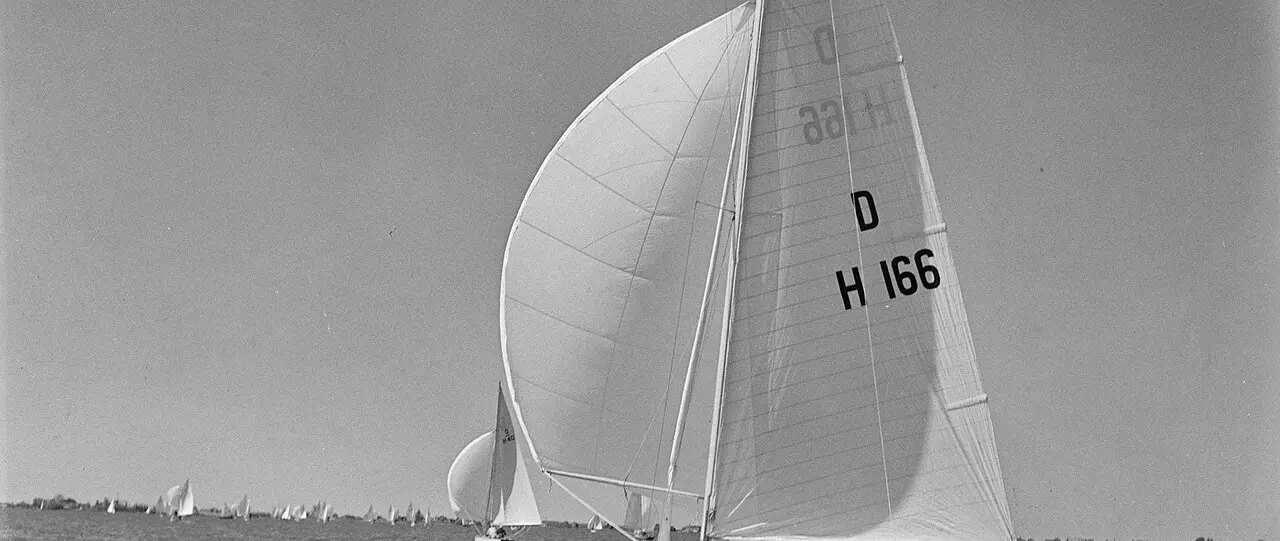
Lead image: Historical Dragon class sailing in the Netherlands; NOT the November 2026 Hong Kong championship or Provezza Dragon. Historical contextual photograph by Harry Pot, File:Zeilen Brasemermeer Draken, Bestanddeelnr 907-7822.jpg, via Wikimedia Commons. License: CC0 (https://creativecommons.org/publicdomain/zero/1.0/). Image resized for editorial display. Historical Dragon class sailing in the Netherlands; NOT the November 2026 Hong Kong championship or Provezza Dragon. Original file: https://commons.wikimedia.org/wiki/File:Zeilen_Brasemermeer_Draken,_Bestanddeelnr_907-7822.jpg.. Licensed original image, author and terms.
