
February dates confirmed for Torbay
Entries have opened for the 2027 Oceanbridge Sail Auckland regatta, with racing scheduled at Torbay Sailing Club on Auckland's North Shore from 11 to 14 February. Registration is planned for Wednesday 10 February, and entries close at 17:00 New Zealand local time on Thursday 28 January 2027. Yachting New Zealand is the organising authority and published the event details on 4 November 2026. More than one hundred sailors from New Zealand and overseas are expected across twelve classes. Those figures are an expectation, not a final entry count, and no 2027 race result exists yet. For Leisure Boat Guide, the event is relevant because it focuses on dinghies, skiffs, foiling boards and other small wind-powered craft. Its breadth offers developing sailors a route to race alongside athletes with international experience.
A calendar that reaches from youth to Olympic sailing
The event is structured to bring sailors at different stages of development to one venue. A youth crew in a 420 or 29er can share a regatta environment with experienced Olympic-class athletes preparing for international competition. That does not mean each class sails in the same race or follows identical course arrangements. Race management must adapt starting procedures and course plans to the craft and conditions involved. Yachting New Zealand describes the regatta as an important national fixture, with a competition window that falls before many campaigns turn towards northern-hemisphere events. Participants can encounter strong competition without always needing to travel to Europe. The precise strategic importance will vary with each athlete's ambitions, but the programme provides a practical link between local racing and larger competitive pathways.
Seven single-handed classes on the entry list
The announced single-handed programme includes ILCA 6, ILCA 7, Waszp, kitefoil, wingfoil, iQFOiL 7.3m and iQFOiL 8m. The craft differ significantly in how the sailor controls them. A conventional ILCA dinghy rewards balance and sail handling on a hull supported by buoyancy, while a Waszp uses foiling equipment, and board or kite disciplines demand different steering and control techniques. It is therefore misleading to describe the entire single-handed entry as one type of boat. The common feature is that one competitor is responsible for the craft during racing. Each discipline has its own class rules and safety considerations, and competitors must consult the Notice of Race for the relevant requirements. The variety is a substantial part of the event's appeal.
Five double-handed classes complete the programme
The double-handed entries are 420, mixed 470, 29er, 49er and 49erFX. These are all compact sailing classes, but they place different demands on crew coordination and physical preparation. The 420 provides a widely used youth training platform, while the 29er introduces high-performance skiff handling. The 49er and 49erFX require particularly close teamwork, and the mixed 470 has its own established technical and tactical demands. A crew moving between classes must adapt its communication and manoeuvres rather than assume that experience transfers automatically. Yachting New Zealand's announcement does not specify the names of every 2027 entrant, so a preview should not invent a starting roster or claim that particular international stars have already committed. The confirmed information is the class list and the opportunity to enter under the published event rules.
Why the Waszp addition matters
The announcement explicitly notes that the Waszp is included in the 2027 class list. It brings a foiling single-handed dinghy into a meeting that already covers several Olympic-related board and skiff disciplines. This can offer foiling sailors a formal national-level occasion to test themselves against peers, with event services and race management operating alongside other small-craft classes. It does not prove how many Waszp boats will eventually start or predict a winning sailor. A class's appearance in the Notice of Race is an opportunity for eligible competitors, not an assurance that a particular minimum fleet will be reached. For clubs considering how to support modern small-boat sailing, an event that recognises both established dinghies and newer foiling craft shows a willingness to accommodate more than one development pathway.
The 2026 edition provides useful context
Yachting New Zealand reports that the previous edition attracted more than 160 sailors from 14 countries, including competitors with Olympic experience. That is a completed historical participation figure, not the forecast for 2027. A strong international entry can make a regional competition particularly valuable for New Zealand crews by exposing them to new opponents and standards. The 2026 regatta featured predominantly light-air racing across four days, though future weather cannot be inferred from that. The retrospective offers a reminder that preparation for a multi-class meeting involves more than choosing a fast boat. Sailors need to manage equipment, understand event notices and adjust their tactics as conditions develop. The new edition will generate its own entry list and results, which should be reported separately rather than assumed to mirror last year's field.
Menzies and Lee Rush set a high standard in 49er
The 2026 regatta saw Seb Menzies and George Lee Rush defend their 49er title by more than thirty points, according to the federation's recap. Their result illustrates the calibre of some past participants, and they were subsequently named finalists for Team of the Year at the 2026 World Sailing Awards. This is context for the upcoming event, not evidence that the pair will necessarily win or even race in February 2027. Yachting New Zealand also notes that Paris silver medallists Isaac McHardie and Will McKenzie have stepped back from the class, changing the competitive landscape for New Zealand's longer-term Olympic selection. A preview can describe the stakes without declaring a future selection decision. The regatta provides another stage on which athletes may be evaluated over time.
Close ILCA racing shows the value of one point
In the previous year's ILCA 6 competition, Switzerland's Maud Jayet beat American Olympian Erika Reineke by a single point. Greta Pilkington finished fourth overall as the leading New Zealand woman, with Tom Pilkington third overall. These are confirmed 2026 results, and they demonstrate how narrow a margin can separate strong sailors in one-design dinghies. A small error at a start or mark can become significant over a series, but the official retrospective does not provide a complete account of each athlete's decisions. It would be unjustified to attribute the result to a particular tactical mistake without evidence. The relevance to the 2027 event lies in the expectation of demanding competition, while the eventual winners will be determined only after the new races are sailed.
The retrospective also highlights boards and kites
The 2026 kitefoil grand final was won by Germany's Jannis Maus in a fleet that included Paris Olympic gold medallist Ellie Aldridge. The iQFOiL competition saw Aimee Bright beat a field including Veerle ten Have, with Bright later winning the under-23 world championship in Poland that October. These completed performances underscore the range of pathways represented at Sail Auckland. Foiling boards and kites should not be described as conventional dinghies, yet they share an interest in wind, racing rules and performance on the water. For a future participant, watching different classes can be educational, particularly when the venue hosts specialists who understand the demands of their equipment. The past results do not guarantee that the same athletes will enter the next regatta.
Youth teams are an important part of the field
The 2026 programme also featured successes for Nicola and Rebecca Hume in 49erFX, Zofia Wells and Charlotte Handley in the 420, and Blake Batten and Hugo Smith in the 29er. The 420 pair won seven of ten races, while the 29er winners had been sailing together for only a short time. These examples illustrate contrasting routes to a strong result: established coordination in one crew and rapid development in another. They do not constitute a universal training formula. Crew relationships differ, and a team that performs well at one event still has to prepare for the next. The inclusion of youth classes in the 2027 Notice of Race remains significant because it gives developing sailors a competitive setting with visibility beyond their home clubs.
Entries require practical preparation
Yachting New Zealand advises sailors to check measurement certificates and the Notice of Race before entering. This is more useful than assuming every craft that looks like a class-legal boat is automatically eligible. Sailors should verify class requirements, registration arrangements, equipment rules and the relevant dates. A trailerable dinghy may be convenient to transport, but it still needs reliable rigging, functioning controls and an appropriate launching plan. Foiling equipment may require additional handling and safety considerations. The exact documents govern each class, and they can be updated through official notices. The entry deadline of 28 January leaves time for planning, but it is not a guarantee that any particular class will remain open indefinitely or that late applications will be accepted.
Torbay offers a meeting point for different communities
A multi-class regatta brings together sailors who may normally train in separate fleets. That can create opportunities to learn how another discipline prepares, communicates and interprets wind, without pretending that all classes are equivalent. Shore-side organisation also matters. Volunteers, coaches, measurers and race officials help the event function, while families and supporters need clear information about launching areas, parking and facilities. The announcement identifies Torbay Sailing Club as the host venue, but it does not establish detailed access arrangements for every participant or spectator. Those should be checked with the organisers as the event approaches. A welcoming regatta is built from competent operations as well as the sporting opportunity, and the 2027 programme will depend on both.
A live entry window rather than a race report
As of 26 November 2026, the factual news is that Sail Auckland 2027 is scheduled for 11–14 February, registration is planned on 10 February, and entries are open until 17:00 on 28 January. More than one hundred participants are expected across twelve classes. The official Notice of Race and entry links are available from Yachting New Zealand. No 2027 podium or final entry count has yet been published in the source, and historical 2026 results are identified as such. A separately licensed photograph of a dinghy, skiff or board should be described as contextual and not as a photograph of the future regatta. For small-boat sailors, the value of the announcement is a clear date and an accessible competitive target with a broad range of suitable classes.
Original industry sources and image credits
Reporting based on Yachting New Zealand official report.
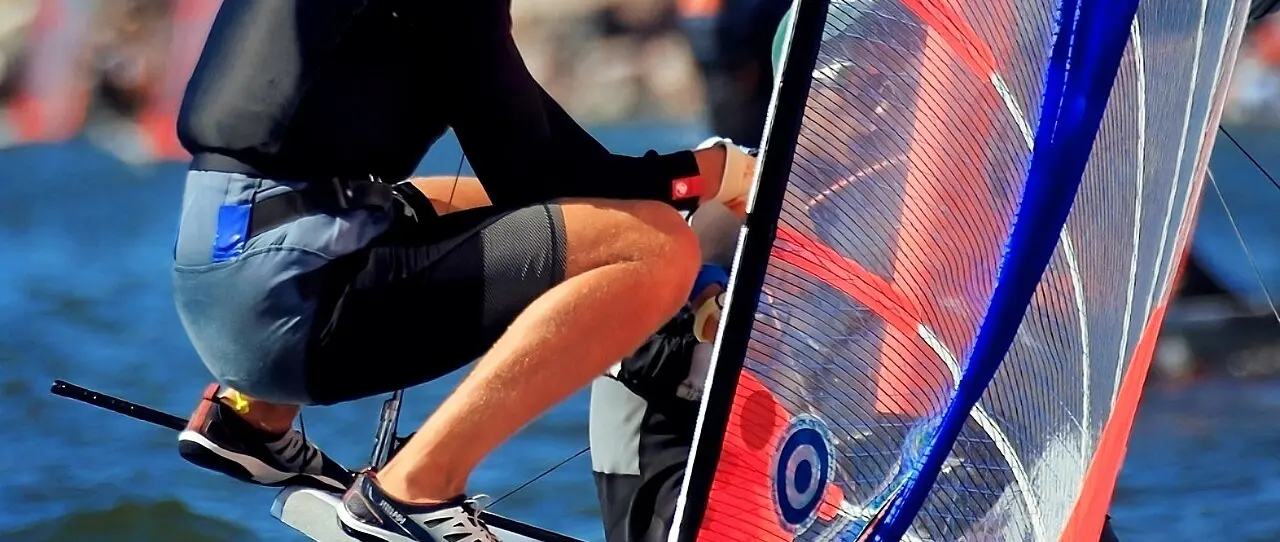
Lead image: Historical 29er skiff racing in Helsinki; NOT Oceanbridge Sail Auckland 2027. Historical contextual photograph by Iván Morales Velázquez, File:Julio Alonso Ortega and Yoel Hernández Sailing in Helsinki – 29er Skiff Racing in the Baltic.jpg, via Wikimedia Commons. License: CC BY-SA 4.0 (https://creativecommons.org/licenses/by-sa/4.0/). Image resized for editorial display. Historical 29er skiff racing in Helsinki; NOT Oceanbridge Sail Auckland 2027. Original file: https://commons.wikimedia.org/wiki/File:Julio_Alonso_Ortega_and_Yoel_Hernández_Sailing_in_Helsinki_–_29er_Skiff_Racing_in_the_Baltic.jpg.. Licensed original image, author and terms.
