
Sailing clubs as classrooms
Yachting New Zealand is aligning its RŪNĀ education programme with changes to the national school curriculum due to begin taking effect in 2027. In an official report published on 21 October 2026, the federation explains that teachers and its education team have been exploring ways to make existing sailing-based learning material fit the revised teaching framework, with water safety and outdoor education among the opportunities. RŪNĀ is a school programme built around practical experience, marine science and understanding coastal environments, not a national championship or a commercial boat launch. Its relevance to small-boat enthusiasts lies in the role local sailing clubs can play in introducing young people to the water. The development should be viewed as curriculum preparation, not an announcement that every school has adopted the programme or that new facilities are already complete.
Worser Bay provides the setting
The discussions included a visit to the Boat & Beach Wise Education Centre at Worser Bay, where Yachting New Zealand Education Lead Alisa Torgersen met local teachers. The aim was to identify how existing resources might help schools teach subjects within the refreshed curriculum without creating a separate layer of work. The official statement says teachers responded positively, suggesting that only modest alignment work would be needed in the established Science, Technology and Social Sciences material. That is an encouraging assessment, but it is not an independent evaluation of every lesson plan. The federation intends to develop further guidance mapping activities to the objectives for specific school year levels. At the time of the announcement, that resource was a planned piece of work, and it should not be described as already distributed nationwide.
Water safety gains curriculum attention
A notable element of the refreshed Health and Physical Education curriculum is its explicit attention to water safety and Education Outside the Classroom. That creates an opening for practical experiences in and around boats, particularly in a country where communities have a close relationship with coasts, lakes and harbours. For an educational sailing activity, water safety involves more than explaining a buoyancy aid. Participants need an appropriate understanding of conditions, supervision and how to respond if circumstances change. The official report does not publish a new national on-water safety standard or detail individual school risk assessments. Those remain matters for the relevant organisations and trained personnel. The opportunity is to relate established safety education to a learning framework that already addresses outdoor experience rather than presenting it as an optional extra.
A programme built for several subjects
RŪNĀ combines classroom teaching, hands-on sailing and practical investigation of the marine environment. The federation says its approach brings together marine science, renewable energy and mātauranga Māori, connecting activities with local coastal places and knowledge. That range is important because a small sailing boat can provide examples relevant to physics, environmental observation and responsible recreation. A student might learn about propulsion by wind, local currents or the relationship between a beach and its wider ecosystem. Such examples explain the educational potential, but they are not claims that every participating school follows an identical exercise. The programme works with teachers and clubs, and local activities should reflect available facilities, age groups, safety conditions and curricular objectives. This flexibility is part of what the refreshed guidance is intended to support.
Years four to ten are a key audience
Torgersen identified opportunities for RŪNĀ to strengthen its work with pupils in Years 4 to 10. These students can range from newcomers who have never stepped aboard a boat to young people with experience through family or club sailing. A useful programme has to support both groups without assuming prior skill. The federation stresses that teachers want resources that complement their existing teaching rather than adding unnecessarily to workload. The planned curriculum mapping can help staff select appropriate activities and link practical experience with classroom learning. This is not a claim that every pupil in those years will be taught sailing in 2027. Participation depends on schools, clubs and the wider implementation arrangements. The meaningful news is that the programme is preparing a clearer connection between hands-on boating and formal educational aims.
Local partnerships support delivery
Yachting New Zealand says RŪNĀ operates through partnerships with schools, sailing clubs, iwi and research organisations. Such cooperation brings together different forms of expertise. A club may supply access to small boats and experienced personnel, while teachers identify what students need to learn and research partners contribute specialist knowledge. Iwi involvement can help bring relevant local environmental and cultural perspectives into the educational experience. These roles are not interchangeable and should not be reduced to a single generic organiser. The arrangement also makes coordination important: a successful visit requires agreement about safety, supervision and how the session supports the school's objectives. The official report identifies the categories of partners but does not specify the exact responsibilities of every participating organisation, so those should not be invented.
Participation figures show considerable reach
Since its launch in 2021, RŪNĀ has reached more than 25,500 students and 830 teachers through 21 sailing clubs, according to the federation. These are programme reach figures reported by Yachting New Zealand, not independently audited numbers of new club members or lifelong sailors. A pupil who attends an educational session may develop interest in boating, but a participation statistic alone cannot establish that outcome. The figures nevertheless show that the concept has moved beyond a single pilot. Operating across multiple clubs creates opportunities to gather experience from different local conditions and school communities. It also raises the need for resources that work consistently enough to be useful across settings, while leaving room for adaptation to each location. That is why the curriculum mapping project matters.
International recognition in 2026
The programme received the Education and Training Award at the 2026 Sport Positive Awards. Yachting New Zealand presents the recognition as an acknowledgment of environmental education through sport. An award does not replace scrutiny of individual educational outcomes, but it does identify the programme as one that has attracted attention beyond its immediate participating clubs. For small-boat communities considering ways to engage new participants, the achievement illustrates a route that does not begin with formal racing. Young people may first become interested in marine environments, local waterways and the practical science of wind. Whether they later join a sailing club is a separate question. The award is a confirmed element of the announcement and should not be expanded into claims of a new government qualification or universal school endorsement.
Plans for the learning environment
During the Worser Bay visit, teachers also expressed support for proposed amenities at the education centre. The official report does not say that the facilities are fully funded, built or already available to every visiting school. Proposed infrastructure can be valuable because outdoor education needs suitable spaces for briefings, equipment storage and transitions between classroom work and water-based activities. Yet the specific arrangements require confirmation from the centre and its partners. This distinction is important for readers who may wish to book a visit and might otherwise assume promised improvements have been delivered. The announcement is about curriculum alignment and developing opportunities, with facilities described as a related area of interest. A responsible account keeps plans and completed work separate.
What small boats can teach that textbooks cannot
A boat responds immediately to wind direction, trim and the actions of its crew. These observable changes can make abstract concepts concrete for students, provided experienced instructors keep the activity safe and appropriate to their age. In a sheltered learning environment, the relationship between a sail and moving air may become more memorable than a diagram alone. A small craft can also prompt questions about how humans interact with waterways, including the environmental effects of recreational activities. These are examples of educational possibilities, not an official lesson-by-lesson specification from RŪNĀ. The value is in linking direct observation with the teacher's established goals. Practical sailing should complement, not displace, the wider curriculum and should never require students to operate beyond their competence.
A role for clubs outside competitive sport
A sailing club is often associated with racing fleets, private berths and weekend events. Educational partnerships can broaden that role by providing supervised opportunities for students who may have no family connection with boating. Clubs can introduce newcomers to the water, explain local conditions and help young people understand the community's relationship with the coast. The federation's figures suggest such collaboration already occurs across numerous New Zealand clubs. It does not follow that every club has the staff, vessels or facilities to operate a school programme. Practical capacity, safeguarding and environmental circumstances must be considered before any similar initiative is adopted. The broader point is that sailing organisations can contribute to local education through structured partnerships rather than relying solely on invitations to join a racing programme.
A refreshed curriculum is not an instant nationwide rollout
The federation says parts of the refreshed curriculum begin taking effect from Term 1 in 2027. That is a timeline for the education framework, not proof that all RŪNĀ resources will change simultaneously on the first school day. The programme intends to provide material linking lessons with objectives for each year level. Further conversations about senior outdoor education were also anticipated, including work with Education Outdoors New Zealand at the Boat & Beach Wise centre. The official account does not provide a finished curriculum package, a new nationwide enrolment target or an exact budget. These items should be reported only when confirmed. For schools and clubs, the immediate development is a clearer route to explain how sailing and water safety can meet educational requirements.
The next steps for participating communities
Teachers considering a coastal learning experience should consult Yachting New Zealand and their local partner organisations about current resources, supervision and scheduling. Clubs need to establish how activities connect with the school programme and what trained personnel are available. Parents can ask how on-water sessions are managed, without assuming that an article about curriculum alignment provides the full safety plan. The published facts are the programme's growth since 2021, its reported reach, the Worser Bay discussions and the work planned for the new curriculum. A separately licensed historical image of small dinghy sailing, if used, is illustrative and not a photograph of the 2026 meeting. The news is that hands-on boating education is being prepared for a more formal place within a refreshed national learning framework.
Original industry sources and image credits
Reporting based on Yachting New Zealand official education report.
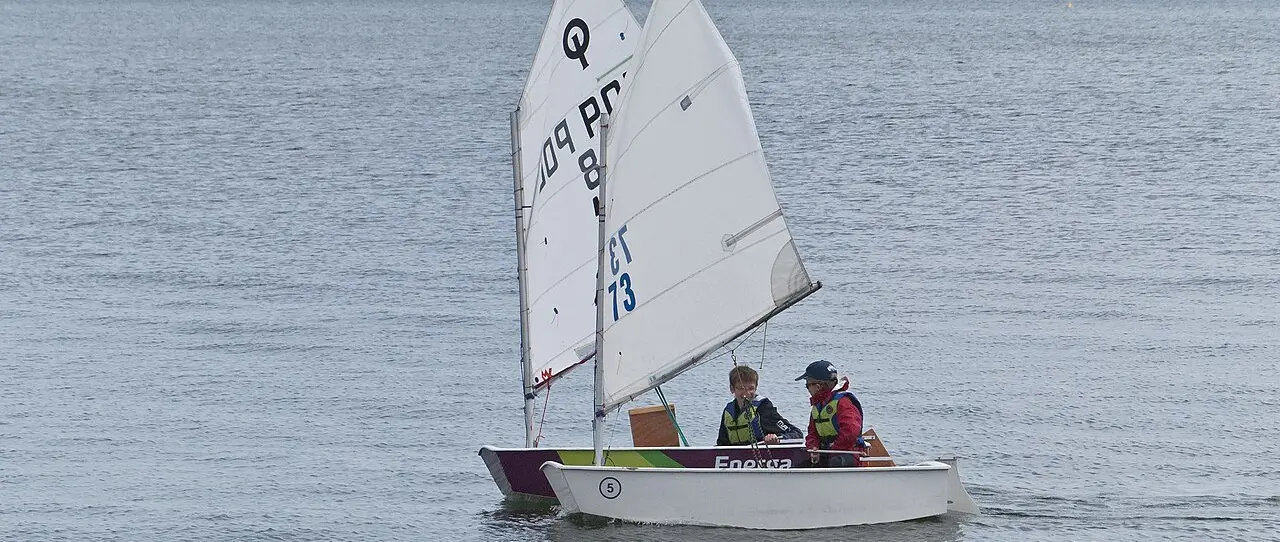
Lead image: Historical sailing-school dinghies photographed in Gdynia in 2014; NOT RŪNĀ programme activity or Worser Bay in 2026. Historical contextual photograph by Jacek Halicki, File:2014 Żaglówki szkółki żeglarskej w Gdyni 01.jpg, via Wikimedia Commons. License: CC BY-SA 4.0 (https://creativecommons.org/licenses/by-sa/4.0/). Image resized for editorial display. Historical sailing-school dinghies photographed in Gdynia in 2014; NOT RŪNĀ programme activity or Worser Bay in 2026. Original file: https://commons.wikimedia.org/wiki/File:2014_Żaglówki_szkółki_żeglarskej_w_Gdyni_01.jpg.. Licensed original image, author and terms.
