
A four-day championship at Best Island
Nelson Radio Sailing Club will host the 2026 New Zealand International One Metre National Championship from 3 to 6 December, bringing 54 skippers from New Zealand, Australia and Brazil to its private pond on Best Island. Yachting New Zealand confirmed the entry figure and event arrangements in a report published on Thursday 26 November. The championship is for radio-controlled sailing yachts, not full-size vessels, and that distinction is central to understanding its place in the small-boat community. A model yacht has no crew aboard, but its skipper still has to interpret wind, position for the start, make tactical decisions and respond to changes around the marks. The event promises close competition and public access for spectators. It does not yet have a winner, so no result or final championship ranking should be reported before racing.
What an International One Metre yacht actually is
The International One Metre, often shortened to IOM, is a long-established radio-sailing class. Its hull length cannot exceed 1,000 millimetres, while a fully prepared boat must weigh more than 4,000 grams, according to Yachting New Zealand's account. Two-channel radio controls normally operate a sail winch and rudder, allowing the skipper to adjust course and sail trim from shore. These are technical class characteristics, not descriptions of a remotely operated full-size yacht. The boats may look like miniaturised racing keelboats, but their size and control systems create a distinctive discipline. Sailors cannot move their body weight around a deck to change balance; instead, they rely on set-up and careful radio inputs. The class provides an accessible way to explore sailing tactics without necessarily owning a crewed yacht, although the model, equipment and maintenance still carry costs.
A class with a long international history
Yachting New Zealand traces the IOM class to 1988 and designer Jan Dejmo. The class is raced in more than thirty countries and is described as New Zealand's most popular radio-sailing class. Longevity is a valuable feature of a one-design environment because sailors can compare their skills using familiar equipment and established class rules. It does not mean that every boat is identical or that technical development has stopped. Tuning, equipment choices and construction standards remain important within the applicable class requirements. A championship is therefore a contest of both preparation and steering judgment. For the wider recreational marine sector, this demonstrates how enthusiasm for sailing can extend beyond conventional ownership. Someone interested in weather, design or competition can participate in a sailing discipline without launching a person-carrying craft.
Leading New Zealand skippers on the entry list
The report identifies Nelson sailor Dean Atkinson as second in the current New Zealand rankings, followed by Reuben Muir from North Shore in third and Erle Williams from Kerikeri in fourth. Their rankings indicate that strong domestic competitors will be present, but a national ranking is not a forecast of the race result. A skipper can encounter a poor start, changing breeze or an unfavourable sequence and lose places regardless of previous performance. The entry list also includes sailors travelling from Australia and Brazil, broadening the competitive field. The national organisation did not publish a complete final seeding for the championship because racing has not happened yet. The sensible description is an international entry of 54 skippers, with several named leading New Zealand contenders, rather than a claim that any one person is guaranteed the title.
Why the format uses several fleets
The organisers intend to begin with a qualifying series in which boats rotate between fleets, allowing competitors to meet one another across multiple starts. At a point determined by the race officer, the field will be divided into Gold, Silver, Bronze and Copper fleets. The Gold fleet will race for the IOM national trophy, while other fleets will compete for their respective placings. This arrangement is common in large radio-sailing fields because a pond may not accommodate every boat in one practical start. It also gives competitors a way to build a classification through successive races rather than relying on one early grouping. The precise moment of division is an operational decision for the race officer. Without the official scoring instructions, a report should not invent qualifying thresholds, discard arrangements or points calculations.
A start line can make or break a race
A remote-controlled yacht is small, but the skipper must still judge the time and distance to the start. With many boats approaching the same line, clear air and positioning can be difficult to secure. The operator needs to consider the boat's speed, apparent breeze and space relative to other craft, all while standing ashore. A change in wind angle just before the signal can favour a different part of the line. The official preview specifically notes that a well-timed start, wind shift or close mark rounding can change the fleet order. These are general competitive realities, not a prediction of any individual's performance at Best Island. Racing will provide the evidence needed for a more detailed report. Until then, the most useful insight is that model sailing retains many tactical problems familiar to full-size dinghy and keelboat racers.
Race officials bring international experience
Yachting New Zealand names Sacha McGregor of New Plymouth as an international race officer involved in the skipper briefings and John Rountree of Tauranga as an international umpire. Their roles matter because a fleet of 54 skippers needs clear starting procedures, consistent rules and a practical response when conditions change. The published schedule calls for an 11:00 briefing each day, with racing intended to begin at 11:30 if the wind permits. Those are planned times, not a guarantee that every scheduled race will start on the minute. The organisers also expect to complete as many races as circumstances allow. The flexibility is sensible: even on an apparently sheltered pond, wind may vary across a short course. Good competition management balances the desire for a full programme with fairness and workable sailing conditions.
What the venue offers spectators
The club's Best Island pond provides banks on both sides where visitors can watch the racing. Yachting New Zealand says spectator admission is free, with roadside parking available. The preview also warns that a portion of the banks is under development and has bare soil, so visitors may find standing or bringing a chair more practical. These concrete details are useful to someone deciding whether to attend. They should not be transformed into a promise of parking availability or accessibility features that have not been confirmed. Conditions at the venue may change, especially if the weather is wet. Visitors should follow the club's current instructions and respect the private setting. A compact pond allows viewers to see tactical contests at relatively close range, which can make radio sailing approachable even to people unfamiliar with the class.
Four racing days, with a shorter Sunday
The official schedule runs from Thursday 3 December through Sunday 6 December. The reported daily window is 11:00–18:00 on Thursday, Friday and Saturday, with Sunday finishing earlier, at 15:00. These hours include the 11:00 skipper briefings and are subject to weather and race management. A schedule is useful for planning, but an article dated 26 November cannot establish that all planned starts will actually take place. Nor should it describe a championship podium before the final races. The entry and event information is available through the New Zealand Radio Yachting Association's sailing calendar, with the Nelson Radio Sailing Club providing local details. Competitors should use those official channels for notices and any updates rather than relying on an old publicity summary once racing is underway.
Technical preparation is still important at model scale
A one-metre yacht requires attention to hull condition, rigging, sail controls, batteries and the reliability of the radio link. The practical checks are not the same as those needed for a full-size vessel carrying people, and the consequences of a fault differ, but equipment reliability still influences a competition. A jammed sail winch or poorly adjusted control can affect performance even when a skipper understands the tactics. These are broad considerations, not reports of particular defects among the Nelson entries. Model sailors may also prepare alternative rigs according to class rules and anticipated conditions, although the exact equipment carried by the 54 participants is not provided in the official announcement. The wider point is that radio sailing combines craftsmanship, maintenance and seamanship in a small physical format. That combination helps explain why experienced conventional sailors can find the discipline compelling.
Connections with full-size recreational sailing
Radio-controlled yacht racing offers a different relationship with wind from owning a dinghy or cruiser, but some core skills carry across. A model skipper watches gust patterns, observes competitors and decides when to tack, gybe or seek a more favourable course. That understanding may interest someone preparing for a larger boat, although it is not a substitute for learning personal flotation, launching, navigation or emergency procedures on the water. Equally, a sailor with years of keelboat experience may need time to become competent with a handheld radio controller. The sports are related but not interchangeable. Small-boat clubs can benefit from recognising that people discover sailing through many routes. A radio-yachting event can be a welcoming opportunity to appreciate sail trim and tactics without assuming everyone wants to race a full-size hull.
The significance of an international entry
A 54-skipper field drawn from three countries provides a strong regional occasion for a class whose physical boats measure only a metre. Its scale is notable not because of fleet tonnage but because of the people and expertise involved. Visitors may bring different tuning approaches and tactical experiences, creating opportunities to learn from one another. The championship also depends on volunteers and race officials, whose work supports fair racing and spectator access. The organisers' report does not assign an economic value to the event or provide a survey of participants' expenditure, so those figures should not be invented. It is enough to say that the entry brings an international competition to Nelson and offers the local club an opportunity to showcase radio sailing. The rest will be determined on the pond.
A verified preview, with results still to come
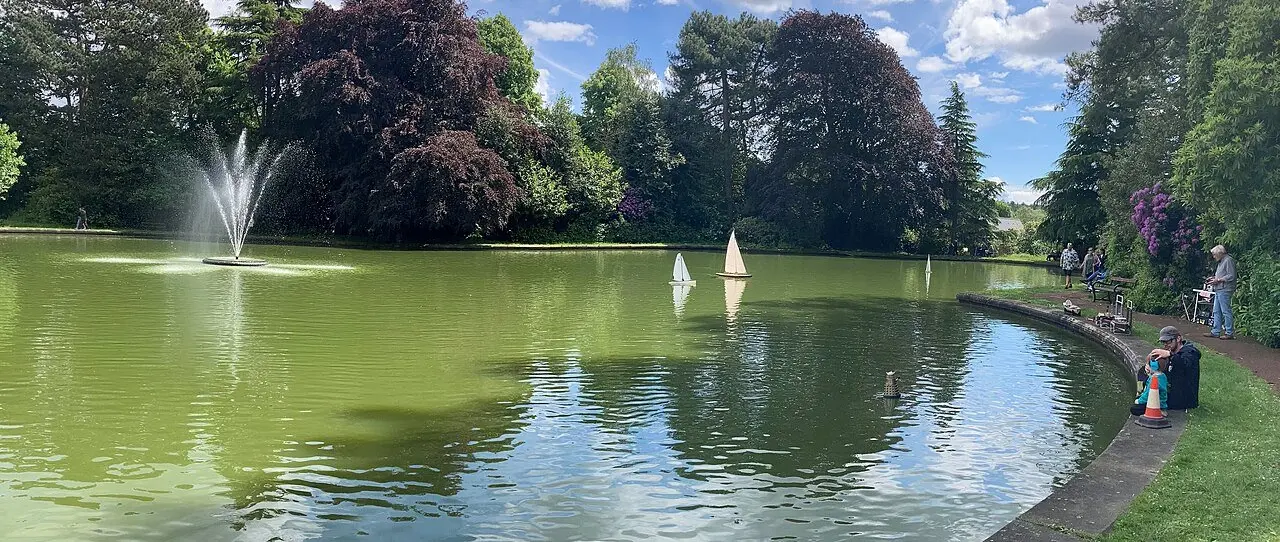
As of 26 November, the confirmed facts are the 3–6 December dates, Best Island venue, 54 skippers, international representation, class characteristics and intended fleet structure. Dean Atkinson, Reuben Muir and Erle Williams are named in the current rankings, but none has yet won the event described in this preview. A historical photo of radio-controlled yacht sailing can illustrate the type of craft only if properly licensed and explicitly labelled as contextual rather than claimed as an image from Nelson's 2026 competition. Readers should consult the organiser for later results and any changed arrangements. The story demonstrates that compelling small-boat sailing can occur on a surprisingly compact scale, with genuine tactical depth and international participation even when nobody boards the yacht.
Original industry sources and image credits
Reporting based on Yachting New Zealand official report.
Lead image: Historical radio-controlled sailboats on a pond in England; NOT the December 2026 Nelson IOM Nationals. Historical contextual photograph by Hoppend, File:Radio Controlled sailboats on Papplewick Pumping station pond.jpg, via Wikimedia Commons. License: CC BY 4.0 (https://creativecommons.org/licenses/by/4.0/). Image resized for editorial display. Historical radio-controlled sailboats on a pond in England; NOT the December 2026 Nelson IOM Nationals. Original file: https://commons.wikimedia.org/wiki/File:Radio_Controlled_sailboats_on_Papplewick_Pumping_station_pond.jpg.. Licensed original image, author and terms.
